Intel's Panther Lake: A Much-Needed Win Against Apple Silicon
Intel's Core Ultra Series 3, powered by the long-awaited Panther Lake architecture, marks a significant turning point for the chipmaker. After years of incremental updates, this new generation delivers substantial performance gains, particularly in multi-core processing and integrated graphics, positioning it as a formidable competitor to Apple's M-series chips. Our hands-on testing reveals that Intel has finally achieved a competitive edge in key areas, offering Windows users a compelling alternative that balances power and efficiency.
For years, Intel's laptop chip updates have been modest, incremental steps. The arrival of Panther Lake, officially known as the Intel Core Ultra Series 3, breaks that pattern. Announced nearly five years ago as the cornerstone of Intel's ambitious turnaround strategy, this chip design represents a critical moment for the company. Having tested laptops powered by this new silicon, it's clear: Intel has finally scored a much-needed win, delivering performance that seriously challenges Apple's dominance in the laptop CPU space.
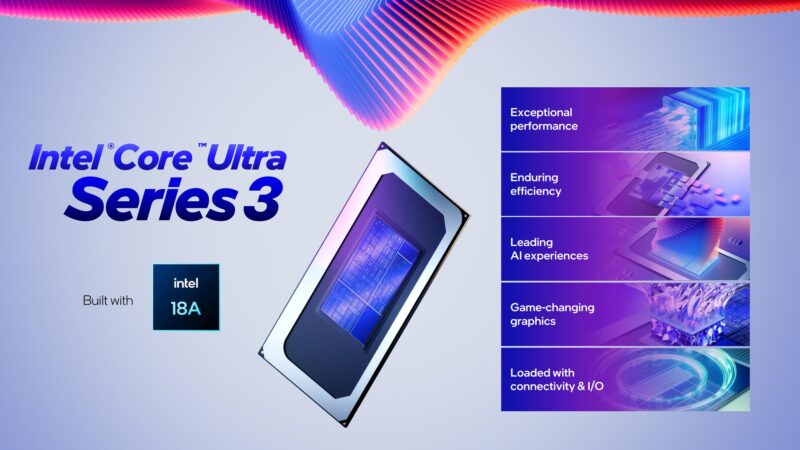
Benchmark Performance: Topping the Charts
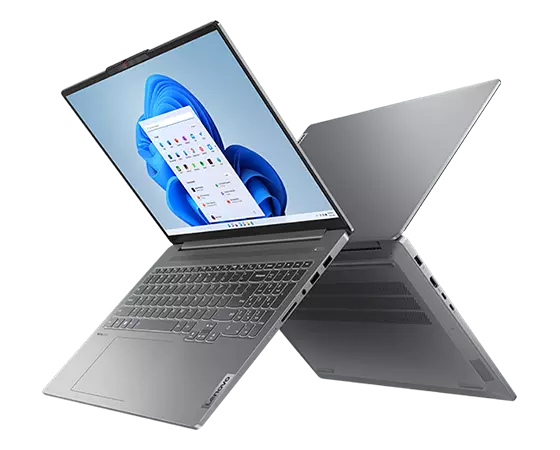
The Core Ultra Series 3, built on Intel's advanced 18A process node, delivers on its promise of improved performance. Testing the top-of-the-line Core Ultra X9 388H in a 16-inch Lenovo IdeaPad reference unit reveals impressive results. In multi-core benchmarks, this new Intel chip now sits at the top of the stack, outperforming Apple's latest M5 by a significant margin. This is a notable achievement, as competing with Apple's tightly integrated hardware and software ecosystem has been a major hurdle for x86 processors.
While Intel still can't match Apple's single-core performance—where the M4 Pro and M4 Max retain an edge—the multi-core gap has closed dramatically. The difference between the Core Ultra X9 388H and the Apple M4 Pro is only about 14 percent in multi-core tests. This positions Intel's latest offering as a highly competitive option for productivity workloads, content creation, and other tasks that leverage multiple processor cores.
A Leap Forward in Integrated Graphics
Perhaps the most striking advancement with Panther Lake is in integrated graphics performance. The X9 and X7 configurations feature Intel's B390 GPU architecture, representing the top of Intel's integrated graphics line. Benchmark scores show a massive leap forward, with Intel taking a clear lead in this category. This translates to tangible benefits for users, enabling capable gaming and accelerated creative tasks without the need for a bulky, power-hungry discrete graphics card.
In practical tests, a laptop with the Core Ultra X9 388H handled demanding titles like Cyberpunk 2077 at a comfortable 55 frames per second on medium settings. For titles requiring higher frame rates, Intel's XeSS upscaling and frame generation technologies provide a significant boost. This level of graphical capability in a thin-and-light laptop form factor was previously the domain of machines with dedicated GPUs, which typically sacrifice battery life and portability.
The Battery Life and Efficiency Equation
A critical promise of the Core Ultra Series 3 was maintaining or improving efficiency relative to its predecessor, Lunar Lake. Early testing indicates Intel has succeeded. The reference Lenovo machine achieved well over 20 hours of local video playback, a figure that finally brings Intel into striking distance of Apple's legendary battery life. This addresses a long-standing weakness for Windows laptops and reduces the performance-versus-battery-life trade-off consumers often face.
This efficiency is partly attributable to the chip's manufacturing. The Core Ultra Series 3 marks a return to Intel's own fabs, being built on the Intel 18A process at the company's new facility in Arizona. This contrasts with the previous generation, which was partially manufactured by TSMC—an admission of how far Intel had fallen behind. The 18A process appears to deliver the efficiency gains needed to compete with Apple Silicon and Qualcomm's Snapdragon X series.

What This Means for the Market
Intel's success with Panther Lake is significant for several reasons. First, it restores confidence in the company's engineering roadmap and its ability to execute on ambitious plans. The Core Ultra Series 3 reverses a trend of stagnation and positions Intel as a strong competitor just as the laptop market faces increased competition from ARM-based architectures.
Second, it provides Windows laptop manufacturers with a compelling silicon option that balances performance, graphics capability, and battery life. Based on the number of laptop announcements featuring these new chips, Intel remains the dominant choice for Windows machines. For consumers, this means more viable alternatives to Apple's MacBook Pro, particularly for users who need strong integrated graphics for gaming or creative work but also value all-day battery life.
While challenges remain—including competition from upcoming Apple M5 Pro/Max chips and Qualcomm's next-generation offerings—Panther Lake represents Intel's most substantial advancement in years. It delivers on the promises made half a decade ago and provides a foundation upon which Intel can build its future in the competitive computing landscape.