Exploring the Microscopic and the Mind: A Brief Look at Recent Science Books
A curated selection of recent science books delves into fascinating realms, from the pioneering discoveries of microbiology to the philosophical puzzles of memory and the interconnectedness of life. This brief overview highlights key themes from four notable publications, including a biography of Antoni van Leeuwenhoek, an anthropological exploration of 'naturekind', a philosophical inquiry into memory, and an analysis of financial risk. Each book offers a unique lens through which to examine the natural world and human experience, providing accessible insights for general readers interested in science and culture.
Recent publications in the science and humanities offer compelling explorations of life's microscopic foundations, the enigmatic nature of memory, and humanity's place within a broader web of existence. This brief overview examines a selection of notable books that bridge scientific discovery with philosophical and cultural inquiry, providing accessible entry points into complex topics for the general reader.
Myriad, Microscopic and Marvellous
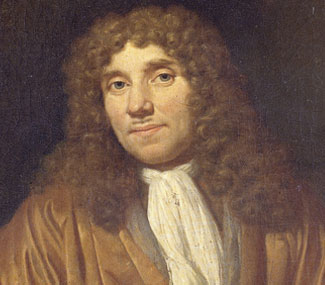
In her biography Myriad, Microscopic and Marvellous, historian Geertje Dekkers chronicles the groundbreaking work of Antoni van Leeuwenhoek. In 1674, using a microscope of his own design, van Leeuwenhoek made what Dekkers calls "his most sensational discovery" when he observed single-celled organisms in lake water. His meticulous observations extended far beyond bacteria and protozoa, providing the first accurate descriptions of red blood cells, capillaries, spermatozoa, and the structure of the eye's lens. His detailed correspondence with the Royal Society of London, which considered him its most valuable correspondent upon his death in 1723, laid the essential groundwork for the field of microbiology.
Naturekind
Anthropologists Melissa Leach and James Fairhead, in their book Naturekind, propose a framework for understanding human interconnectedness with other life forms. They introduce the concept of "naturekind" to describe the communities and cultures through which humans are inextricably linked to wider biological networks. The authors explore these connections through encounters with animals like chickens, horses, and bees, as well as through environments such as forests and cities. By applying principles of semiotics—the study of signs and meaning—to biology, they develop a field of biosemiotics that connects biological phenomena with linguistics and anthropology.
The Book of Memory
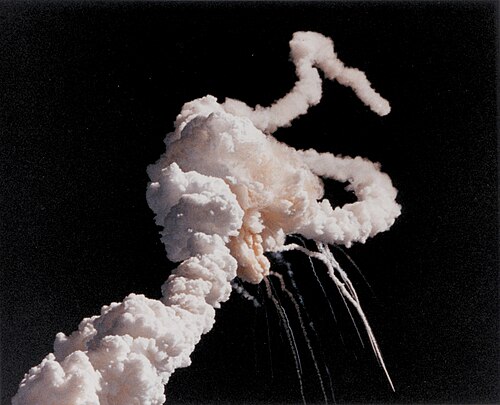
Philosopher Mark Rowlands offers a stimulating analysis in The Book of Memory, examining the fallible and constructive nature of human recollection. He cites a psychological study following the 1986 Space Shuttle Challenger disaster, where a significant portion of students misremembered how they learned of the event just three years later. Rowlands uses such observations to build a philosophical metaphor: "Memory is the ability to read the book of you." He suggests that the self is simultaneously the author, the book, and the reader of one's own memories, blurring the line between the act of remembering and what is remembered.
The World's Worst Bet
While not detailed in the source excerpt, David J. Lynch's The World's Worst Bet appears to analyze significant financial miscalculations and risk. This title rounds out a collection that, taken together, encourages readers to consider the precision of observation, the complexity of ecological relationships, the reliability of personal narrative, and the consequences of human judgment.
In summary, this brief survey of recent books demonstrates how scientific inquiry continues to intersect with history, philosophy, and anthropology. From van Leeuwenhoek's revelatory lenses to Rowlands' metaphysical exploration of self, these works invite a deeper appreciation for both the observable details of our world and the intangible processes that shape our understanding of it.