How Soil Health Became a Powerful Weapon Against Locust Swarms
A groundbreaking study from Arizona State University, conducted with farmers in Senegal, reveals a simple yet transformative agricultural strategy: improving soil health can dramatically reduce locust damage and double crop yields. By enriching soil with nitrogen, crops become less appealing to the insects, leading to fewer pests and significantly larger harvests. This research offers a sustainable, community-based alternative to chemical pesticides, providing a crucial tool for food security in regions threatened by these devastating pests.
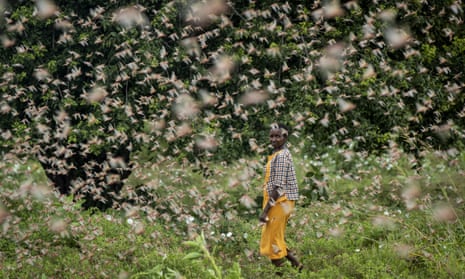
For centuries, locust swarms have symbolized agricultural devastation, capable of stripping entire regions of their food supply in a matter of days. While often viewed as an ancient plague, these migratory pests remain a severe and modern threat to global food security. However, a revolutionary approach emerging from the fields of Senegal is changing the narrative. Scientists have discovered that the solution to this airborne menace may lie not in the sky, but beneath our feet—in the health of the soil itself. This article explores the groundbreaking research demonstrating how a simple soil upgrade can suppress locust populations and dramatically boost agricultural resilience.
The Science Behind Soil and Locust Behavior
The key to this breakthrough lies in understanding the dietary preferences of locusts. Research led by Arianne Cease of Arizona State University's Global Locust Initiative uncovered a consistent biological pattern. Locusts and swarming grasshoppers thrive on a carbohydrate-rich, protein-poor diet. Plants grown in nutrient-deficient soil naturally produce more carbohydrates and less protein, creating what Cease describes as the optimal "donut diet" for these pests. This diet fuels their long-distance migratory behavior, much like carbohydrates fuel an endurance athlete.
Conversely, when soil is enriched—specifically with nitrogen—the nutritional profile of the crops shifts. Plants develop higher protein content and lower carbohydrate levels. This altered diet is suboptimal for locusts; their bodies struggle to process the excess protein and fail to extract sufficient energy, ultimately suppressing their populations and swarming behavior. This foundational science, developed over 15 years of research, provided the hypothesis for the field study in Senegal.
The Senegal Field Trial: Proof in the Millet Fields
To test this theory outside the laboratory, researchers partnered with 100 farmers in two Senegalese villages regularly plagued by the Senegalese grasshopper. The experimental design was straightforward: each farmer planted two plots of millet. One plot was treated with nitrogen fertilizer, while the other was left untreated as a control. Throughout the growing season, researchers meticulously counted locust numbers and measured crop damage.
The results, published in the journal Scientific Reports, were decisive and compelling. The fertilized plots consistently hosted fewer locusts and showed significantly less leaf damage. Most importantly, at harvest, the yield from the treated plots was double that of the untreated control plots. As lead author Mamour Touré of Université Gaston Berger noted, the study gave Senegalese farmers "a practical way to control them at the local level." The experiment successfully demonstrated that manipulating plant chemistry through soil health is a viable, effective pest management strategy.
Beyond Fertilizer: Scaling a Sustainable Solution
While the study used nitrogen fertilizer, the researchers emphasize that sustainable, long-term control requires affordable and ecologically sound methods. The promising news is that the same beneficial effect appears achievable with compost. "Ongoing work is focused exclusively on compost, and we seem to be getting the same results," stated Cease. This shift is critical, as composting utilizes crop residues and organic waste, improving soil structure and health without the financial and environmental costs associated with synthetic fertilizers.
Encouraged by the trial's success, the participating Senegalese farmers have already adopted composting practices independently. Professor Touré reported that farmers now compost crop residues instead of burning them, a technique "fully mastered thanks to the project." This community-led adoption underscores the practical viability of the approach. The research team is now seeking funding to expand this work to other regions heavily impacted by locusts, aiming to transform a localized success into a global strategy.
.jpg?sfvrsn=5e18491d_1&Status=Master)
Global Implications and Future Threats
The implications of this research extend far beyond Senegal. Locusts and grasshoppers are a global challenge, and the principles of soil health management could be applied in various agricultural contexts. Notably, the research has relevance even for the United States, which currently has no native locust species. Cease warns that climate change may alter this, with the Central American locust's range potentially reaching suitable habitats in Texas within 10-15 years.
Furthermore, the United States already contends with significant grasshopper pests, known collectively as the "Dirty Dozen," which threaten rangelands and compete with livestock for forage. The chemical pesticides currently used as the primary control tool have known drawbacks. The soil-health strategy pioneered in Senegal offers a potential alternative—a proactive, ecological method to make landscapes less hospitable to these migratory pests, reducing reliance on reactive chemical applications.
Conclusion: A Paradigm Shift in Pest Management
The Senegal study represents a significant paradigm shift in agricultural pest management. It moves the focus from directly targeting the insect—often with environmentally costly chemicals—to indirectly managing it by enhancing the underlying ecosystem, starting with the soil. This approach aligns with the broader goals of sustainable agriculture, promoting soil vitality, increasing crop yields, and building farm resilience.
By demonstrating that a simple intervention like soil enrichment can cut locust damage and double harvests, this research provides a powerful, accessible tool for farmers worldwide. It underscores a profound ecological truth: sometimes, the most effective defense against a threat is to strengthen the foundation of the system it attacks. As the global community seeks solutions to food security challenges, investing in soil health may prove to be one of our most strategic and sustainable defenses.