HyprLabs and the AI Race to Build Autonomous Vehicles Faster
The autonomous vehicle industry is witnessing a resurgence driven by AI advancements, with startups like HyprLabs entering the fray with innovative approaches. Founded by Zoox cofounder Tim Kentley-Klay, HyprLabs is developing 'Hyprdrive' software that uses 'run-time learning' to train self-driving systems with minimal data. This article explores how this new methodology compares to established players like Tesla and Waymo, the challenges of scaling safety, and whether agile startups can disrupt a capital-intensive field.
The autonomous vehicle (AV) landscape, once mired in delayed promises and technical hurdles, is experiencing renewed momentum. This resurgence is largely fueled by rapid advancements in artificial intelligence and machine learning, which promise to reduce the cost and complexity of developing self-driving software. Into this competitive arena steps HyprLabs, a small startup with an ambitious goal: to drastically accelerate the development of safe autonomous technology. Founded by industry veteran Tim Kentley-Klay, HyprLabs represents a new wave of companies betting that agility and innovative AI training techniques can challenge established giants.

The HyprLabs Approach: Run-Time Learning
HyprLabs is pioneering a software training methodology it calls "run-time learning," which it views as a significant departure from conventional approaches. As detailed in a WIRED report, the company's system is built on a transformer model—a type of neural network—that learns continuously during operation. Unlike traditional methods that require massive, pre-labeled datasets, HyprLabs' software learns under the guidance of human supervisors, sending only novel pieces of driving data back to a central system for fine-tuning. This method aims for extreme data efficiency. The startup's entire training corpus comes from just 4,000 hours of driving data (approximately 65,000 miles) collected by two modified Tesla Model 3s in San Francisco, of which only 1,600 hours were used for actual model training.
Contrasting with Industry Titans
HyprLabs' data-efficient model stands in stark contrast to the strategies employed by industry leaders. For years, the AV sector was divided between camera-only proponents like Tesla and multi-sensor approaches used by companies like Waymo and Cruise. Tesla's method relies on an "end-to-end" model trained via reinforcement learning on the vast image data collected by its global fleet of customer cars. In contrast, companies like Waymo have historically depended on smaller, meticulously labeled datasets from dedicated fleets, combined with extensive human-programmed rules. Waymo, for instance, has logged over 100 million fully autonomous miles. HyprLabs seeks a middle path, aiming to combine the adaptive learning of camera-based systems with the structured understanding of sensor-fusion approaches, but with a fraction of the computational and data resources.
The Safety and Scaling Challenge
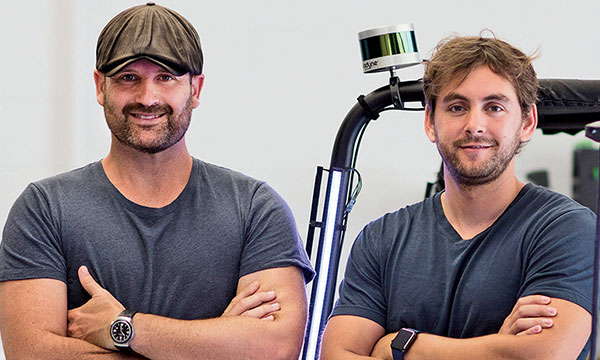
The core question for HyprLabs and similar startups is not just about building driving software, but about scaling it to a level of safety that surpasses human drivers—a monumental challenge. Kentley-Klay himself acknowledges the uncertainty, stating, "I can't say to you, hand on heart, that this will work." The leap from a system that "drives pretty well" in controlled scenarios to one that is demonstrably safer than a human in all conditions requires exhaustive validation. While efficient learning algorithms are a powerful tool, they must be rigorously tested against the infinite variability of the real world. The startup is clear that its current Hyprdrive software is not yet "production-ready and safety-ready," positioning it as a promising development platform rather than a finished product.
The Road Ahead: From Software to Robots
HyprLabs' vision extends beyond software licensing. The company ultimately plans to build and operate its own proprietary robots, described by Kentley-Klay as a cross between "R2-D2 and Sonic the Hedgehog." This move from developing driving intelligence for cars to creating a new form of robot highlights the broader ambition of the firm. The upcoming introduction of this robot, planned for the next year, will serve as the true test of whether the company's lean, AI-driven methodology can translate into a viable physical product. Success would signal a potential shift in how robotics companies are built, prioritizing algorithmic efficiency over brute-force data collection.

The story of HyprLabs encapsulates a critical moment in the autonomous vehicle industry. As AI capabilities grow, they lower the barriers to entry, allowing smaller, agile teams to experiment with novel approaches to solving one of technology's hardest problems. While the path from a promising prototype in San Francisco to a safe, scalable, and commercially viable system is long and fraught with challenges, startups like HyprLabs are essential drivers of innovation. They pressure incumbents, explore alternative technical pathways, and remind the industry that the race to autonomy is still very much on, with the finish line defined not just by capability, but by safety, efficiency, and speed of development.