Read on nature.com
2025: A Year of Scientific Resilience and Global Achievement
Despite facing unprecedented political and financial pressures, the global scientific community demonstrated remarkable resilience in 2025. From groundbreaking discoveries in the deepest ocean trenches to transformative AI developments and critical public health innovations, scientists worldwide continued to push boundaries and collaborate across borders. This year highlighted both the fragility of scientific institutions under political strain and the enduring power of international cooperation in advancing human knowledge and improving lives.
The year 2025 presented science with significant challenges, particularly in the United States where funding cuts, political interference, and immigration restrictions created what many researchers described as a "year of chaos." Yet, against this backdrop of institutional strain, the global scientific enterprise demonstrated extraordinary resilience and continued to produce transformative discoveries that transcended national borders and political divides. This resilience showcased science's fundamental strength: its ability to thrive on independence, openness, and diversity even when these values face external threats.

Global Scientific Achievements Amidst Challenges
While political pressures reshaped research landscapes in several countries, scientists worldwide continued to make groundbreaking discoveries. The selection of Nature's 10 individuals who shaped science in 2025 highlighted this global achievement, with seven of the featured researchers working outside the United States. This distribution reflected both the international nature of modern science and the growing research capabilities in regions beyond traditional Western centers of scientific excellence.
Deep-Sea Discoveries and Environmental Insights
One of the most remarkable discoveries came from geoscientist Mengran Du and her team at the Chinese Academy of Sciences' Institute of Deep-sea Science and Engineering. They reported finding the deepest ecosystem known to host animals, located in an underwater trench northeast of Japan. This chemosynthetic ecosystem, which derives energy from methane and other compounds seeping from the ocean floor rather than sunlight, represents a significant advancement in our understanding of life's adaptability and the hidden mysteries of our planet.

Technological Breakthroughs and Innovation
The rapid advancement of artificial intelligence continued to be a defining story of 2025, with significant developments occurring globally. In China, entrepreneur Liang Wenfeng's company created DeepSeek-R1, a home-grown AI model that achieved capabilities comparable to tools from more established technology firms but at a fraction of the cost. What made this development particularly noteworthy was its unusual openness and the fact that it became the first major AI tool to undergo formal peer review, with results published in scientific journals.
Public Health Innovations
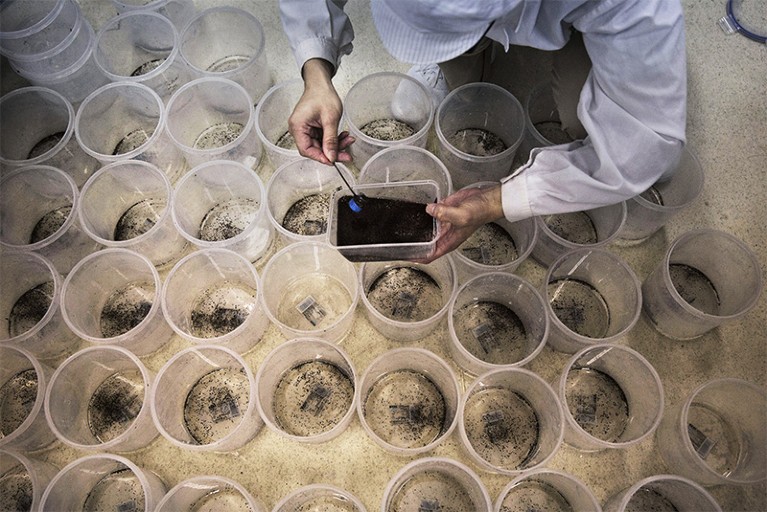
Transformative science directly impacted public health in 2025. In Brazil, entomologist Luciano Moreira established a company that infects Aedes aegypti mosquitoes with Wolbachia bacteria, reducing their ability to transmit human pathogens. This approach proved crucial in combating dengue fever, which killed approximately 6,300 people in Brazilian cities the previous year. Moreira's work demonstrated how scientific innovation could be translated into practical solutions for pressing public health challenges.
International Collaboration and Its Challenges
The stories of scientists like Moreira and systems biologist Yifat Merbl from Israel's Weizmann Institute of Science highlighted the importance of international scientific networks. Both researchers studied in the United States before returning to their home countries, exemplifying how global scientific training and collaboration benefit both individual nations and the worldwide research community. Merbl's team discovered that the proteasome, a cellular machine that breaks down proteins, plays a role in immunity by producing antimicrobial peptides that serve as a first line of defense against bacteria.
The Fragility of Scientific Networks
Despite these successes, 2025 revealed the vulnerability of international scientific networks. Immigration crackdowns in several countries, including the United States, United Kingdom, Australia, and Canada, made it more difficult, expensive, and less attractive for researchers to study and work abroad. This trend threatened the win-win dynamic that had characterized global scientific collaboration in recent decades, where countries both contributed to and benefited from international research networks.
Scientific Values Under Pressure
The year also tested fundamental scientific values. Susan Monarez, who served briefly as head of the U.S. Centers for Disease Control and Prevention, was fired after refusing to pre-approve vaccine recommendations without considering relevant data. Her stand highlighted the ongoing tension between scientific evidence and political pressures, particularly in public health decision-making. Meanwhile, the agreement of the world's first pandemic treaty in April represented a bright spot for evidence-based policymaking and multilateral cooperation, even as the United States withdrew from negotiations.
Conclusion: The Enduring Strength of Science
The scientific achievements of 2025 demonstrated that despite political and financial pressures, the global research enterprise remains resilient and productive. From deep-sea discoveries to AI innovations and public health breakthroughs, scientists continued to push boundaries and collaborate across borders. The year served as both a celebration of scientific achievement and a warning about what could be lost if governments fail to support excellent science, follow evidence-based approaches, and nurture the international collaborative spirit that drives innovation. As the scientific community looks forward, the lessons of 2025 emphasize the need to protect scientific independence, maintain open international networks, and recognize that transformative science ultimately benefits all humanity.