Read on France 24
Iran's Supreme Leader Calls for Crackdown on 'Seditionists' Amid Deadly Protest Repression
Iran's Supreme Leader Ayatollah Ali Khamenei has called for swift punishment of "domestic criminals" and accused "seditionists" of being responsible for thousands of deaths during recent protests. This statement follows a brutal government crackdown that rights groups estimate has resulted in a death toll in the thousands. The protests, initially sparked by economic hardship, evolved into the largest demonstrations against the Islamic Republic in over three years. Khamenei's televised address also blamed the United States and Israel for fueling the unrest, while former US President Donald Trump called for an end to his leadership.
In a significant televised address, Iran's Supreme Leader Ayatollah Ali Khamenei has escalated the government's rhetoric against recent widespread protests, calling for authorities to "break the back of the seditionists" and demanding swift punishment for "domestic criminals." This statement comes amid international condemnation and reports from human rights organizations detailing a violent crackdown that has reportedly left thousands of Iranian citizens dead. The protests, which began as expressions of anger over severe economic conditions, rapidly transformed into the most significant challenge to the Islamic Republic's authority in more than three years, before being suppressed under a severe internet blackout and heavy security measures.
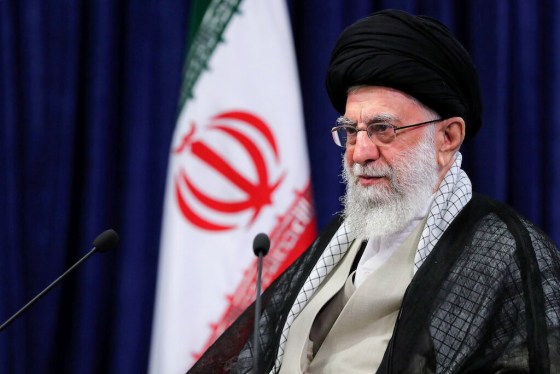
Khamenei's Accusations and Call for Action
During his address to supporters, Khamenei made a stark admission regarding the scale of the violence, alleging that agents of the unrest had "murdered a few thousand people" with "pure savagery." This marks one of the first acknowledgments from the highest level of the Iranian leadership that the death toll reaches into the thousands. He framed the government's response as a necessary defense against a foreign-backed conspiracy, stating, "We do not intend to lead the country to war, but we will not spare domestic criminals." He further claimed that "international criminals"—a clear reference to the United States and Israel—were "worse" and were the ultimate architects of the turmoil.
The Scale of the Crackdown and Rights Groups' Findings
Independent human rights organizations have provided chilling estimates of the repression's human cost. Norway-based Iran Human Rights (IHR) has verified that 3,428 protesters were killed by security forces but warns the actual number could be several times higher, with other estimates reaching 5,000 to 20,000. The opposition channel Iran International has cited senior government sources claiming at least 12,000 deaths. Eyewitness accounts given to AFP describe scenes of chaos and violence; one protester named Kiarash reported seeing "thousands of dead bodies" at a Tehran mortuary after being fired upon during demonstrations on January 10.

International Reactions and Accusations
The Iranian government has consistently blamed the protest wave on its arch-foes, labeling it a "terrorist operation" hijacked by the United States and Israel. Khamenei specifically accused former U.S. President Donald Trump of being "guilty for the casualties," calling the unrest an "American conspiracy" aimed at re-establishing dominance over Iran. In response, Trump called for an end to Khamenei's nearly four-decade rule, stating, "The man is a sick man who should run his country properly and stop killing people... It's time to look for new leadership in Iran." This exchange highlights the deep-seated geopolitical tensions that frame the domestic crisis.
Current Situation and Ongoing Repression
Authorities claim that calm has returned after what they condemned as "riots," with state media reporting thousands of arrests. Security officials cited by the Tasnim news agency placed the number of arrests around 3,000, while rights groups estimate up to 20,000. The government has also targeted religious minorities, announcing the arrest of a 32-member network from the Bahai faith, whom it accused of espionage and involvement in the protests. A severe internet blackout, monitored by Netblocks, has persisted for over a week, severely hampering communication and the verification of events on the ground. Despite the crackdown, Reza Pahlavi, the exiled son of the former Shah, has called for renewed protests, indicating that underlying grievances remain unresolved.
Conclusion
Ayatollah Khamenei's call for a renewed crackdown signals the Iranian government's intent to maintain control through force and blame external actors for domestic unrest. The staggering death toll reported by rights groups points to one of the most severe repressions in recent Iranian history. While the immediate protests have subsided under the weight of security measures and internet restrictions, the fundamental issues of economic hardship and political discontent that sparked them persist. The international community faces continued challenges in responding to the crisis, caught between diplomatic pressures and the grim realities of a severe human rights situation. The path forward for Iran remains fraught with tension, as the leadership's uncompromising stance clashes with the profound demands of its people.