The Moral Duty Holding Gaza's Healthcare System Together
Gaza's healthcare system is operating on the brink of collapse, sustained almost entirely by the unpaid volunteer work and profound moral duty of its surviving medical staff. Despite a ceasefire, hospitals like al-Shifa remain partially destroyed, critically understaffed, and desperately lacking in medicines, equipment, and supplies. Medical workers, many of whom have lost homes and loved ones, continue to treat an overwhelming number of patients under conditions that resemble a battlefield, facing immense psychological trauma while fighting to save lives. This article examines the current state of Gaza's hospitals and the urgent call for international intervention to prevent a complete humanitarian catastrophe.
In the aftermath of conflict, Gaza's healthcare infrastructure lies in ruins, yet a fragile lifeline persists. This lifeline is not made of steel, concrete, or advanced medical technology; it is woven from the resilience and unwavering moral commitment of the territory's remaining doctors and nurses. As one medical worker in Gaza poignantly stated, the only force still propping up the hospitals is the sense of moral duty of the surviving medical workers. This article explores the dire conditions within Gaza's medical facilities, the immense burden carried by healthcare professionals, and the critical need for immediate international support to salvage a system on the verge of total collapse.
The Crumbling Infrastructure of Care
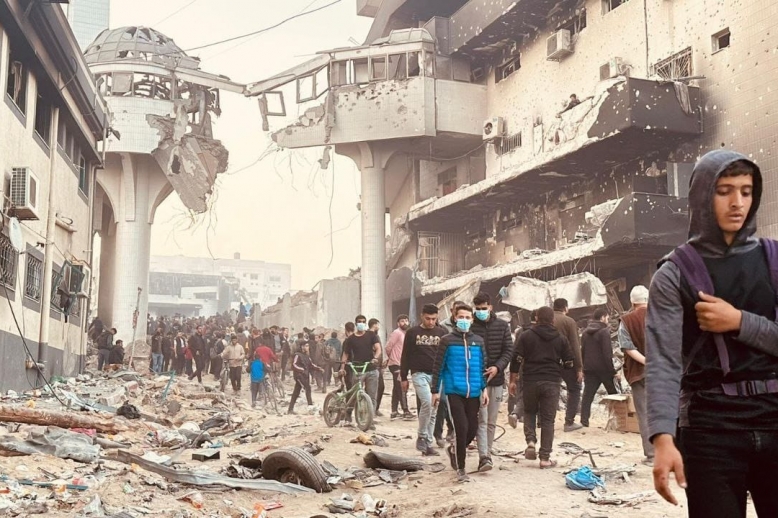
The physical state of Gaza's hospitals is a testament to the devastation wrought by prolonged conflict. Al-Shifa Medical Complex in Gaza City, once the largest and most important healthcare facility in the territory, now stands as a symbol of this destruction. According to a report from Al Jazeera, most of the buildings in the sprawling complex are destroyed or burned. Out of its original 29 departments, only three are partially operational. Medical staff work in a handful of partially restored buildings, a stark reduction from the pre-war capacity. This scene is replicated across Gaza, where healthcare delivery occurs amidst rubble, with tarpaulins often serving as walls and critical systems like electricity and running water remaining unavailable.
The Human Cost on Medical Staff
The burden of keeping this broken system functioning falls entirely on the shoulders of Gaza's healthcare workers, who operate under unimaginable strain. Staffing levels are a fraction of what is needed; an emergency ward that once had a full team now operates with just four to six nurses and up to three doctors. Compounding the physical workload is the fact that most medical staff are not paid for their work, as the hospital system cannot afford salaries. Some receive only symbolic remuneration from supporting organizations. After exhausting 24-hour shifts, these professionals return to bombed-out homes without heating, electricity, or adequate food, creating a cycle of professional and personal hardship that few healthcare systems worldwide could withstand.

A System Operating Beyond Capacity
The healthcare crisis is exacerbated by a patient load that far exceeds the system's crippled capacity. Hospital occupancy rates have reached record levels, with some departments exceeding capacity many times over. Medical teams face a constant stream of patients suffering from heart attacks, hypothermia, worsened chronic diseases, and traumatic injuries. The environment lacks almost everything essential: medicines, ventilators, functioning operating rooms, and beds. A severe shortage of spare parts means even minor equipment malfunctions can halt treatment for dozens of patients. This logistical nightmare creates impossible triage decisions and endless queues of people waiting for unavailable care.
The Patient Population in Crisis
The scale of medical need in Gaza is staggering. There are an estimated 350,000 people with chronic illnesses who are largely unable to receive regular treatments. Furthermore, 42,000 people with life-changing injuries require multiple surgeries and long-term rehabilitation, services that are currently inaccessible. Perhaps most critically, more than 16,000 patients require urgent medical evacuation outside of Gaza. The blockade on medicines, including cancer drugs, dialysis supplies, heart medications, antibiotics, and insulin, turns treatable conditions into death sentences. The human toll is immense, with nearly 1,100 patients having died while waiting for permission to leave for treatment.
Psychological Trauma and Unwavering Duty
Beyond the physical demands, Gaza's medical workers carry profound psychological trauma. At least 1,722 healthcare colleagues were killed during the conflict, some fled when possible, and at least 80, including Dr. Hussam Abu Safia, remain detained in Israeli jails. Those who remain work while haunted by images of the horrors they have witnessed: children who have lost multiple limbs, elderly patients with inoperable internal injuries, and young people with severe injuries dependent on unavailable care. As one colleague at al-Shifa who lost a child confessed, "I carry my grief with me in my pocket, among the instruments and bandages. Sometimes I treat a child who looks like my own son, and I have to hide my tears." Another described their work not as hospital duty but as a battle: "We don't work in a hospital; we're on a battlefield, fighting against time and death."

A Call for Urgent Action and Solidarity
The medical workers of Gaza have framed their continued service as a cry for help. They emphasize that Gaza does not need more statements of concern but concrete action: medicine, equipment, trained personnel, and a guarantee of the basic right to treatment. The restoration of Gaza's healthcare sector requires urgent international intervention to re-equip operating rooms, replenish obliterated medical supply chains, and support the surviving staff. The moral duty that currently props up the hospitals is an unsustainable foundation. Without immediate and substantial aid, this final pillar will crumble, leading to a complete collapse of healthcare and an even greater humanitarian catastrophe. The world must heed this call to save Gaza's healthcare system so it can, in turn, save lives.