Read on bbc.com
Mexico Train Derailment: Investigation Underway After Fatal Crash in Oaxaca
A major train derailment in Mexico's Oaxaca region has resulted in 13 fatalities and nearly 100 injuries, prompting a federal investigation. The Interoceanic train, carrying 250 passengers and crew, derailed near the town of Nizanda, with some cars tilting perilously over a cliff edge. This incident raises serious questions about the safety of Mexico's ambitious rail expansion projects, particularly the strategic Interoceanic Corridor initiative designed to boost regional trade. Authorities, including President Claudia Sheinbaum, have deployed emergency response teams to the crash site as the nation grapples with this transportation tragedy.
A devastating train derailment in southern Mexico has claimed multiple lives and injured scores of passengers, triggering a federal investigation and casting a shadow over the country's significant infrastructure ambitions. The crash occurred as the Interoceanic train rounded a bend near the town of Nizanda in the state of Oaxaca, causing several cars to leave the tracks. With at least 13 confirmed fatalities and nearly 100 people injured, this tragedy represents one of the most severe rail accidents in recent Mexican history and has mobilized the highest levels of government response.

The Crash and Immediate Aftermath
According to official reports from the Mexican navy, which operates the country's railway network, the derailment involved a train carrying 241 passengers and 9 crew members. The incident resulted in 98 injuries, with 36 individuals requiring hospital treatment. Mexican President Claudia Sheinbaum confirmed that five of the injured were in serious condition, underscoring the severity of the crash. Photographs from the scene depicted a chaotic rescue operation, with emergency workers assisting passengers from train cars that had fallen off the rails and were partially tilted over the side of a cliff, highlighting the precarious nature of the accident location.
Official Response and Investigation
In the wake of the disaster, Mexico's Attorney General confirmed that a formal investigation is underway to determine the cause of the derailment. President Sheinbaum announced that top-level officials, including the secretary of the navy, were dispatched to the crash site to oversee response efforts and the subsequent inquiry. The governor of Oaxaca, Salomón Jara Cruz, expressed "deep regret" over the accident and stated that state authorities were coordinating with federal agencies to provide assistance to those affected. This multi-agency response underscores the national significance of the event and the urgency to understand its root causes.
The Interoceanic Train and Strategic Context
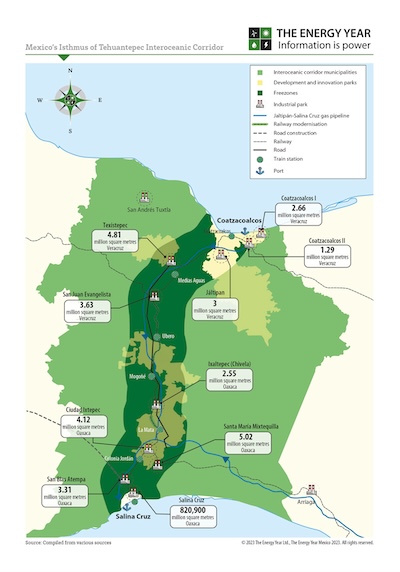
The derailed train was part of the Interoceanic service, a key component of Mexico's infrastructure strategy. This rail link connects the Pacific port of Salina Cruz with Coatzacoalcos on the Gulf Coast, traversing the narrow Isthmus of Tehuantepec. The service was inaugurated just two years ago under the administration of former President Andrés Manuel López Obrador, with the primary goal of boosting the regional economy. The train is a central pillar of the broader Interoceanic Corridor project, a government initiative designed to modernize rail, port, and industrial infrastructure to create a major trade corridor rivaling other global transit routes.
Broader Implications for Rail Development
This tragic accident occurs at a critical juncture for Mexico's transportation policy. The Interoceanic train service is part of a significant push to expand both passenger and freight rail capacity in southern Mexico, aiming to stimulate long-term economic development in historically underserved regions. The derailment near Nizanda will inevitably lead to intense scrutiny of the safety protocols, maintenance standards, and operational procedures governing these new and upgraded rail lines. The investigation's findings will likely have profound implications for the future of the Interoceanic Corridor and similar infrastructure projects, balancing ambitious development goals with paramount public safety concerns.
The Mexico train derailment is a sobering reminder of the human cost associated with infrastructure failures. As the investigation proceeds, it will be crucial for authorities to provide transparency regarding the cause—whether it was track failure, excessive speed, equipment malfunction, or another factor—and to implement any necessary safety reforms. The incident not only represents a profound loss for the victims' families but also poses a significant challenge to a flagship national project intended to drive economic growth and connectivity.