Read on bbc.com
US-Ukraine Talks in Florida: Progress on Security Guarantees, But Territorial Issues Remain Unresolved
Recent high-level talks between US President Donald Trump and Ukrainian President Volodymyr Zelensky at Mar-a-Lago have yielded progress on long-term security guarantees for Ukraine, with the US reportedly offering a 15-year framework. Both leaders described the discussions as "great" and "terrific," yet critical obstacles remain unresolved, particularly concerning the status of Russian-occupied territories in eastern Ukraine and the future of the Zaporizhzhia nuclear plant. While the security agreement is said to be 95% complete, Zelensky has expressed a desire for guarantees extending up to 50 years. The path to a final peace deal remains complex, with Russia rejecting key components and the fate of the Donbas region still a major point of contention.
The recent diplomatic summit between US President Donald Trump and Ukrainian President Volodymyr Zelensky at the Mar-a-Lago resort in Florida has injected a new dynamic into the protracted Ukraine-Russia conflict. While both leaders emerged from the talks with positive public statements, describing them as "great" and "terrific," a closer examination reveals a landscape of significant progress intertwined with enduring, complex challenges. The discussions centered on a revised peace plan, with security guarantees for Ukraine emerging as a focal point of advancement, yet the fundamental issue of territory—specifically the Russian-occupied regions—remains a formidable and unresolved hurdle.

Progress on Security Guarantees: A Framework Takes Shape
A key outcome from the Florida talks was the articulation of a proposed security guarantee framework from the United States to Ukraine. According to reports from the meeting, the US has offered Ukraine security guarantees spanning 15 years. President Trump indicated that an agreement on this point was "close to 95%" complete, signaling a major step toward providing Kyiv with the long-term assurances it has sought since the full-scale invasion began. President Zelensky, however, has since expressed a desire for these guarantees to extend much further, suggesting time frames of 30, 40, or even 50 years to ensure lasting security against future Russian aggression.
Zelensky emphasized the critical nature of these guarantees, stating to reporters, "Without security guarantees, this war cannot be considered truly over. We cannot acknowledge that it has ended, because with such a neighbour there remains a risk of renewed aggression." He further indicated that he hoped any formal security guarantees would take effect immediately upon Kyiv signing a peace deal. The US has not publicly commented on the proposed extended time frames, but Trump noted that he expected European allies to "take over a big part" of the security effort, with support from the United States.
The Unresolved Core: Territory and Critical Infrastructure
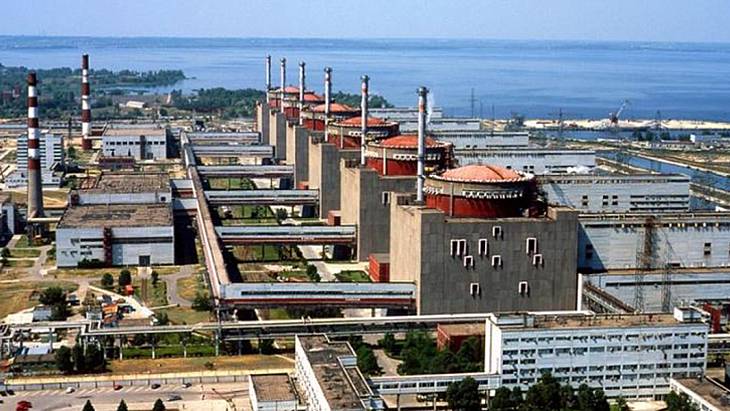
Despite the headway on security, President Zelensky identified two core issues that remain unresolved: the status of occupied territories and the future of the Zaporizhzhia Nuclear Power Plant. The plant, Europe's largest, is located in Russian-controlled territory in southeastern Ukraine and represents a significant security and environmental concern. Its disposition is a critical component of any sustainable peace agreement.
The Donbas Dilemma
The most contentious unresolved matter is the future of the Donbas region, comprising Donetsk and Luhansk. Moscow currently controls approximately 75% of Donetsk and 99% of Luhansk. Russia has consistently stated its objective is to seize full control of these regions, a position from which it has shown little willingness to compromise. Following the talks, President Trump acknowledged that a deal on Donbas remained "unresolved, but it's getting a lot closer."
The positions of the involved parties reveal the depth of the stalemate. The Kremlin has reiterated that Ukraine should withdraw its troops from the parts of Donbas still under Kyiv's control. Ukraine, conversely, has proposed that the area could become a free economic zone policed by its own forces. Zelensky has stressed that any final decision on the territory's status should involve the Ukrainian people, potentially through a referendum, which would require a 60-day ceasefire to organize—a condition Russia does not support.
Regional and International Reactions
The Florida talks have prompted responses from key European allies. European Commission President Ursula von der Leyen, in a post-meeting call, hailed "good progress" while reinforcing the necessity for "ironclad security guarantees" for Ukraine. French President Emmanuel Macron announced that Kyiv's allies would convene in Paris the following month to specifically discuss these security assurances, indicating a coordinated Western effort is underway.
From Moscow, initial reactions have been cautiously aligned with Trump's optimistic tone. A Kremlin spokesman agreed with the US president's assessment that peace is closer, as reported by the Russian state-owned news agency Tass. However, this public stance contrasts with Russia's continued rejection of key parts of the peace plan, including the proposed temporary ceasefire to facilitate a Ukrainian referendum.

Conclusion: A Path Forward Amid Persistent Challenges
The Mar-a-Lago meeting between Trump and Zelensky has undeniably moved the needle on one of the war's most complex diplomatic fronts: long-term security for Ukraine. The proposal of a 15-year US guarantee marks a substantive development. However, the celebratory rhetoric of a "great" meeting belies the immense work that remains. The territorial integrity of Ukraine, particularly the fate of Donbas and the security of the Zaporizhzhia plant, continues to be the most significant obstacle to a comprehensive peace. With Russia maintaining its maximalist positions on territory and rejecting ceasefire conditions, and Ukraine insisting on democratic consultation over its own lands, the final 10% of the journey to an agreement—as Zelensky has framed it—may prove the most difficult to navigate. The proposed follow-up meetings in Washington and Paris will be critical tests of whether this diplomatic momentum can be converted into a durable and just resolution.