Read on PBS News
Analyzing Trump's Second Term: A Year of Rupture and the Search for Repair
The first year of Donald Trump's return to the White House has been marked by profound institutional change and aggressive executive action, prompting deep reflection on the state of American democracy. New York Times columnist David Brooks and Boston Globe analyst Kimberly Atkins Stohr offer contrasting yet complementary perspectives on this consequential period. Brooks frames the moment as a global phenomenon of rupture driven by a failing meritocratic system, while Atkins Stohr highlights specific erosions of the rule of law and the rise of white Christian nationalism. Their analysis reveals a nation grappling with both the immediate impacts of policy shifts and the deeper societal fractures that enabled this political transformation.
The first year of Donald Trump's second presidency has unfolded as a period of significant political transformation, marked by aggressive executive action and profound institutional change. As analyzed by commentators David Brooks of The New York Times and Kimberly Atkins Stohr of The Boston Globe, this era represents both a dramatic shift in governance and a reflection of deeper societal fractures. Their examination, featured on PBS NewsHour, provides crucial insights into what distinguishes Trump's return from his first term and what it signals for the future of American democracy.
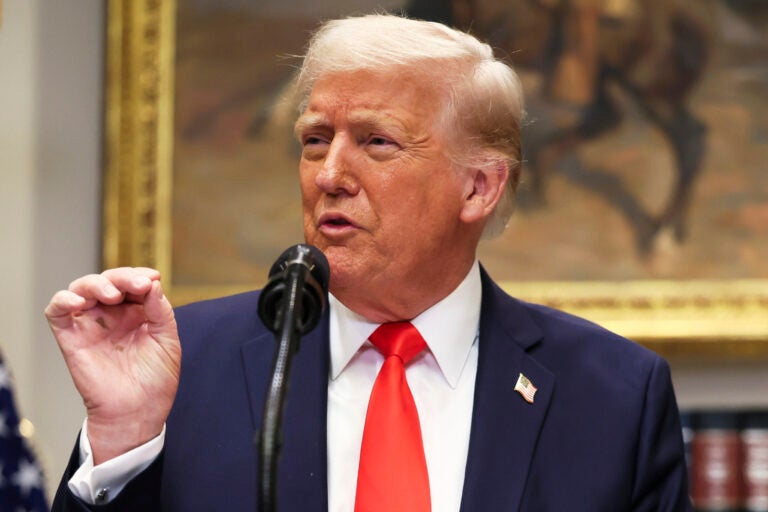
The Dual Narrative of Institutional Decline and Societal Fracture
David Brooks presents two interconnected stories to explain the current political landscape. The first concerns the systematic hollowing out of post-1945 American institutions. Brooks argues that foundational structures like NATO, the Department of Justice, and USAID have been significantly weakened over the past year, leading to a "great decline in state capacity." This erosion, he suggests, raises alarming questions about American decline relative to global competitors like China, which he describes as "investing in science" and "kicking our butts."
The second narrative addresses the establishment's disconnection from the American working class. Brooks points to trade, immigration, and cultural policies that have alienated many workers, creating a sense of invisibility among conservative and working-class voices within media and academic institutions. This perceived marginalization, he contends, created the political vacuum that Trump effectively filled. "A lot of people feel, I'm invisible to these people," Brooks states. "And so we get Trump." He emphasizes that both stories—institutional decline and societal alienation—are simultaneously true, creating a complex crisis that demands honest self-reflection from all sectors of society.
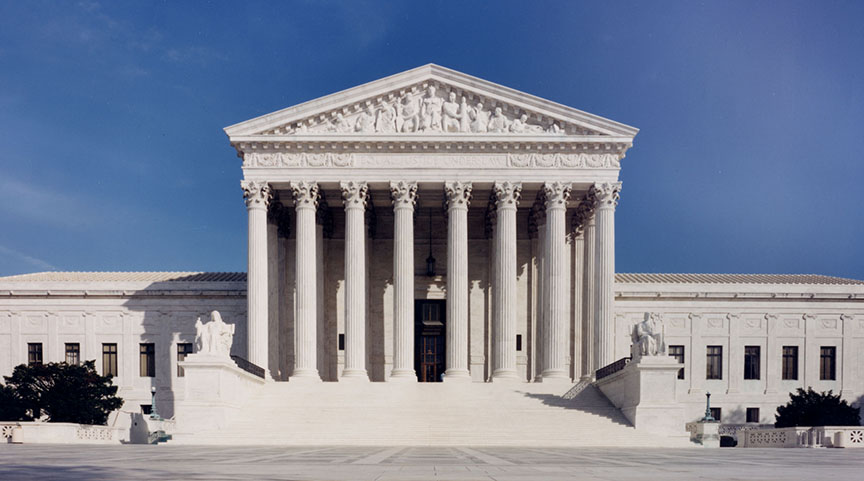
Erosion of the Rule of Law and the Rise of Identity Politics
Kimberly Atkins Stohr focuses her analysis on two alarming developments: the erosion of the rule of law and the administration's explicit identity politics. She highlights the "Trumpification of the Department of Justice" as particularly concerning, citing the pardoning of January 6 rioters alongside the weaponization of justice against political enemies. As an attorney, she notes this represents a fundamental departure from legal norms, with the administration directing attention selectively—for instance, in Trump's social media commentary on the Epstein files—while the Justice Department complies.
Atkins Stohr identifies a consistent "through line of race" connecting various policies, from immigration to federal workforce purges to attacks on universities. She describes an ideology of "white Christian nationalism" that has permeated the federal government, manifesting in preferential treatment for certain immigrant groups while denigrating others. This represents, in her view, a dramatic shift in how government relates to different demographic groups within the country.
A Global Phenomenon Rooted in Economic and Social Dislocation
Both analysts contextualize Trump's rise within broader global trends. Brooks identifies this as a "global phenomenon" evident in figures like Nigel Farage in Britain, right-wing movements in France and Germany, and political shifts across South America and Asia. He attributes this trend to the disruptions of the information age, which have created what he calls "an inherited meritocratic system, an inherited caste system."
Brooks presents stark statistics illustrating this divide: people with high school degrees die approximately ten years sooner than college graduates, face significantly higher rates of opioid deaths, lower marriage rates, higher rates of children born out of wedlock, and greater social isolation. "If you tell successive generations that your kids are not going to have an equal shot," Brooks argues, "they're going to flip the table." He compares the current moment to historical periods of rupture—the 1830s, 1890s, 1860s, and 1960s—suggesting that societies progress through cycles of breakdown and rebuilding.

The Role of Institutions and the Challenge of Resistance
A critical theme in the discussion is the role—and failure—of institutions to provide effective checks and balances. Atkins Stohr specifically criticizes the Supreme Court for its use of the "shadow docket" to allow administration policies to take effect before their constitutionality is determined. "By the time the legality or the constitutionality has decided," she notes, "the damage has already been done." This judicial acquiescence, combined with the transformation of executive agencies, has created what both analysts see as weakened institutional safeguards.
Brooks laments the absence of robust "collective civic action" in response to these developments, contrasting the current situation with historical examples like the Philippines' resistance to Ferdinand Marcos, which was led by coordinated efforts from students, transportation workers, businesses, and religious institutions. He suggests American civil society may be too fragmented and intimidated to mount effective resistance, creating a "collective action problem" where individual institutions fear retaliation if they speak out alone.
Pathways Forward: From Rupture to Repair
Despite the grim assessment, both analysts identify potential pathways toward repair. Brooks looks to historical precedent, noting that the crisis of the 1890s sparked a "civic renaissance" that produced enduring institutions like the Boys and Girls Clubs, NAACP, labor unions, and the Sierra Club. He believes similar cultural and civic renewal must precede political reform, expressing confidence that "America will go through this horrible period of rupture and something will come out the other end if we're creative enough to adjust."
Atkins Stohr emphasizes the responsibility of political institutions, particularly the Democratic Party in upcoming elections, to clearly articulate an alternative vision and resist efforts to undermine electoral integrity. She warns of "obstacles already being put up for a free and fair election" through voter list consolidation and purges, making political mobilization essential. Both agree that repair requires honest acknowledgment of complicity from various sectors of society in creating the conditions for this political moment.
The analysis of Trump's second term thus reveals a nation at a crossroads, experiencing both immediate policy transformations and confronting deeper structural and social challenges. The conversation between Brooks and Atkins Stohr underscores that understanding this period requires examining both the actions of the administration and the societal conditions that made its return possible, while maintaining hope that the American tradition of renewal through crisis will ultimately prevail.