Read on the Guardian
UK-Registered Firms Linked to Recruitment of Colombian Mercenaries for Sudan's RSF
An exclusive Guardian investigation reveals a transnational network of UK-registered companies involved in recruiting hundreds of former Colombian soldiers to fight alongside Sudan's Rapid Support Forces (RSF), a paramilitary group accused of war crimes and genocide. The investigation traces connections between these mercenary operations and addresses in London, including a flat in Tottenham and luxury hotel postcodes in central London. Key individuals behind these companies were recently sanctioned by the US Treasury for their roles in fueling Sudan's civil war, raising serious questions about UK corporate oversight and the global mercenary trade.
The shadowy world of international mercenary recruitment has found an unlikely operational base in the heart of London, according to a groundbreaking investigation. UK-registered companies, established by individuals now sanctioned by the United States, have been instrumental in recruiting hundreds of former Colombian military personnel to fight alongside Sudan's Rapid Support Forces (RSF). This paramilitary group stands accused of systematic war crimes, ethnic slaughter, and genocide in a conflict that has claimed tens of thousands of lives. The revelation exposes critical gaps in corporate oversight and highlights how seemingly legitimate business structures can facilitate atrocities thousands of miles away.

The London Connection: From Tottenham Flats to Luxury Hotels
At the center of this network is a cramped, second-floor apartment in a nondescript block of flats off Creighton Road in Tottenham, north London. UK government records show this address is tied to Zeuz Global, a company implicated in the mass recruitment of mercenaries for the RSF. The company was established by two Colombian nationals who were sanctioned by the US Treasury on December 8, 2025, for their roles in hiring Colombian fighters. Both individuals are listed in UK Companies House records as residents of Britain, raising immediate questions about how individuals openly censured by a major ally were able to operate a company within the UK.
The corporate maneuvering took a bizarre turn following the US sanctions announcement. The day after the sanctions were imposed, Zeuz Global abruptly changed its registered address. Its new postcode corresponds to One Aldwych, a five-star hotel in London's Covent Garden. However, the address's first line confusingly references "4dd Aldwych," which matches the postcode of the nearby Waldorf Hilton hotel. Representatives from both luxury establishments have stated they have no connection to Zeuz Global and no knowledge of why the firm used their addresses, suggesting the use of these locations may be an attempt to obscure the company's true operations.

The Sanctioned Network and Its Impact on Sudan's War
According to the US Treasury, the key figure orchestrating the Colombian recruitment network is Álvaro Andrés Quijano Becerra, a dual Colombian-Italian national and retired Colombian military officer based in the United Arab Emirates (UAE). He is accused of playing a central role in recruiting former soldiers through a Bogotá-based employment agency he co-founded. His wife, Claudia Viviana Oliveros Forero, was also sanctioned for owning and managing the agency. Another individual, Mateo Andrés Duque Botero, a dual Colombian-Spanish national, was sanctioned for managing a business that handled funds and payroll for the network, with wire transfers totalling millions of dollars.
These individuals are directly linked to the UK companies. On April 8, 2024, Duque and Oliveros registered a company in north London called ODP8 Ltd, later renamed Zeuz Global, with £10,000 in capital. Oliveros, 52, lists Britain as her country of residence, and Duque was appointed as a director in July 2025, also described as a UK resident. The recruitment of these Colombian mercenaries has had a devastating impact on Sudan's conflict. They were directly involved in the RSF's seizure of El Fasher in late October 2025, an event that triggered a killing frenzy estimated to have cost at least 60,000 lives. The mercenaries have served as snipers, infantrymen, drone pilots, and instructors, providing the hi-tech warfare capabilities that proved instrumental in the paramilitary group's advances.
Systemic Failures in UK Corporate Oversight
Experts have expressed grave concern over the ease with which this network established a UK corporate presence. Mike Lewis, a researcher and former member of the UN panel of experts on Sudan, stated, "It is of major concern that the key individuals the US government claims are directing this mercenary supply have been able to set up a UK company operating from a flat in north London." He further criticized the UK's corporate registration system, noting, "Having a UK company like this is a passport for criminals to do business with legitimate counterparts. It's still harder to join a gym in most cases than to set up a UK company."
This case is not isolated. Lewis pointed to a "long, well publicised history of UK shell companies being used to broker weapons and military assistance to embargoed actors" in conflicts from South Sudan and Libya to North Korea and even ISIS. When contacted about Zeuz Global's activities and the residency claims of sanctioned individuals, Companies House did not respond. The UK government has pointed to recent reforms, including the introduction of "mandatory identity verification" for company directors, as measures to improve transparency. A government source stated these new powers for Companies House have made progress in tackling false information on the register.
International Repercussions and Denials
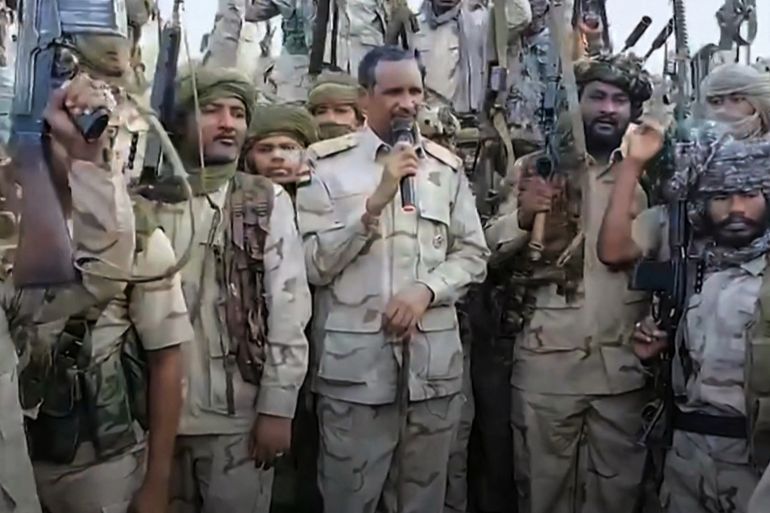
The involvement of Colombian nationals in Sudan's war first came to light in 2024 through an investigation by Bogotá-based outlet La Silla Vacía, which revealed over 300 former soldiers had been contracted. This prompted an apology from Colombia's foreign ministry. The United Arab Emirates has also been repeatedly linked to arming the RSF and, according to a report by the investigative organisation The Sentry, to business people supplying Colombian mercenaries. The UAE has consistently denied these allegations.
The British government has condemned the RSF's actions. Foreign Secretary Yvette Cooper has denounced the group for "systematic killings, torture and sexual violence" following the capture of El Fasher. A UK government spokesperson stated, "The UK is calling for an immediate end to atrocities, the protection of civilians, and the removal of barriers to humanitarian access by all parties to the conflict," adding that the UK recently sanctioned RSF commanders for atrocities in El Fasher.
Conclusion: A Call for Accountability and Reform
The trail from a Tottenham flat to the battlefields of Sudan exposes a dangerous nexus between corporate anonymity and modern conflict. The use of UK-registered companies to facilitate a mercenary pipeline for a group accused of genocide represents a profound failure of due diligence and international responsibility. While the UK government cites new verification powers, this case demonstrates that reactive measures are insufficient. Preventing the abuse of the UK's corporate landscape for such deadly purposes requires proactive, rigorous checks and international cooperation to track and dismantle these networks before they contribute to further atrocities. The lives of thousands in Sudan depend on closing these loopholes.