Read on Global News
Russian General Fanil Sarvarov Killed in Moscow Car Bombing
Lt. Gen. Fanil Sarvarov, a senior Russian military official, was killed by a car bomb in Moscow on December 22, 2025. As head of the Operational Training Directorate of the Russian Armed Forces' General Staff, his death marks the third assassination of a high-ranking Russian officer within a year. Russian investigators have indicated that Ukrainian intelligence services may be responsible for the attack, continuing a pattern of targeted killings linked to the ongoing conflict in Ukraine. This incident underscores the escalating shadow war being waged on Russian soil.
The assassination of a senior Russian military commander in the heart of Moscow has sent shockwaves through the nation's security apparatus. On Monday, December 22, 2025, Lt. Gen. Fanil Sarvarov, head of the Operational Training Directorate of the Russian Armed Forces' General Staff, was killed by an explosive device placed under his car. This brazen attack, occurring in the capital city, represents a significant escalation in the covert warfare that has paralleled the open conflict in Ukraine. The killing marks the third such assassination of a high-ranking Russian general within a single year, raising serious questions about internal security and the reach of foreign intelligence operations.
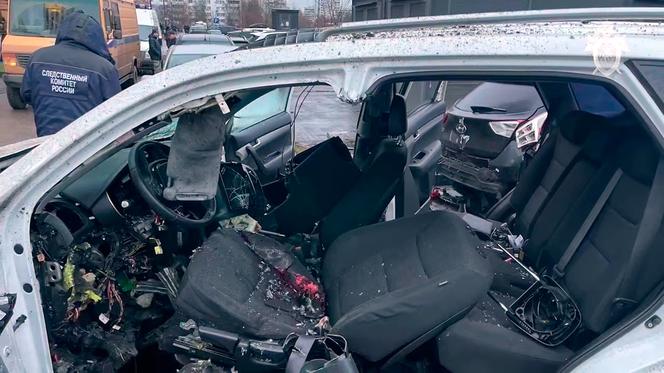
The Attack and Immediate Aftermath
According to official statements from Russia's Investigative Committee, the nation's top criminal investigation agency, Lt. Gen. Sarvarov succumbed to injuries sustained in the explosion. Spokesperson Svetlana Petrenko confirmed the general's death and outlined the ongoing investigation. "Investigators are pursuing numerous lines of inquiry regarding the murder. One of these is that the crime was orchestrated by Ukrainian intelligence services," Petrenko stated. The attack was reportedly carried out using a bomb planted beneath Sarvarov's vehicle, a method that has been employed in previous assassinations of Russian officials.
The Kremlin confirmed that President Vladimir Putin was immediately informed of the killing. The Russian Defense Ministry provided additional context on Sarvarov's military career, noting his previous combat experience in conflicts in Chechnya and Syria. This background highlights his status as a seasoned and high-value target within the Russian military hierarchy. The swift attribution of blame to Ukrainian services by investigators, even while stating that multiple lines of inquiry are open, follows a familiar pattern seen in similar incidents over the past several years.

A Pattern of Targeted Assassinations
Sarvarov's death is not an isolated event but part of a concerning trend for Russian authorities. Since Moscow's full-scale invasion of Ukraine began in February 2022, several assassinations and attempted assassinations of military officers, propagandists, and public figures have occurred on Russian soil. Ukrainian intelligence has claimed responsibility for some of these operations, while remaining silent on others, including the attack on Sarvarov at the time of reporting.
Recent Precedents
This incident echoes two other high-profile killings from the preceding year. In late 2024, Lt. Gen. Igor Kirillov, the chief of the Russian military's nuclear, biological and chemical protection forces, was killed by a bomb hidden on an electric scooter outside his apartment building. Ukraine's Security Service (SBU) publicly claimed responsibility for that attack. An Uzbek national was quickly arrested and charged with carrying out the killing on behalf of Ukrainian intelligence. President Putin himself described Kirillov's assassination as a "major blunder" by Russia's security agencies.
In April 2025, another senior officer, Lt. Gen. Yaroslav Moskalik, a deputy head of the main operational department in the General Staff, was killed by a car bomb near his apartment building just outside Moscow. A suspect was also swiftly apprehended in that case. Days after Moskalik's death, Ukrainian President Volodymyr Zelenskyy made cryptic remarks about receiving reports on the "liquidation" of top Russian military figures, stating that "justice inevitably comes," though he did not mention Moskalik by name.

Implications and Analysis
The repeated success of these attacks deep within Russia points to significant vulnerabilities in the state's security infrastructure. The ability of operatives to target high-profile individuals in or near Moscow challenges the narrative of domestic safety and control. For Ukraine, these operations serve as both tactical victories, removing experienced commanders from the battlefield, and psychological warfare, demonstrating reach and capability directly to the Russian leadership and public.
The method—using improvised explosive devices (IEDs) on personal vehicles—suggests careful planning, surveillance, and potentially insider information regarding the targets' routines. The fact that these attacks continue to occur, despite heightened security concerns and previous incidents, indicates either a formidable capability on the part of Ukrainian intelligence or the involvement of internal dissident networks, or a combination of both.
As the conflict in Ukraine approaches its fourth year, the war has clearly expanded beyond the front lines. A shadow war of intelligence, sabotage, and assassination is being waged with increasing audacity. The death of Lt. Gen. Fanil Sarvarov is a stark reminder that in modern geopolitical conflicts, the battlefield is not confined to trenches and cities under artillery fire, but extends to the quiet streets of capital cities, where a parked car can become a weapon of war.