Rethinking Talent Development: Why Variety, Not Early Specialization, Creates World-Class Performers
A groundbreaking international review analyzing nearly 35,000 elite achievers across science, music, chess, and sports has overturned conventional wisdom about talent development. The research reveals that early stars rarely become adult superstars, and most world-class performers developed gradually while exploring multiple fields before specializing. This article examines the key findings that challenge traditional gifted education models and offers insights into how societies can better nurture future high achievers through diverse experiences rather than narrow focus.
For decades, societies have operated under a fundamental assumption about talent development: identify gifted children early, focus their efforts intensely on a single discipline, and through years of specialized training, they will become world-class performers. This model has shaped gifted education programs, youth sports academies, and music conservatories worldwide. However, a major international review published in the journal Science has fundamentally challenged this paradigm. By analyzing the developmental histories of nearly 35,000 elite achievers, researchers from Rheinland-Pfälzische Technische Universität Kaiserslautern-Landau and collaborating institutions have revealed a different path to excellence—one built on variety, gradual growth, and exploration.

The Flawed Assumptions of Traditional Talent Development
Traditional approaches to gifted education and talent development have rested on several core assumptions that the new research calls into question. As detailed in the ScienceDaily report, the conventional model posited that outstanding achievement depended on strong early performance combined with specific innate abilities like intelligence or musical talent. These traits were believed to require years of intense, discipline-focused training to produce elite results. Consequently, many talent programs have focused on identifying top young performers early and pushing them toward rapid specialization in their chosen field.
According to lead researcher Arne Güllich, professor of sports science at RPTU University Kaiserslautern-Landau, this approach may not be the most effective way to nurture future high achievers. "Traditional research into giftedness and expertise did not sufficiently consider the question of how world-class performers at peak performance age developed in their early years," Güllich explains. The research team, which included experts from the University of Innsbruck, Michigan State University, and Purdue University, sought to address this gap by examining how elite performers actually progressed over time rather than relying on assumptions based on younger or sub-elite samples.
Key Findings from the 35,000-Performer Analysis
The researchers conducted a comprehensive reexamination of large datasets from previous studies, analyzing the developmental histories of 34,839 top-level performers from around the world. This group included Nobel Prize winners in the sciences, Olympic medalists, elite chess players, and leading classical music composers. This cross-disciplinary approach revealed consistent patterns that contradict traditional talent development models.

First, individuals who stand out as the best at a young age are usually not the same people who become the best later in life. This finding directly challenges the practice of selecting future champions based on early childhood performance. Second, those who eventually reached the highest levels tended to improve gradually during their early years and were not top performers within their age group. Third, and perhaps most significantly, future world-class achievers typically did not focus on a single discipline early on. Instead, they explored a range of activities, such as different academic subjects, musical genres, sports, or professions.
How Variety Builds Stronger Performers
The research team proposed three explanatory hypotheses to understand why diverse experiences appear to foster higher achievement. The search-and-match hypothesis suggests that exposure to multiple disciplines increases the likelihood of eventually finding the best personal fit between an individual's unique capabilities and a particular field. The enhanced-learning-capital hypothesis proposes that learning in diverse areas strengthens overall learning capacity, making it easier to continue improving later at the highest level within a chosen field. The limited-risks hypothesis argues that engaging in multiple disciplines reduces the chance of setbacks such as burnout, unhealthy work-rest imbalances, loss of motivation, or physical injury.
Arne Güllich summarizes the combined effect of these factors: "Those who find an optimal discipline for themselves, develop enhanced potential for long-term learning, and have reduced risks of career-hampering factors, have improved chances of developing world-class performance." This framework suggests that the benefits of diverse experiences extend beyond simple exposure—they fundamentally enhance an individual's capacity for sustained excellence.
Practical Implications for Talent Development
Based on these findings, Güllich offers clear guidance on how young talent should be supported. The evidence suggests avoiding early specialization in a single field. Instead, young people should be encouraged and given opportunities to explore several areas of interest and receive support in two or three disciplines. These areas do not need to be closely related. Combinations like language and mathematics, or geography and philosophy, can be equally valuable in building the cognitive flexibility and learning capacity that supports later excellence.
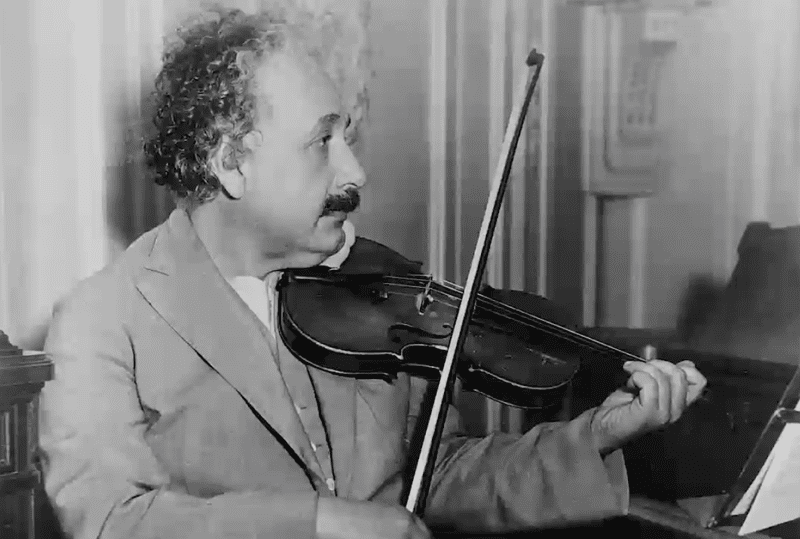
The researchers point to Albert Einstein as a famous example of this principle in action—one of the most important physicists, who was also deeply engaged with music and played the violin from an early age. This interdisciplinary engagement may have contributed to the cognitive flexibility that characterized his revolutionary scientific thinking.
Conclusion: Toward Evidence-Based Talent Development
The implications of this research extend beyond individual development to broader educational and policy considerations. The authors argue that these insights should inform changes in how talent development programs are designed. Policymakers and program leaders can move toward approaches grounded in evidence rather than tradition. As Güllich concludes, "This may enhance opportunities for the development of world-class performers—in science, sports, music, and other fields."
This paradigm shift from early specialization to exploratory development represents a fundamental rethinking of how societies can best nurture exceptional talent. By creating environments that encourage breadth of experience, gradual improvement, and interdisciplinary exploration, we may not only develop more world-class performers but also create more resilient, adaptable individuals capable of sustained excellence across their lifetimes. The message from this comprehensive research is clear: talent grows through variety, not narrow focus, and our approaches to nurturing gifted individuals must evolve accordingly.