Read on nature.com
New Research Balances the Global Carbon Budget, Boosting Climate Monitoring Confidence
A landmark study published in Nature has successfully reconciled long-standing discrepancies in the global carbon budget, providing more accurate estimates of anthropogenic CO2 sources and sinks. The research, led by Pierre Friedlingstein and colleagues, refines calculations of how much carbon dioxide from human activities is absorbed by oceans and land versus how much remains in the atmosphere. This breakthrough offers a firmer scientific foundation for tracking global climate action and understanding Earth's carbon cycle dynamics with greater precision.
For decades, a persistent gap has troubled climate scientists: the estimated sources of human-made carbon dioxide and the known sinks that absorb it did not perfectly align with the observed rise in atmospheric CO2. This discrepancy, known as the carbon budget imbalance, cast uncertainty on our precise understanding of the planet's carbon cycle. However, a pivotal re-evaluation published in Nature has now reconciled these figures. The research, detailed by Friedlingstein et al., provides updated and more precise estimates of worldwide anthropogenic CO2 sources and sinks, effectively balancing the global carbon budget and significantly enhancing confidence in our ability to monitor climate action.

The Challenge of the Carbon Budget Imbalance
Anthropogenic carbon dioxide emissions, primarily from burning fossil fuels and deforestation, are the principal driver of global climate change. A critical mitigating factor is that only about half of these emissions accumulate in the atmosphere; the other half is absorbed by natural sinks—the world's oceans and terrestrial biosphere, such as forests and soils. For many years, however, the mean estimates for these global sources and sinks did not match the precisely measured rate of increase in atmospheric CO2 concentrations. This mismatch created uncertainty and limited the robustness of using the carbon budget approach to track trends and evaluate the effectiveness of climate policies over time.
Reconciling the Numbers: Key Adjustments in the New Analysis
The recent study makes several crucial adjustments to previous calculations, which together bring the budget into balance. The researchers incorporated updated datasets and refined methodologies for estimating both emissions and absorptions. A significant focus was on improving the quantification of the ocean carbon sink, which has been subject to measurement uncertainties. By synthesizing the latest observations and model outputs, the team produced a consolidated and more accurate carbon budget. As reported in the Nature News & Views article, this work "increas[es] confidence that this approach can be used to track trends in Earth’s carbon cycle." The balanced budget means scientists can now more reliably attribute changes in atmospheric CO2 to specific human activities and natural processes.
Implications for Climate Policy and Action
The practical implications of this scientific advancement are substantial. A consolidated and accurate global carbon budget is an essential tool for the Paris Agreement's global stocktake process, which assesses collective progress toward climate goals. Policymakers and international bodies rely on this data to understand whether emission reductions are being offset by natural sinks or if sinks themselves are weakening due to climate change. This refined accounting provides a firmer basis for setting and adjusting national emissions targets (NDCs). It also enhances the credibility of corporate carbon neutrality claims and carbon offset projects, which depend on accurate sink measurements.
The Path Forward: Monitoring a Dynamic System
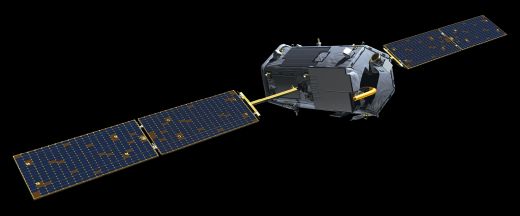
While this research marks a significant step forward, monitoring the carbon cycle remains an ongoing challenge. The sinks are not static; their capacity to absorb CO2 can change with ocean temperatures, acidification, deforestation rates, and the health of ecosystems. Continued investment in global observation networks—including satellites, ocean buoys, and ground-based stations—is critical to maintain this newfound balance in the data. The study underscores that robust science is the bedrock of effective climate action. With a more reliable carbon budget, the world is better equipped to track the impact of its efforts to mitigate climate change and understand the evolving response of the Earth system.