Read on nature.com
Glimmers of Hope: New Frontiers in the Fight Against Pancreatic Cancer
Pancreatic cancer, long associated with a dire prognosis, is showing signs of yielding to scientific progress. While it remains a leading cause of cancer deaths, recent advancements in early detection, therapeutic innovation, and disease modeling are beginning to shift the landscape. This article explores the promising research efforts—from non-invasive breath tests and personalized vaccines to sophisticated organoid models—that are offering new hope and improving survival rates for this challenging disease.
For decades, a diagnosis of pancreatic cancer has carried a devastatingly poor prognosis, making it one of the most feared forms of cancer. Despite being only the tenth most commonly diagnosed cancer in the United States, it ranks as the third-leading cause of cancer-related deaths. The outlook has historically been grim, largely because the disease is often detected at an advanced stage when treatment options are limited. However, as detailed in a recent Nature Outlook, researchers are now making significant strides that are beginning to change the narrative, offering tangible hope for better outcomes.

Improving Survival Rates and the Diagnostic Challenge
The statistics underscore the severity of the challenge. The overall five-year survival rate for pancreatic cancer currently stands at 13%, a figure that, while still low, represents a notable increase from just 7% a decade ago. This progress, however incremental, signals that the relentless efforts of the scientific community are starting to bear fruit. The central obstacle remains late detection; the cancer's location and subtle early symptoms mean it frequently evades diagnosis until it has spread. Consequently, a major thrust of contemporary research is focused on shifting this paradigm by finding ways to identify the disease earlier, when it is more likely to be treatable.
Pioneering Approaches to Early Detection
Innovative, non-invasive methods for early detection are at the forefront of current research. Scientists are developing simple blood tests designed to spot specific proteins characteristic of pancreatic cancer. Perhaps even more intriguing are efforts to create breathalyzer-style tests that could analyze a person's breath for volatile organic compounds linked to the disease. These approaches aim to provide screening tools that are less invasive than imaging scans, potentially allowing for earlier intervention in at-risk populations.

Expanding the Therapeutic Arsenal
Beyond detection, researchers are working to expand the limited pool of effective therapies. One of the most promising avenues is the development of personalized therapeutic vaccines. These vaccines are designed to train a patient's own immune system to recognize and attack the unique proteins driving their specific cancer. This represents a move towards highly tailored, precision medicine for a disease that has been notoriously resistant to conventional treatments.
Unraveling the Disease's Survival Strategies
A deeper biological understanding is also fueling progress. In recent years, scientists have begun to decipher how pancreatic tumors manipulate their environment to thrive. A key discovery involves the cancer's relationship with the nervous system. Tumors appear to harness nerve cells to help them survive in low-oxygen conditions and to suppress the local immune response, effectively creating a protective shield. By targeting these interactions, researchers hope to develop new drugs that can disrupt the cancer's survival mechanisms.
The Power of Advanced Disease Modeling
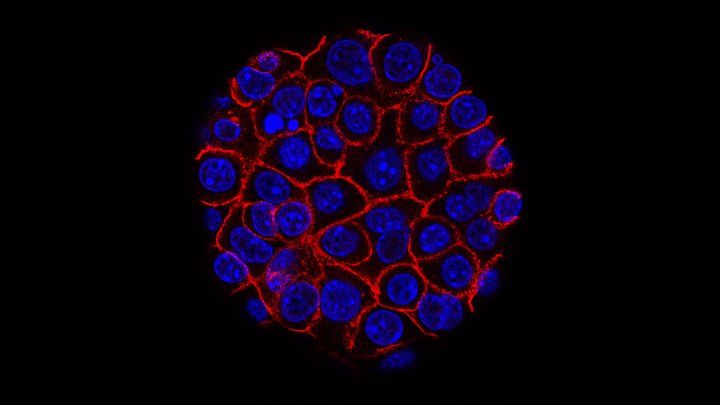
Underpinning all these advances are revolutionary models of the disease. Pancreatic organoids—miniature, three-dimensional versions of the organ grown in a lab dish—are proving invaluable. These models allow scientists to study the fundamental biology of pancreatic cancer and test new drugs in a system that closely mimics human tissue. Furthermore, researchers can now engineer organoids to develop tumors that genetically match those of individual patients, creating a powerful platform for predicting which therapies might be most effective in a personalized treatment plan.
A Future of Cautious Optimism
The fight against pancreatic cancer is being waged on multiple fronts: through earlier detection, smarter therapies, and a foundational understanding of its biology. While the survival rate of 13% is a stark reminder of the work still to be done, the upward trend and the breadth of innovative research provide legitimate grounds for hope. The convergence of efforts in early detection via blood and breath tests, immune-boosting vaccines, nerve-targeting drugs, and sophisticated organoid models paints a picture of a future where pancreatic cancer may no longer be an automatic death sentence, but a manageable, and perhaps even curable, disease.