Read on Global News
Family of Colombian Fisherman Killed in U.S. Strike Files Human Rights Complaint
The family of Alejandro Carranza, a Colombian fisherman killed when the U.S. military bombed his boat in the Caribbean, has filed a formal complaint with the Inter-American Commission on Human Rights, alleging his death was an extrajudicial killing. The petition argues the September 15 strike violated international human rights conventions and occurred in Colombian territorial waters. This case highlights growing international scrutiny of U.S. military actions in the region under the Trump administration's anti-drug operations.
The death of a Colombian fisherman during a U.S. military operation has escalated into a significant international human rights case, raising questions about accountability, sovereignty, and the rules of engagement in counter-narcotics operations. Alejandro Carranza, a 40-year-old father of four, was killed on September 15 when his fishing vessel was struck by U.S. forces in the Caribbean Sea. His family, represented by U.S.-based human rights lawyer Daniel Kovalik, has now filed a formal petition with the Inter-American Commission on Human Rights (IACHR), alleging that Carranza's death constitutes an extrajudicial killing that violated fundamental human rights conventions.
The Incident and Immediate Aftermath
According to the petition filed with the IACHR, Alejandro Carranza was engaged in his daily fishing activities along Colombia's Caribbean coast when his boat was targeted and destroyed by U.S. military forces. The strike occurred as part of broader U.S. military operations that began in September, targeting vessels the Trump administration alleges were transporting drugs toward the United States. Colombian President Gustavo Petro immediately condemned the action, stating on social media platform X that "U.S. government officials have committed a murder and violated our sovereignty in territorial waters." President Petro further asserted that Carranza "had no ties to the drug trade and his daily activity was fishing."
The Legal Complaint and Its Implications
The formal complaint filed with the Inter-American Commission on Human Rights represents a strategic legal approach by Carranza's family and their legal representative. Daniel Kovalik explained to the Associated Press that the family chose this international human rights body because of the significant obstacles they would face in pursuing a federal case within the United States judicial system. "The U.S. does not subject itself to accountability, so we're using the avenues we have before us," Kovalik stated. He further noted that while any recommendations from the commission would not be legally binding on the United States, which does not recognize the jurisdiction of the associated international court, the family hopes that "a decision in our favour, combined with public pressure, can get us that compensation and also can end the killings in the Caribbean."
Broader Context of U.S. Military Operations
Carranza's death occurred within the context of expanded U.S. military operations in the Caribbean and eastern Pacific Ocean regions. According to reports, the U.S. military has killed more than 80 people since September through strikes on vessels allegedly involved in drug trafficking. The Trump administration has maintained that these operations target "foreign terrorists operating drug smuggling vessels," though it has not released detailed information about those killed in the strikes. The operations have drawn increasing scrutiny following reports in the Washington Post that Defense Secretary Pete Hegseth issued a verbal order to "kill everybody" on the first boat targeted, and that an admiral approved a follow-up strike that reportedly killed two survivors of the initial attack.
Family's Situation and Seeking Justice
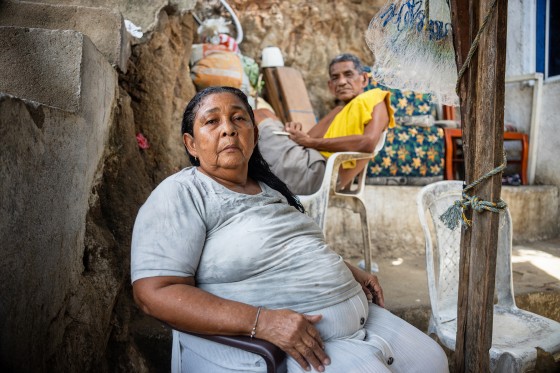
Beyond the legal dimensions, the human impact of Carranza's death is profound. As the family's primary breadwinner, his death has left his wife and four children in a precarious economic situation. The family is seeking compensation through the IACHR petition, though Kovalik acknowledges the challenges given the United States' position regarding international human rights bodies. Additionally, the family has reportedly faced security threats in Colombia, with Kovalik noting they "have received death threats from right-wing paramilitary groups in the country for denouncing the death of their loved one." The lawyer met with the Carranza family at their home in northern Colombia, where he observed firsthand the devastating impact of the incident.
International and Diplomatic Ramifications
This case occurs amid strained relations between the United States and Colombia under President Gustavo Petro's left-leaning government. Petro has been vocal in his criticism of the U.S. military operations, repeatedly characterizing the boat attacks as "murders." Interestingly, Daniel Kovalik is also representing President Petro in the United States following sanctions imposed on the Colombian leader by the Trump administration, adding another layer to the complex diplomatic dynamics. The case raises fundamental questions about sovereignty, as the strike occurred in what Colombia maintains are its territorial waters, and about the appropriate use of military force in counter-narcotics operations that result in civilian casualties.

Conclusion: A Test Case for Accountability
The petition filed on behalf of Alejandro Carranza's family represents more than a quest for individual justice; it serves as a test case for international accountability mechanisms when confronting actions by powerful nations. While the legal avenues may be limited given the United States' position regarding international human rights courts, the case has already succeeded in drawing international attention to the human cost of expanded military operations in the Caribbean. As the IACHR considers the petition, the world watches to see how international human rights bodies respond when allegations involve a permanent member of the United Nations Security Council. The outcome may influence not only potential compensation for Carranza's family but also future approaches to holding nations accountable for military actions that result in civilian deaths in international waters or foreign territories.