Unearthing Early Rome: The Monumental Basin of Gabii and Its Architectural Legacy
Archaeologists from the University of Missouri have uncovered a massive stone-lined basin at the ancient Roman city of Gabii, dating to around 250 B.C. This monumental structure, cut directly into bedrock and centrally located, offers an unprecedented glimpse into early Roman urban planning and civic architecture. The remarkable preservation of Gabii, abandoned by 50 B.C., provides a clearer window into the development of public spaces than the heavily overbuilt city of Rome itself. This discovery reveals how early Romans adapted Greek architectural concepts to create powerful symbols of political and social identity, centuries before the iconic Roman Forum reached its final form.
The discovery of a monumental stone basin at the ancient site of Gabii is reshaping our understanding of early Roman architecture and urban development. Located just 11 miles east of modern Rome, Gabii was once a powerful rival to the burgeoning city on the Tiber. Led by Professor Marcello Mogetta from the University of Missouri, an international research team has unearthed a structure that challenges previous assumptions about the scale and sophistication of Roman civic building in the mid-Republican period.
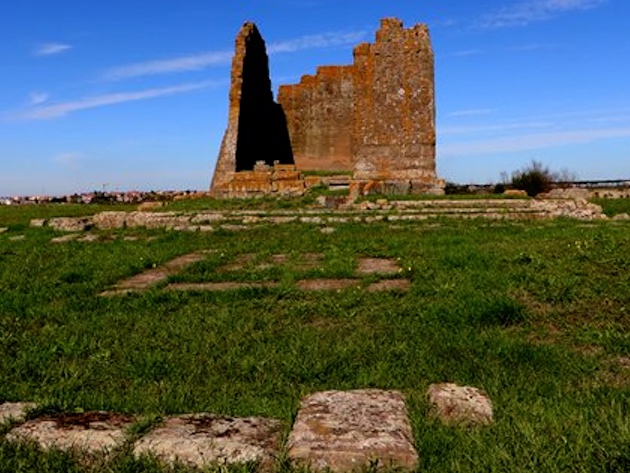
This article explores the significance of the Gabii basin, its implications for our knowledge of Roman urbanism, and how its exceptional preservation offers a unique snapshot of a formative era in Western architectural history.
The Gabii Discovery: A Monumental Civic Structure
The recently uncovered structure at Gabii is a huge stone-lined basin, with portions carved directly into the natural bedrock. Dating to approximately 250 B.C., and possibly earlier in some sections, it represents one of the earliest known examples of large-scale Roman architecture outside of temples and defensive walls. Its strategic placement at the city's center, near the main crossroads, suggests it functioned as a central feature of Gabii's public forum—the heart of civic, political, and social life in Roman towns.
Professor Mogetta emphasizes that monumental construction in this period served dual purposes. Beyond any practical function related to water management or public utility, such structures were potent forms of political messaging. The scale and central location of the basin communicated authority, communal identity, and civic pride. Since archaeologists still lack a complete understanding of what the early Roman Forum looked like before its Imperial transformations, Gabii provides an invaluable parallel. The site acts as a preserved laboratory of urban experimentation, showing how Romans were manipulating space and architecture to shape public life centuries before the Empire's grandeur.
Why Gabii's Preservation is Unparalleled
Gabii holds a unique position in Roman archaeology due to its historical trajectory. Unlike Rome, whose earliest layers were continuously built over and obscured by millennia of subsequent construction, Gabii was largely abandoned by 50 B.C. It was later reoccupied on a much smaller scale, leaving its original Republican-era layout remarkably intact beneath the surface. This abandonment, as detailed in the research findings, has frozen the city in time, offering a clearer view of early Roman urban life than is possible in the capital itself.

This exceptional preservation has allowed the Gabii Project, an international archaeological initiative now directed by Mogetta, to conduct systematic excavations. The area is designated as an archaeological park by Italy's Ministry of Culture, managed as part of the Musei e Parchi Archeologici di Praeneste e Gabii. This protected status facilitates ongoing research while aiming to preserve the site's heritage for future study and public engagement.
Greek Influences and Early Roman Adaptation
The basin is not an isolated find but part of a larger architectural complex at Gabii. It builds upon the team's earlier discovery of the "Area F Building," a terraced structure carved into the slope of the ancient volcanic crater that formed the settlement's foundation. Together, these structures point to significant Greek inspiration in early Roman architecture. Greek cities were renowned for their engineered civic spaces—paved plazas, dramatic terraces, and grand staircases that served as stages for political life and cultural display.
Early Roman builders appear to have selectively adapted these Hellenistic concepts. They integrated the Greek emphasis on monumental public space but began infusing it with a distinct Roman sensibility towards order, utility, and political symbolism. The Gabii basin, likely a monumental pool or water feature at the city's core, exemplifies this synthesis. It demonstrates that Romans were not merely passive recipients of Greek culture but active experimenters, reshaping imported ideas to forge their own architectural identity and mechanisms of social control.
Future Research and Unanswered Questions
Supported by Italy's General Directorate of Museums, the Gabii Project plans to continue its work. Future excavations will focus on fully revealing the basin and the surrounding stone-paved area. Researchers also intend to investigate a nearby "anomaly" detected through thermal imaging, which may be a temple or another large civic building. If it is a temple, it could help explain artifacts found in the abandonment layers of the basin, such as intact vessels, lamps, perfume containers, and inscribed cups.
These objects may have been religious offerings or items deposited during a ritual closing of the pool around 50 C.E., highlighting the intertwined nature of water management, civic life, and religious practice in ancient cities. One major historical question the team hopes to address is the sequence of development: were civic spaces like forums developed before major religious buildings, or vice versa? The answer could reveal whether political or spiritual forces were more influential in shaping the earliest Roman monumental landscapes.

Conclusion: A Window into Rome's Formative Century
The monumental basin at Gabii is more than an archaeological curiosity; it is a key to understanding a critical period of Roman innovation. During the 3rd century B.C., Rome was transitioning from a regional power to a dominant force in the Mediterranean. This era required new forms of urban expression to match its growing political ambitions. The Gabii discovery shows that experimentation with large-scale, symbolic civic architecture was already underway, blending Greek inspiration with nascent Roman ideals.
By continuing to study Gabii, archaeologists like Mogetta and his team aim to reconstruct the full narrative of the city—from its rise as a rival to Rome, through its peak, to its eventual abandonment. This work not only illuminates a specific place but also enriches our broader comprehension of how Roman architecture, and the urban world it helped create, came to be. The stones of Gabii remind us that the Roman Forum's grandeur was the product of a long, innovative, and adaptive process, traces of which are still being unearthed today.