New 3D Model Reveals Decentralized Moai Production on Easter Island
A groundbreaking high-resolution 3D model of Rano Raraku quarry on Easter Island has revealed that the famous moai statues were created through decentralized family groups rather than centralized control. The research, published in PLOS One, identified 30 distinct carving zones with unique styles and multiple transport routes, challenging long-held assumptions about how large-scale monument building occurred on Rapa Nui. This discovery provides new insights into the island's social organization and cultural practices.
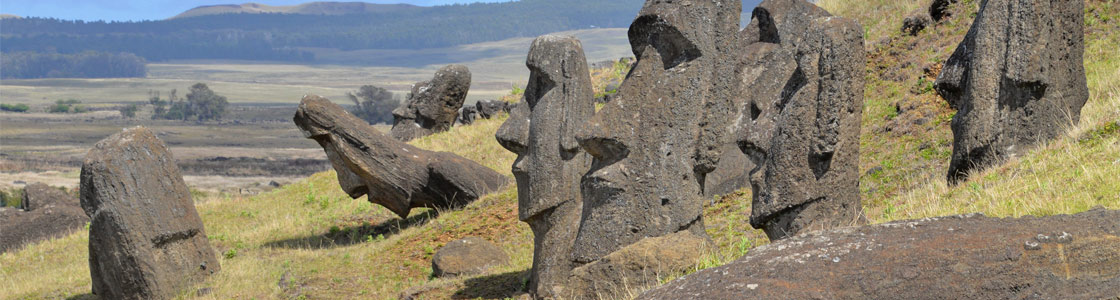
The mystery of Easter Island's iconic moai statues has taken a dramatic turn with new archaeological research that fundamentally reshapes our understanding of how these monumental figures were created. A comprehensive 3D survey of Rano Raraku, the primary moai quarry, reveals that statue production followed a decentralized pattern rather than the centralized, hierarchical system previously assumed by many researchers.
Revolutionary 3D Survey Methodology
The research team, led by Carl Philipp Lipo of Binghamton University, employed cutting-edge photogrammetry techniques to create the most detailed model of the quarry ever produced. By compiling over 11,000 photographs into a comprehensive 3D reconstruction, scientists were able to analyze hundreds of moai preserved in various stages of production with unprecedented precision. This methodological breakthrough allowed researchers to identify subtle patterns and relationships that were previously invisible to traditional archaeological approaches.
Decentralized Production Model
The 3D model revealed 30 distinct quarrying areas within Rano Raraku, each demonstrating unique carving approaches and techniques. This patchwork of work zones suggests that multiple family groups operated independently while sharing cultural knowledge and technical expertise. The evidence points toward a social organization where carving efforts were carried out by separate communities rather than through centralized oversight or a single coordinating authority.

Transportation Evidence
Additional findings from the study indicate that completed or partially shaped moai were transported away from the quarry along several different paths. This multiplicity of transport routes further supports the decentralized model of production, suggesting that each carving group had their own methods and pathways for moving the massive statues to their final locations across the island.
Challenging Traditional Assumptions
These findings fundamentally challenge long-held assumptions about how large-scale monument building projects were organized in ancient societies. The research suggests that projects of this scale do not necessarily require strict hierarchy or centralized control, as similarities between moai appear to result from shared cultural knowledge rather than coordinated joint labor. This new understanding helps resolve some of the so-called "mystery" of Rapa Nui by providing concrete evidence about the island's social organization.

Implications for Archaeological Research
The study, published in the open-access journal PLOS One, provides a valuable dataset that will support future investigations and guide cultural management at this UNESCO World Heritage site. The research methods employed in this study can also be applied to other archaeological locations worldwide, potentially revolutionizing how we understand ancient monument construction and social organization across different cultures and time periods.
This groundbreaking research not only transforms our understanding of Easter Island's famous statues but also challenges broader assumptions about how ancient societies organized large-scale construction projects. The decentralized model of moai production suggests a more complex and collaborative social structure than previously imagined, opening new avenues for understanding the cultural dynamics of Rapa Nui and similar ancient societies.