Tidal Forces Reshape White Dwarfs: New Model Explains Hot, Inflated Stellar Remnants
Recent astronomical observations have revealed a puzzling class of white dwarfs in tight binary orbits that are significantly hotter and larger than standard stellar theory predicts. A new study from Kyoto University proposes that powerful tidal forces between these dense stellar remnants generate substantial internal heat, causing them to inflate and altering their evolutionary timeline. This discovery challenges existing models and provides fresh insights into the mechanisms that may trigger dramatic cosmic events like type Ia supernovae, potentially reshaping our understanding of binary star evolution.
White dwarfs, the dense remnants of stars like our sun after they exhaust their nuclear fuel, have long been considered relatively predictable endpoints of stellar evolution. However, recent observations of white dwarfs locked in extremely rapid binary orbits have presented astronomers with a significant puzzle. These stellar remnants appear far hotter and roughly twice as large as established theory would suggest. A groundbreaking study led by researchers at Kyoto University now offers a compelling explanation: the hidden power of tidal forces. This new model not only resolves the observational discrepancies but also reshapes our understanding of how these systems evolve and potentially explode.
The Puzzle of Hot, Inflated White Dwarfs
In typical galactic scenarios, white dwarfs in binary systems are ancient and have cooled to temperatures around 4,000 degrees Kelvin. The recent discovery of short-period binaries, where two white dwarfs complete an orbit in less than an hour, defies this expectation. As detailed in the research published in The Astrophysical Journal, many of these fast-orbiting pairs exhibit surface temperatures between 10,000 and 30,000 degrees Kelvin. This anomalous heat, coupled with their unexpectedly large radii, prompted the Kyoto University team, led by Lucy Olivia McNeill, to investigate non-standard heating mechanisms.
The Role of Tidal Heating in Stellar Evolution
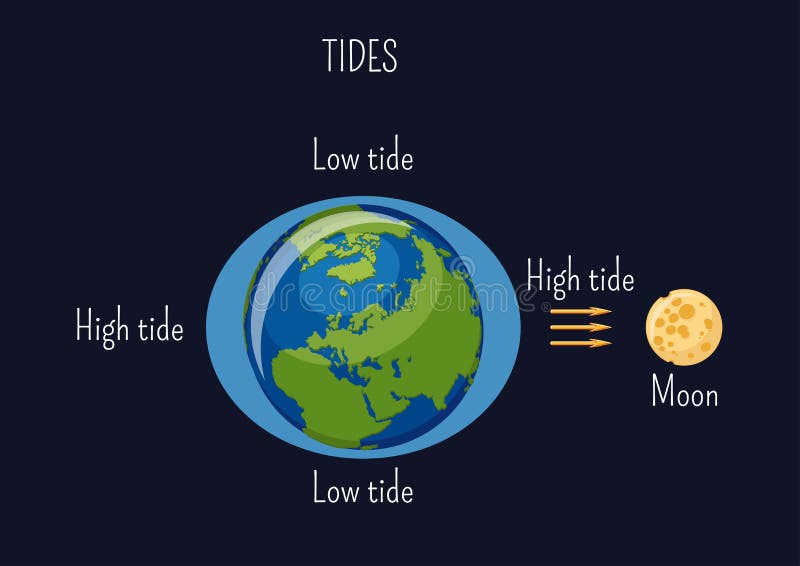
The researchers developed a theoretical model to quantify the effects of tidal forces in these compact systems. Tidal interactions occur when the gravitational pull of one body distorts its companion, generating internal friction and heat. This process, known as tidal heating, has been successfully used to explain the properties of exoplanets like Hot Jupiters. The team applied this concept to white dwarf binaries, creating a widely applicable framework to estimate both historical temperature profiles and future orbital changes. The model revealed that the gravitational influence of a smaller, denser white dwarf can significantly heat its larger, less massive companion.
Reshaping Size, Heat, and Orbital Destiny
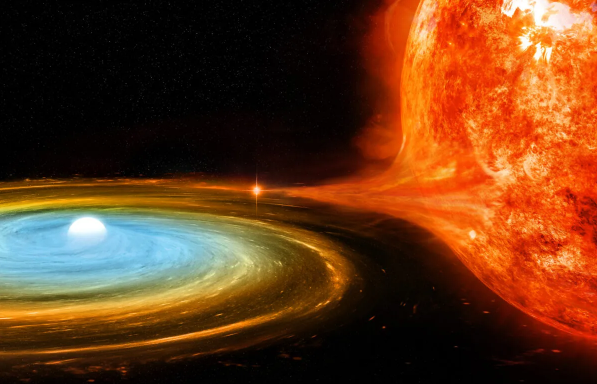
The analysis yielded transformative insights. The internal heat generated by tidal forces causes the affected white dwarf to expand, pushing its surface temperature to at least 10,000K. Crucially, this expansion means the stars are likely twice their predicted size when they begin the critical phase of mass transfer—where one star starts losing material to its companion. Consequently, these binary pairs may initiate interaction at orbital periods three times longer than previously theorized. "We expected tidal heating would increase the temperatures," McNeill noted, "but we were surprised to see how much the orbital period reduces for the oldest white dwarfs when their Roche lobes come into contact." This acceleration in evolutionary timing has profound implications.
Implications for Cosmic Explosions and Future Research
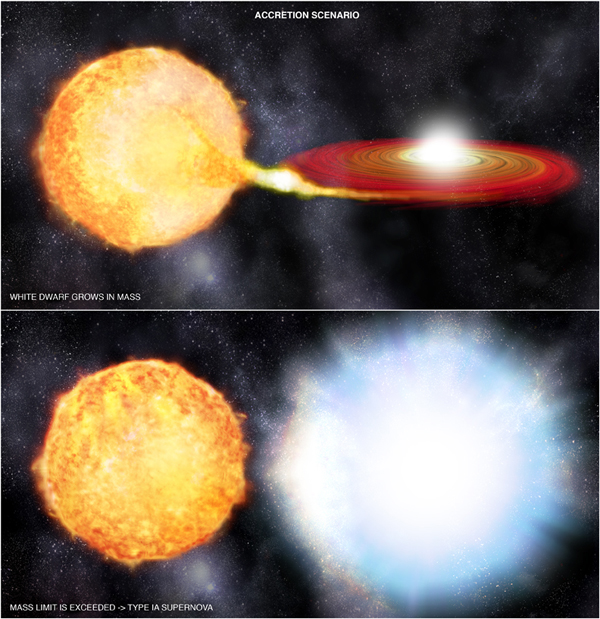
The revised timeline directly impacts our understanding of some of the universe's most energetic events. Extremely tight white dwarf binaries are prime candidates for the progenitors of type Ia supernovae—standard candles used to measure cosmic distances—and cataclysmic variables. The new model suggests these explosive interactions may occur sooner and under different conditions than once thought. Looking forward, the research team plans to apply their model specifically to carbon-oxygen white dwarf pairs. This work aims to clarify the pathways to type Ia explosions, particularly testing the viability of the double degenerate merger scenario against realistic temperature predictions. This ongoing research promises to further unravel the complex final acts of binary star systems.
In conclusion, the discovery that tidal forces can supercharge white dwarfs challenges long-held assumptions in stellar astrophysics. By explaining the anomalous heat and size of short-period binaries, the Kyoto University model provides a crucial missing piece in the puzzle of binary star evolution. It reframes our understanding of how these systems interact and offers new clues about the origins of stellar explosions that have shaped the cosmos. As astronomers continue to observe and model these fascinating systems, the role of hidden forces like tides will undoubtedly remain a central focus in the quest to understand the life cycles of stars.