Read on PBS News
Bipartisan Call for Congressional Oversight of Military Strikes in Drug Interdiction Campaign
Lawmakers from both major political parties are advocating for congressional reviews of U.S. military strikes against suspected drug-smuggling vessels in the Caribbean and eastern Pacific. This unified stance follows a Washington Post report alleging that Defense Secretary Pete Hegseth issued a verbal order for the killing of all crew members during a September 2nd attack. While the administration defends the operations as lawful, legislators express grave concerns about potential violations of the laws of armed conflict and the need for rigorous oversight to establish the facts.
In a rare display of bipartisan unity, members of Congress are calling for thorough investigations into recent U.S. military operations targeting drug trafficking in the Western Hemisphere. This development follows a controversial report by The Washington Post, which has raised serious legal and ethical questions about the conduct of these missions. The core allegation—that a follow-up strike was ordered against survivors of an initial attack—has prompted lawmakers to demand accountability and transparency from the Department of Defense.
The Allegations and Immediate Fallout
The controversy centers on a September 2nd military strike in the Caribbean Sea, part of an escalated campaign against cartels suspected of smuggling narcotics into the United States. According to a report published by The Washington Post, Defense Secretary Pete Hegseth issued a verbal order for all crew members aboard a targeted vessel to be killed, including any survivors of an initial missile strike. This alleged directive has sparked immediate concern across the political spectrum, with legislators emphasizing that attacking individuals who are no longer combatants poses a direct challenge to established international law.
Bipartisan Congressional Response
Lawmakers from both the Democratic and Republican parties have voiced support for formal congressional reviews. Their statements, made during Sunday news program appearances, highlight a shared commitment to oversight, even as some express initial skepticism about the report's veracity.
Democratic Concerns
Senator Tim Kaine (D-Va.) framed the potential severity of the allegations clearly, stating, “This rises to the level of a war crime if it’s true.” His comment underscores the profound legal implications being considered by Congress. The Democratic ranking member of the Senate Armed Services Committee, Senator Jack Reed (D-R.I.), has joined with the committee's chairman in pledging a vigorous investigation.
Republican Stance and Investigations
Republican leaders have similarly called for facts while cautioning against premature judgment. Representative Mike Turner (R-Ohio) noted that Congress lacks confirming information but acknowledged the seriousness of the claim: “Obviously, if that occurred, that would be very serious and I agree that that would be an illegal act.” He confirmed that the leaders of the Armed Services Committees in both the House and Senate have already opened investigations into the matter.
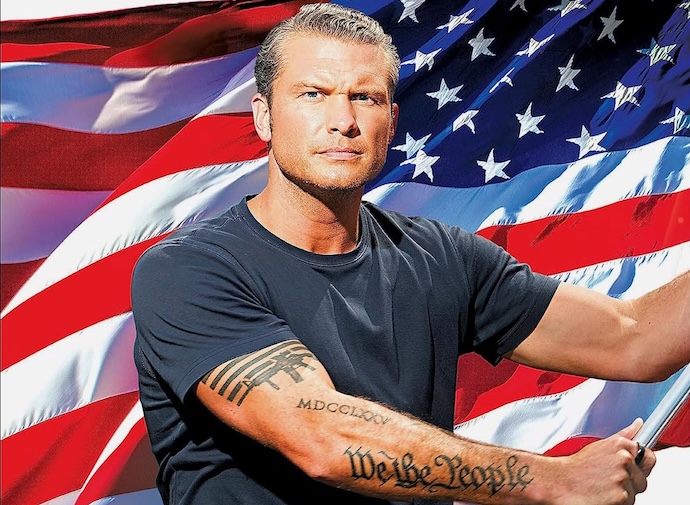
The chairmen of both armed services committees—Senator Roger Wicker (R-Miss.) and Representative Mike Rogers (R-Ala.)—have issued joint statements with their Democratic counterparts committing to rigorous oversight. The House committee's statement specifically mentioned taking “bipartisan action to gather a full accounting of the operation in question.”
Administration Defense and Geopolitical Context
The Trump administration has forcefully defended the operations. Defense Secretary Hegseth dismissed The Washington Post's report as “fake news” on social media platform X, asserting that all actions are lawful and approved by military and civilian legal authorities. President Donald Trump, while stating he would look into the matter, defended Hegseth, saying, “Pete said he did not order the death of those two men. And I believe him.”
These military strikes occur within a broader geopolitical pressure campaign against the government of Venezuelan President Nicolás Maduro. The U.S. administration alleges that some cartels are controlled by Maduro, and the President has recently confirmed contact with the Venezuelan leader. The administration has also declared Venezuelan airspace “closed in its entirety,” a move denounced by Maduro's government as a colonial threat.
The Path Forward: Oversight and Accountability
The unfolding situation presents a critical test for congressional oversight of military operations. The bipartisan consensus on the need for investigation suggests that, regardless of the specific allegations' truth, there are broader concerns about the scope, legality, and communication of these drug interdiction strikes. The outcome of these congressional reviews will likely influence not only the future of this specific campaign but also the protocols governing similar military actions. The fundamental question remains whether the executive branch's operational conduct in the name of national security aligns with the legal and ethical standards mandated by U.S. and international law.