The West Antarctic Ice Sheet: Understanding the Timeline of Sea Level Rise
The West Antarctic Ice Sheet contains enough ice to raise global sea levels by 5 meters, but scientific debate continues about when and how quickly this collapse will occur. While NASA confirmed in 2014 that irreversible retreat had begun, estimates range from centuries to potentially much faster timelines through controversial processes like marine ice cliff instability. This article examines the competing scientific perspectives on the vulnerability of this critical ice sheet and what it means for coastal communities worldwide.
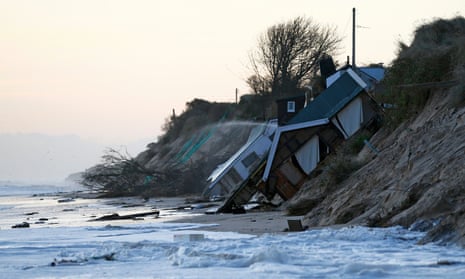
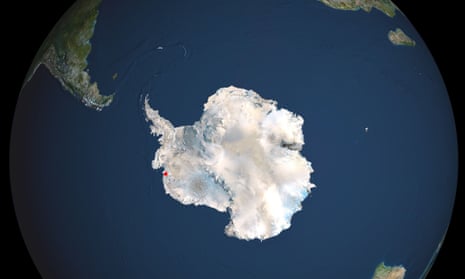
The fate of the West Antarctic Ice Sheet represents one of the most significant uncertainties in climate science, with profound implications for global sea levels and coastal communities. This massive ice sheet, larger than Alaska and Texas combined, holds enough frozen water to raise oceans by 5 meters worldwide. The scientific community agrees that irreversible retreat has begun, but the timeline and mechanisms of collapse remain hotly debated among researchers.
The Uniquely Vulnerable West Antarctic Ice Sheet
Unlike other major ice sheets, West Antarctica's ice rests in a bowl-shaped depression deep below sea level, making it particularly susceptible to ocean warming. The critical vulnerability lies at the "grounding line" where ice transitions from resting on bedrock to floating as ice shelves. As relatively warm seawater works its way beneath these protective shelves, it thins them from below, shifting the grounding line inland and accelerating glacier flow toward the sea.
According to research highlighted by Wired, this marine ice sheet instability creates a feedback loop where retreating grounding lines expose ever-thicker ice to warming waters. Hilmar Gudmundsson, a glaciologist at Northumbria University, emphasizes that this process could lead to "a very sharp increase in global sea level, and it will happen very quickly."
Competing Theories of Collapse
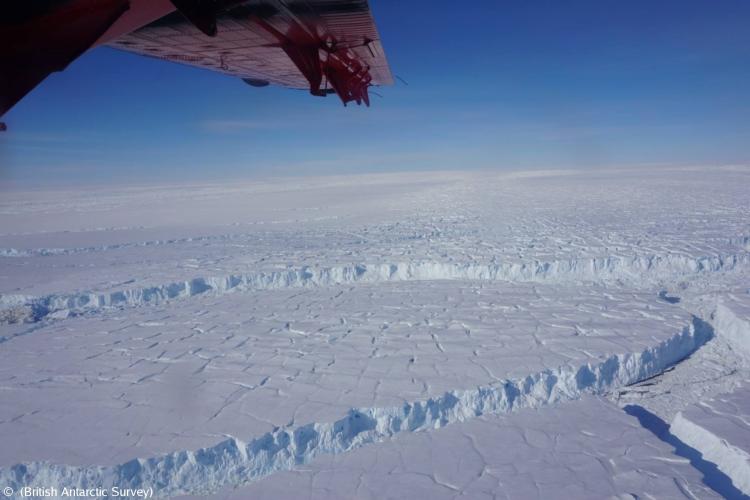
The scientific debate centers on how rapidly this collapse might occur. In 2016, a groundbreaking study proposed the marine ice cliff instability (MICI) theory, suggesting that ice cliffs taller than 90 meters could undergo runaway collapse through a chain reaction. This model initially projected that Antarctica alone could contribute more than a meter of sea-level rise by 2100, though subsequent revisions have tempered these estimates.
However, not all scientists accept the MICI scenario. Critics point to stabilizing factors that might prevent runaway collapse. Mathieu Morlighem of Dartmouth College notes that as ice cliffs collapse, the remaining ice stretches and thins, reducing cliff height and slowing retreat. Additionally, flowing glaciers bring forward replacement ice, and broken ice often forms a protective mélange that temporarily stabilizes cliffs against further collapse.
The Human Impact and Scientific Consensus
Regardless of the exact mechanism, scientists agree that significant sea-level rise is inevitable. The Intergovernmental Panel on Climate Change projects between half a meter and 1 meter of sea-level rise by 2100 from all sources combined. What remains uncertain is whether processes like MICI could accelerate Antarctica's contribution enough to double that overall rise.
Robert Kopp, a climate scientist at Rutgers University, summarizes the situation: "There's deep uncertainty around some of these processes. The one thing we do know is that the more carbon dioxide we put into the atmosphere, the greater the risk." With 230 million people living less than one meter above current sea levels, the timing of West Antarctica's collapse carries enormous consequences for coastal populations worldwide.