Read on PBS News
Venezuela Rejects Trump's Airspace Closure Claim as 'Colonial Threat'
Venezuela's government has forcefully rejected President Donald Trump's assertion that the country's airspace should be considered 'closed in its entirety.' The Venezuelan Foreign Ministry characterized the statement as a 'colonial threat' intended to undermine the nation's territorial integrity and sovereignty. This development comes amid escalating tensions between the two nations, including U.S. military buildups in the region and ongoing pressure campaigns against the government of Nicolás Maduro.
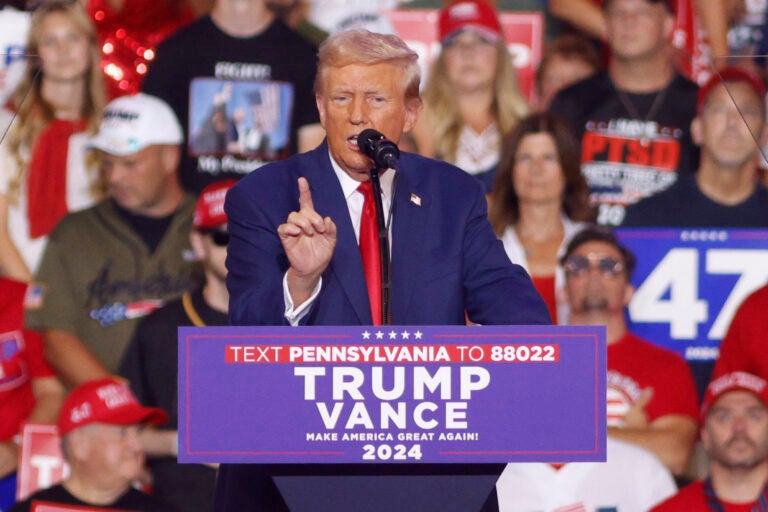
The diplomatic relationship between the United States and Venezuela has reached a new level of tension following President Donald Trump's recent declaration regarding Venezuelan airspace. On Saturday, November 29, 2025, Trump posted on his Truth Social platform that the airspace "above and surrounding" Venezuela should be considered as "closed in its entirety," a statement that immediately drew strong condemnation from the Venezuelan government.

Venezuela's Forceful Response
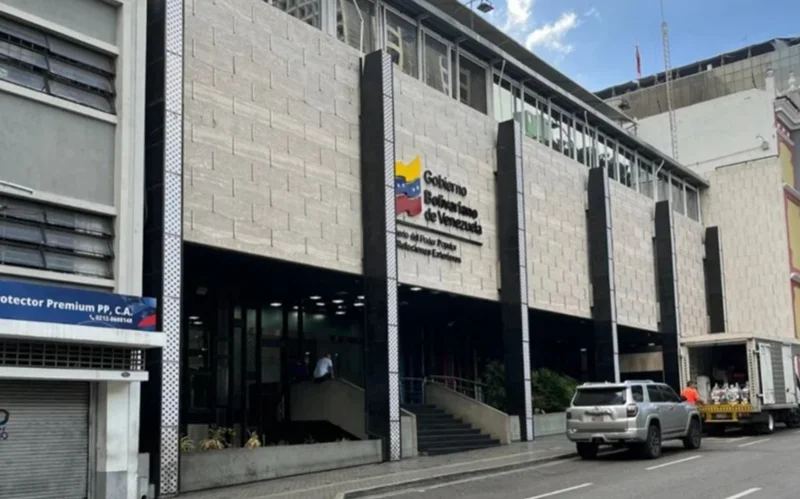
The Venezuelan government issued an official statement through its Foreign Ministry, declaring that it "forcefully rejects" Trump's claim about closing the airspace. The ministry characterized the declaration as a "colonial threat" intended to undermine the country's "territorial integrity, aeronautical security and full sovereignty." The statement further emphasized that "such declarations constitute a hostile, unilateral and arbitrary act" that violates international norms and protocols governing airspace sovereignty.
Context of Escalating Tensions
This airspace declaration comes amid an ongoing U.S. pressure campaign against Venezuelan leader Nicolás Maduro. The White House did not immediately clarify whether Trump's statement represented a new policy or was reinforcing existing messaging around the administration's campaign against Maduro. The U.S. government does not recognize Maduro as the legitimate leader of Venezuela and has filed narcoterrorism charges against him in U.S. courts.
Military and Aviation Implications
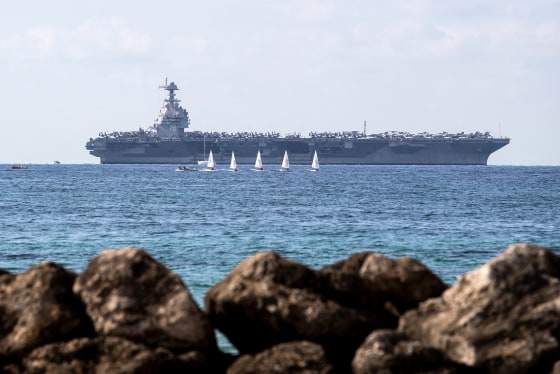
The Federal Aviation Administration had previously warned pilots to exercise caution when flying around Venezuela due to heightened military activity in the region. International airlines began canceling flights to Venezuela following this advisory. Meanwhile, the U.S. has significantly increased its military presence in the Caribbean region, including the deployment of the USS Gerald R. Ford aircraft carrier and nearly a dozen other Navy ships as part of "Operation Southern Spear."
Diplomatic and Immigration Developments
In a related development, the Venezuelan Foreign Ministry noted that U.S. immigration authorities had unilaterally suspended biweekly deportation flights of Venezuelan migrants. Prior to this suspension, more than 13,000 Venezuelans had been deported to Venezuela this year through dozens of chartered flights, with the latest flight arriving in Caracas on Friday, according to flight-tracking data.
International Response and Oversight Concerns
The situation has drawn attention from U.S. lawmakers, with bipartisan calls for greater oversight of military operations in the region. Senate Armed Services Committee leaders from both parties issued a joint statement indicating they would conduct "vigorous oversight to determine the facts" related to recent military strikes in the area. The International Civil Aviation Organization, which typically handles international airspace disputes, had not issued an immediate response to the developing situation.
The airspace declaration and Venezuela's strong rejection highlight the continuing deterioration of relations between the two nations and raise questions about potential escalation in the Caribbean region. As both countries maintain their positions, the international community watches closely for further developments that could impact regional stability and international aviation protocols.