Read on nature.com
New Research Reveals Polyclonal Origins of Colorectal Cancer Precursors
A groundbreaking Nature study challenges the long-held belief that cancer originates from a single mutant cell. Research on familial adenomatous polyposis patients reveals that many premalignant colorectal lesions actually develop from multiple genetically distinct cell populations. This discovery of polyclonal tumor initiation reshapes our understanding of early cancer evolution and suggests that microenvironmental factors play a crucial role in cancer development alongside cell-intrinsic mutations.
For decades, cancer research has operated under the fundamental assumption that tumors originate from a single mutant cell that expands uncontrollably. However, a groundbreaking study published in Nature challenges this paradigm, revealing that many premalignant colorectal lesions actually develop from multiple genetically distinct cell populations. This discovery has profound implications for our understanding of cancer initiation and evolution.
Rethinking Cancer Origins
The traditional model of cancer development posits that a single cell acquires mutations that give it a growth advantage, leading to clonal expansion and tumor formation. This concept has guided cancer research and treatment strategies for generations. However, detecting polyclonal tumor initiation in patients has been challenging because it requires profiling early-stage lesions before clonal sweeps obscure the initial genetic diversity.
Study Methodology and Findings
Researchers from Stanford University conducted a comprehensive analysis of normal colorectal mucosa, benign and dysplastic premalignant polyps, and malignant adenocarcinomas from six individuals with familial adenomatous polyposis (FAP). FAP patients have a germline heterozygous APC mutation that predisposes them to colorectal cancer and numerous premalignant polyps by early adulthood, making them ideal for studying early cancer development.
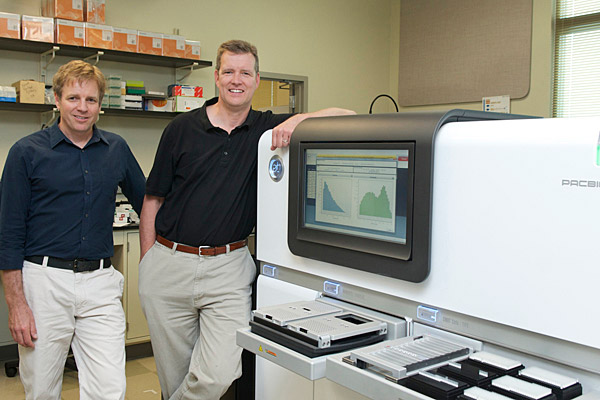
Using whole-genome and whole-exome sequencing, the research team made a startling discovery: many premalignant polyps—40% with benign histology and 28% with dysplasia—were composed of multiple genetic lineages that diverged early, consistent with polyclonal origins. This finding was reinforced by whole-genome sequencing of single crypts from multiple polyps in additional patients, which showed limited sharing of mutations among crypts within the same lesion.
Implications for Cancer Understanding
The presence of multiple distinct APC mutations co-existing in different lineages of a single polyp provides compelling evidence for polyclonality. This discovery fundamentally reshapes our understanding of early neoplastic events, demonstrating that tumor initiation can arise from the convergence of diverse mutant clones rather than the expansion of a single rogue cell.
These findings suggest that cell-intrinsic growth advantages alone may not fully explain tumor initiation. The research highlights the importance of microenvironmental and tissue-level factors in early cancer evolution, opening new avenues for understanding cancer development and potentially new approaches to cancer prevention and early intervention.

Future Research Directions
This research opens numerous questions about the mechanisms that allow multiple mutant clones to cooperate or compete during early tumor development. Understanding these processes could lead to new strategies for cancer prevention and early detection. The study also suggests that current models of cancer evolution may need revision to account for the complex interactions between multiple cell populations in the earliest stages of tumor formation.
The discovery of polyclonal origins in colorectal cancer precursors represents a paradigm shift in oncology. As researchers continue to explore the implications of these findings, we may need to reconsider fundamental aspects of cancer biology and develop new approaches to cancer screening, prevention, and treatment that account for the complex, multi-clonal nature of tumor initiation.