Scientists Uncover the Nutrient Partnership Fueling Massive Sargassum Blooms
Researchers have identified the precise mechanism behind the massive Sargassum blooms sweeping across the Caribbean and Atlantic. A groundbreaking study reveals that phosphorus from equatorial upwelling combines with nitrogen from cyanobacteria living on the algae to create a powerful nutrient partnership. This climate-driven process, documented through coral core analysis, explains the explosive growth of the Great Atlantic Sargassum Belt since 2011 and overturns previous theories about nutrient sources.
For over a decade, massive Sargassum blooms have transformed Caribbean coastlines, creating ecological and economic challenges for coastal communities. The floating brown algae mats, which can stretch for thousands of miles, have puzzled scientists seeking to understand what fuels their explosive growth. Now, groundbreaking research from the Max Planck Institute for Chemistry has uncovered the precise nutrient partnership driving these colossal seaweed formations.
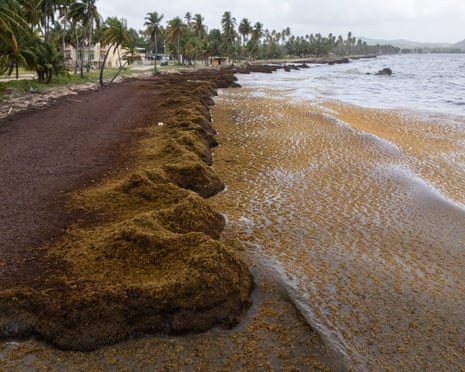
The Nutrient Partnership Explained
The research reveals that Sargassum blooms are fueled by a powerful synergy between two nutrient sources. Phosphorus-rich deep water rises to the surface through equatorial upwelling, while nitrogen is supplied by cyanobacteria living directly on the drifting algae. This partnership creates an ideal growth environment that has intensified over the past decade, perfectly matching the surge in Sargassum growth observed since 2011.
According to the study published in Nature Geoscience, this mechanism offers Sargassum a competitive advantage over other algae species in the Equatorial Atlantic. The cyanobacteria colonizing the brown algae perform nitrogen fixation, converting atmospheric nitrogen gas into a usable form that fuels rapid algal growth.
Coral Cores Reveal Historical Patterns
Scientists used coral drill cores from across the Caribbean to reconstruct environmental changes over the past 120 years. Corals serve as natural archives, incorporating chemical traces from surrounding waters as they grow. By analyzing yearly growth layers similar to tree rings, researchers measured nitrogen isotopic composition to track historical nitrogen fixation patterns.
The coral records revealed significant increases in nitrogen fixation during 2015 and 2018, years that coincided with record Sargassum blooms. Lead author Jonathan Jung noted that when they compared coral reconstruction with annual Sargassum biomass data, "the two records aligned perfectly." This correlation has remained consistent since 2011, when strong winds first transported brown algae from the Sargasso Sea into the tropical Atlantic.
Ruling Out Alternative Theories
The research team systematically eliminated previous theories about Sargassum nutrient sources. Earlier hypotheses suggested Saharan dust carrying iron or nutrient inputs from Amazon and Orinoco rivers might stimulate algae growth. However, these explanations didn't match the timing or intensity patterns observed in Sargassum biomass records.
The study conclusively demonstrated that phosphorus oversupply from upwelling deep water is the primary factor behind major Sargassum events. This finding represents a significant shift in understanding what drives these massive algal blooms and provides a more accurate framework for predicting future occurrences.

Climate Connections and Future Predictions
The arrival of phosphorus-rich water depends on specific climate conditions, including cooler sea surface temperatures in the tropical North Atlantic and warmer conditions in the southern Atlantic. These temperature differences shift air pressure patterns, creating wind changes that move surface waters aside and allow deeper phosphorus-rich water to rise.
Senior author Alfredo Martínez-García explains that "the future of Sargassum in the tropical Atlantic will depend upon how global warming affects the processes that drive the supply of excess phosphorous to the equatorial Atlantic." The research team plans to expand their analysis using additional coral records from throughout the Caribbean, which should help coastal communities better manage the growing impacts of Sargassum blooms.