NASA Confirms 3I/ATLAS as Interstellar Comet, Dismisses Alien Speculation
After weeks of speculation about the mysterious interstellar object 3I/ATLAS, NASA has officially confirmed it is a comet and definitively ruled out any connection to alien technology. The space agency shared previously unreleased images from multiple spacecraft showing the comet's composition and trajectory. Data from Mars orbiters, solar probes, and deep space missions provided comprehensive analysis across infrared, visible, ultraviolet, and gamma-ray spectrums. The comet will make its closest approach to Earth in December 2025 at a safe distance of 267 million kilometers.
Following weeks of intense speculation and viral internet theories about potential alien origins, NASA has officially confirmed that the interstellar object 3I/ATLAS is definitively a comet. The space agency held a press conference to present previously reserved images and scientific data collected by multiple spacecraft, putting to rest widespread speculation about extraterrestrial technology.

Scientific Confirmation Through Multiple Missions
NASA scientists revealed that observations from various spacecraft provided comprehensive data across multiple spectrums, including infrared, visible, ultraviolet, and gamma-ray. The coordinated effort involved missions positioned at different points along 3I/ATLAS's journey through our solar system. According to the agency, all collected data will be made publicly available for further scientific investigation and verification.
Key Observations from Spacecraft
SOHO Solar Probe Capture
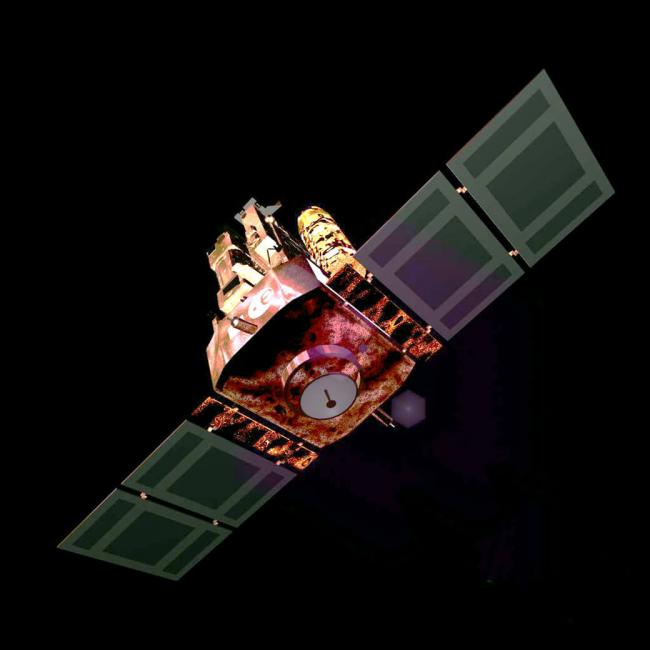
The Solar and Heliospheric Observatory (SOHO) probe, primarily designed for solar monitoring, unexpectedly captured 3I/ATLAS from an impressive distance of 358 million kilometers between October 15 and 26. The orange-toned image revealed the comet's structure at a range scientists described as surprising, given the probe's primary mission focus.
Mars Reconnaissance Orbiter Close-up
One of the most detailed images came from the Mars Reconnaissance Orbiter during October, when 3I/ATLAS approached within 29 million kilometers of Mars. The photograph clearly shows the frozen celestial body surrounded by characteristic dust clouds ejected as the comet approached the sun, confirming typical cometary behavior rather than artificial construction.
STEREO Observatory Analysis
The Solar Terrestrial Relations Observatory (STEREO) required stacking multiple images taken at different exposures to create a coherent visualization of 3I/ATLAS. The resulting image revealed the interstellar object as a bright orb against a noisy background, further supporting its natural composition.
Upcoming Earth Approach and Safety
NASA confirmed that 3I/ATLAS will reach its closest point to Earth on December 19, 2025, passing at a distance of approximately 267 million kilometers. The agency emphasized this distance is completely safe—equivalent to nearly 700 times the distance between Earth and the moon, and 1.8 times the separation between our planet and the sun. The flyby will have no effect on Earth's environment or orbital stability.

Historical Significance and Future Observations
3I/ATLAS represents only the third confirmed interstellar object in recorded history, following 'Oumuamua in 2017 and Borisov in 2019. NASA and other space agencies plan to initiate additional observing campaigns as the comet approaches Earth, aiming to capture better photographs and gather more detailed information about its composition and behavior.
The scientific community views this interstellar visitor as a valuable opportunity to study material from beyond our solar system, potentially providing insights into the formation of planetary systems around other stars. The comprehensive data collection effort demonstrates NASA's capability to coordinate multiple spacecraft for detailed analysis of celestial phenomena.