Nearby Super-Earth GJ 251 c: A Promising Candidate in the Search for Alien Life
Astronomers have discovered a potentially habitable super-Earth located just 20 light-years away, representing one of the most promising opportunities yet to search for life beyond our solar system. The exoplanet GJ 251 c orbits within its star's habitable zone and has a rocky composition similar to Earth, making it an ideal candidate for future atmospheric studies. This breakthrough discovery was made possible by advanced spectrograph technology developed at Penn State and decades of international telescope observations.
The discovery of exoplanet GJ 251 c, located a mere 20 light-years from Earth, represents a significant milestone in the search for habitable worlds beyond our solar system. This super-Earth, with its rocky composition and position within the habitable zone of its host star, offers astronomers one of the most compelling targets yet for investigating the potential for extraterrestrial life. The breakthrough was made possible through the collaborative efforts of an international research team and cutting-edge instrumentation developed at Penn State University.

Understanding Super-Earth GJ 251 c
GJ 251 c earns its classification as a "super-Earth" due to its rocky composition and substantial mass—approximately four times that of our own planet. What makes this discovery particularly exciting is the exoplanet's location within what astronomers call the "Goldilocks Zone" of its host star, GJ 251. This region represents the optimal distance where temperatures could allow for liquid water to exist on the planet's surface, provided it possesses a suitable atmosphere.
According to Suvrath Mahadevan, the Verne M. Willaman Professor of Astronomy at Penn State and co-author of the research published in The Astronomical Journal, "We look for these types of planets because they are our best chance at finding life elsewhere. The exoplanet is in the habitable or the 'Goldilocks Zone,' the right distance from its star that liquid water could exist on its surface, if it has the right atmosphere."
Advanced Detection Technology
The identification of GJ 251 c resulted from more than two decades of meticulous observations using sophisticated instrumentation. The key technology enabling this discovery is the Habitable-Zone Planet Finder (HPF), a high-precision near-infrared spectrograph installed on the Hobby-Eberly Telescope at the McDonald Observatory in Texas. Penn State researchers led the design and construction of this advanced instrument specifically to support the search for Earth-like planets orbiting nearby stars.
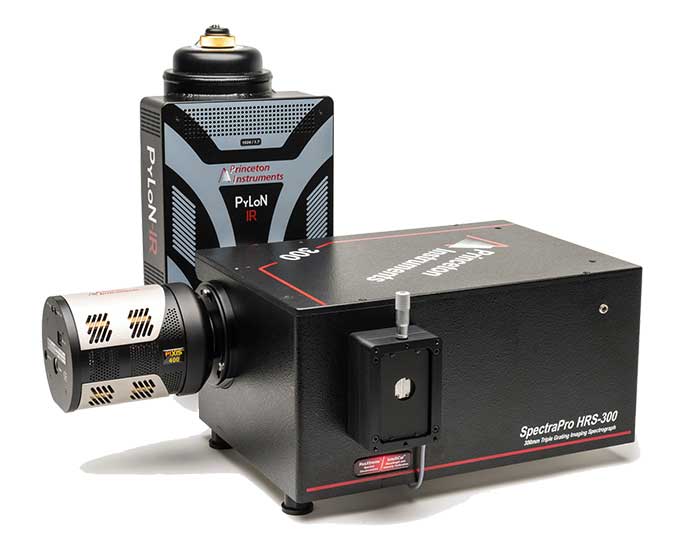
Researchers detected the planet by analyzing the subtle "wobble" of the host star caused by gravitational interactions with orbiting planets. These minute motions manifest as slight Doppler shifts in the star's light, which the HPF instrument can measure with exceptional precision. The team combined long-term observational data with new high-precision measurements from HPF, revealing a signal repeating every 54 days that indicated the presence of the more massive second planet.
Overcoming Technical Challenges
One of the significant hurdles in exoplanet detection involves distinguishing planetary signals from stellar activity. Magnetic phenomena on the star's surface, including starspots and other features, can create variations that mimic the signatures of orbiting planets. The research team employed advanced modeling techniques that examine how signals behave across different wavelengths of light to separate genuine planetary indications from stellar "noise."
Mahadevan described the challenge: "This is a hard game in terms of trying to beat down stellar activity as well as measuring its subtle signals, teasing out slight signals from what is essentially this frothing, magnetospheric cauldron of a star surface." The successful detection of GJ 251 c demonstrates the effectiveness of these sophisticated analysis methods in overcoming stellar interference.
Future Exploration Potential
While current technology cannot produce direct images of GJ 251 c, the planet's position makes it an ideal target for next-generation telescopes. Mahadevan and his team are already preparing for the era of 30-meter-class ground-based telescopes that will carry instruments capable of directly imaging rocky planets within their stars' habitable zones. These future observatories will be able to examine the planet's atmosphere for chemical signatures that might indicate the presence of life.

Eric Ford, distinguished professor of astronomy and astrophysics at Penn State, emphasized the significance of this discovery: "The combination of exquisite data and state-of-the-art statistical methods enabled our interdisciplinary team to transform data into an exciting discovery that paves the way for future observatories to search for evidence of life beyond our solar system."
The discovery of GJ 251 c represents not just a scientific achievement but also a testament to the power of international collaboration and long-term investment in astronomical research. As technology continues to advance, this nearby super-Earth will remain a prime candidate in humanity's ongoing quest to answer one of our most fundamental questions: Are we alone in the universe?