Astronomical Breakthrough: Three Earth-Sized Planets Discovered Orbiting Two Stars in TOI-2267 System
Astronomers have made a groundbreaking discovery of three Earth-sized planets orbiting both stars in the TOI-2267 binary system, located 190 light-years from Earth. This marks the first time planets have been observed transiting around both components of a binary star system, challenging conventional theories of planetary formation. The compact, cold nature of this system defies expectations about where rocky planets can form and survive, offering new insights into planetary development in complex gravitational environments.
In a remarkable astronomical discovery that challenges our understanding of planetary formation, scientists have identified three Earth-sized planets orbiting both stars in the TOI-2267 binary system. This unprecedented finding represents the first known instance of planets transiting around both components of a binary star system, located approximately 190 light-years from Earth. The discovery, published in Astronomy & Astrophysics, offers profound insights into how planets can form and maintain stability in environments once considered too chaotic for complex planetary development.
A Revolutionary Planetary Configuration
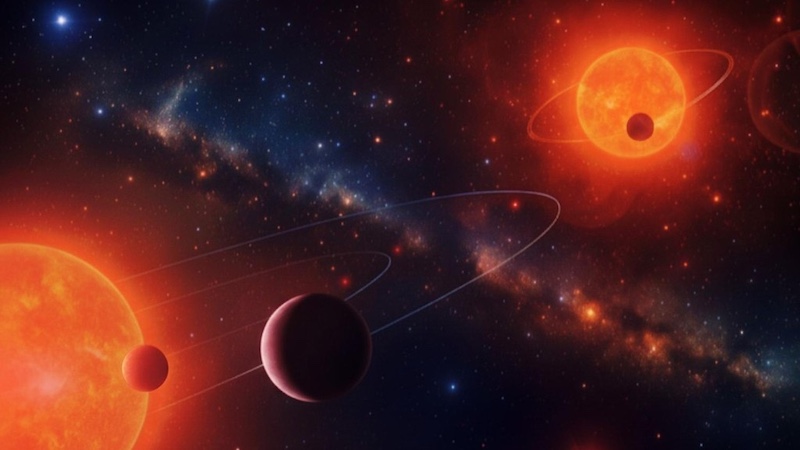
The TOI-2267 system presents a unique planetary arrangement that has stunned astronomers worldwide. According to Sebastián Zúñiga-Fernández, lead researcher at the University of Liège, "Our analysis shows a unique planetary arrangement: two planets are transiting one star, and the third is transiting its companion star. This makes TOI-2267 the first binary system known to host transiting planets around both of its stars." This configuration breaks multiple astronomical records, establishing TOI-2267 as the most compact and coldest pair of stars with known planets.
Defying Conventional Theories
The discovery challenges long-held theories about planetary formation in binary systems. Binary star systems create complex gravitational forces that typically disrupt the planet formation process, making the existence of three Earth-sized planets in such a compact system particularly surprising. Francisco J. Pozuelos from the Instituto de Astrofísica de Andalucía explains that this system serves as a "true natural laboratory for understanding how rocky planets can emerge and survive under extreme dynamical conditions, where we previously thought their stability would be compromised."
Advanced Detection Methods
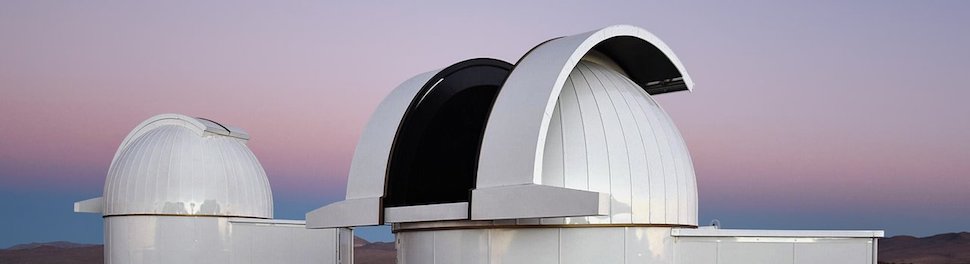
The discovery resulted from a sophisticated combination of space-based and ground-based observations. NASA's TESS space telescope initially provided the data that led to the detection, with astronomers from the University of Liège and IAA-CSIC using their custom SHERLOCK software tool to identify two of the planets. Ground-based confirmation involved multiple observatories, including the SPECULOOS and TRAPPIST telescopes operated by the University of Liège, which are specifically designed to detect small exoplanets around cool, dim stars.
Future Exploration Potential
The TOI-2267 system presents exciting opportunities for future astronomical research. Upcoming observations with the James Webb Space Telescope (JWST) and next-generation ground-based observatories could reveal critical details about these planets, including their masses, densities, and atmospheric compositions. This discovery underscores the importance of combining data from space-based observatories like TESS with precise ground-based instruments to expand our understanding of planetary system formation and evolution throughout the galaxy.