Bumblebees Master Morse Code: Tiny Brains Reveal Complex Time-Tracking Abilities
Groundbreaking research from Queen Mary University of London reveals that bumblebees can distinguish between short and long light flashes, essentially learning to recognize patterns similar to Morse code. In a first-of-its-kind study, scientists demonstrated that these insects possess unexpected timing abilities, choosing between flashing signals to find sweet rewards while avoiding bitter substances. This discovery suggests that even miniature brains contain sophisticated time-processing mechanisms, challenging previous assumptions about insect cognition and offering insights relevant to both evolutionary biology and artificial intelligence development.
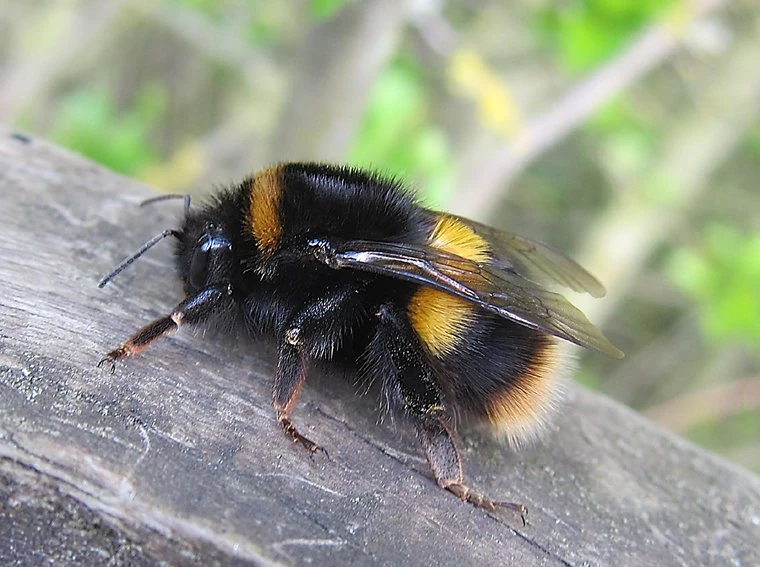
In a remarkable scientific breakthrough, researchers have discovered that bumblebees possess the ability to distinguish between different durations of light flashes, essentially learning to recognize patterns similar to Morse code. This unexpected cognitive ability in insects with brains smaller than a cubic millimeter challenges our understanding of time perception in the animal kingdom and opens new avenues for understanding neural efficiency.
The Morse Code Experiment
Researchers at Queen Mary University of London designed an innovative experiment to test bumblebee timing abilities. PhD student Alex Davidson and Dr. Elisabetta Versace created a specialized maze where bees encountered two flashing circles emitting either short flashes ("dots") or long flashes ("dashes"). The insects were trained to associate one duration with a sweet sugar reward while learning that the other duration indicated a bitter substance they preferred to avoid.
The research team implemented careful controls to ensure the bees were using timing rather than positional cues. They regularly changed the positions of the flashing circles throughout the maze sections. Once the bees consistently flew toward the light associated with sugar, the researchers removed the actual sugar reward to confirm the insects were making choices based purely on flash duration rather than scent or other environmental factors.
Surprising Cognitive Abilities
The results demonstrated that most bumblebees successfully learned to differentiate between the short and long light flashes. They consistently flew directly to the light with the duration previously linked to sugar, regardless of its position in the maze. This confirmed that the insects had developed genuine timing discrimination abilities rather than simply memorizing locations.

Alex Davidson expressed excitement about the findings, noting that since bees don't naturally encounter flashing stimuli in their environment, their success at this task was particularly remarkable. The ability to track visual stimulus duration might represent an extension of time processing capacities that evolved for different purposes, such as spatial navigation or communication within their natural behaviors.
Implications for Understanding Neural Processing
This discovery raises fundamental questions about how miniature brains process time. The known biological systems that regulate daily cycles and seasonal patterns operate too slowly to explain this precise timing ability for flashes differing by fractions of seconds. Scientists now speculate that animals may possess multiple internal clocks operating at different scales, or that time duration encoding might be a fundamental property of nervous systems intrinsic to neuron functionality.
Dr. Versace emphasized the broader implications, explaining that many complex animal behaviors—including navigation and communication—depend on time processing abilities. The demonstration of duration processing in insects provides evidence of complex task solutions using minimal neural resources. This has significant implications for artificial intelligence development, suggesting that artificial neural networks could benefit from studying biological intelligence to achieve greater efficiency and scalability.

The research opens new possibilities for understanding the evolution of cognitive abilities across species and provides inspiration for developing more efficient computational systems. As scientists continue to explore how timing mechanisms function in miniature brains, we may gain deeper insights into both biological intelligence and artificial system design.