Trump Administration Confirms 50-Year Mortgage Plan to Address Housing Affordability
The Trump administration is developing a 50-year mortgage program that could reshape the housing market, according to Federal Housing Finance Agency Director Bill Pulte. While the extended loan term would lower monthly payments for homebuyers, experts warn it would dramatically increase total interest costs over the life of the loan. The proposal comes as Americans face unprecedented housing affordability challenges, with typical homeowners now spending 39% of their income on housing.
The Trump administration has confirmed it is actively developing a groundbreaking 50-year mortgage program that could fundamentally reshape the American housing landscape. Federal Housing Finance Agency Director Bill Pulte described the initiative as "a complete game changer" and "a potential weapon in a WIDE arsenal of solutions" being developed to address the nation's housing affordability crisis.

Understanding the 50-Year Mortgage Proposal
The concept of a 50-year mortgage represents a significant departure from the traditional 30-year loan that has dominated the American housing market for decades. According to CBS News reporting, the proposal aims to spur housing demand at a time when many Americans are priced out of the market by high mortgage rates and soaring home values. The Federal Housing Finance Agency stated it is "evaluating all options to address housing affordability," including making mortgages assumable or portable.
Financial Implications for Homebuyers
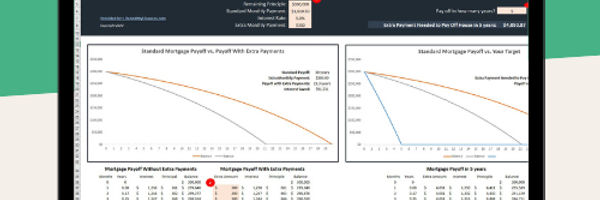
While the extended loan term would provide immediate relief through lower monthly payments, the long-term financial consequences are substantial. Experts calculate that a 50-year mortgage would dramatically increase the total interest paid over the life of the loan. For example, a homeowner purchasing a $400,000 home with a 10% down payment would need a $360,000 loan. Even assuming both 30- and 50-year loans have the same interest rate of 6.25%, the total interest on the 50-year loan would accumulate to approximately $816,000—nearly double the $438,000 in interest paid over a 30-year term.
Market Context and Affordability Challenges
The proposal emerges against a backdrop of severe housing affordability pressures. According to Redfin data, the typical homeowner now spends 39% of their income on housing, well above the 30% affordability threshold recommended by financial experts. Mortgage rates have eased this year but remain above 6%, more than double the pandemic-era lows. Meanwhile, home prices, though slightly down from their peak, averaged $410,800 in the second quarter—about 25% higher than in early 2020.
Expert Analysis and Concerns
Financial experts express mixed views on the potential impact of 50-year mortgages. Joel Berner, senior economist at Realtor.com, told CBS News that while extending loan terms could lift buyer demand, it might push home prices even higher unless more housing is built—potentially erasing any benefit from lower monthly payments. Berner noted, "This is not the best way to solve housing affordability." The modest monthly savings—estimated at around $250 per month for a $360,000 loan—may not justify the dramatically increased total interest costs.
Implementation and Future Outlook
A White House official emphasized that "President Trump is always exploring new ways to improve housing affordability for everyday Americans." The Federal Housing Finance Agency continues to evaluate the proposal alongside other potential solutions. While details remain sparse, the confirmation that a 50-year mortgage plan is actively being developed signals the administration's commitment to addressing housing affordability through innovative financial instruments, even as experts debate the long-term wisdom of such extended loan terms.