Trump's CZ Pardon: Unintended Consequences for US Crypto Industry
The Trump administration's pardon of Binance founder Changpeng 'CZ' Zhao has recast the convicted executive as a political martyr, creating ripple effects throughout the US cryptocurrency landscape. While the pardon removes Zhao's criminal record, it raises concerns about market destabilization, potential regulatory retaliation, and the appearance of conflicts of interest involving Trump family crypto ventures. This decision could enable Binance's possible return to US markets, threatening domestic exchanges like Coinbase and potentially reshaping competitive dynamics in an industry already facing consolidation pressures.
The Trump administration's decision to pardon Binance founder Changpeng 'CZ' Zhao has transformed the convicted crypto executive into an unexpected political martyr, creating significant uncertainty for the US cryptocurrency industry. This controversial move, which wiped clean Zhao's criminal record just months after he served a four-month prison sentence, represents a dramatic reversal in the government's stance toward one of crypto's most prominent figures and raises fundamental questions about market stability and regulatory consistency.

The Legal Context and Pardon Implications
Changpeng Zhao pleaded guilty in November 2023 to failing to maintain an effective anti-money-laundering program at Binance, with the exchange admitting to violating US sanctions and settling with financial regulators for a record $4.3 billion penalty. As detailed in court documents cited by WIRED, one particularly damning exchange showed a Binance employee telling a colleague, "We see the bad, but we close 2 eyes" regarding suspicious transactions involving terror groups and cybercriminals.
The original settlement required Zhao to forfeit his role as Binance CEO and compelled the company to exit US markets while accepting supervision by a US-appointed compliance monitor. However, the October pardon has fundamentally altered this landscape, with the White House now framing Zhao as a victim of the "Biden administration's war on crypto."
Political Ramifications and Industry Concerns
The pardon decision arrives amid growing concerns about connections between Binance and World Liberty Financial, a crypto business founded by Trump and his sons. According to reporting from WIRED, the Trump family owns a 38 percent stake in World Liberty Financial's parent company through a corporate entity, and Binance agreed to receive a $2 billion investment denominated in USD1, a coin issued by World Liberty Financial that could earn the Trump family tens of millions.
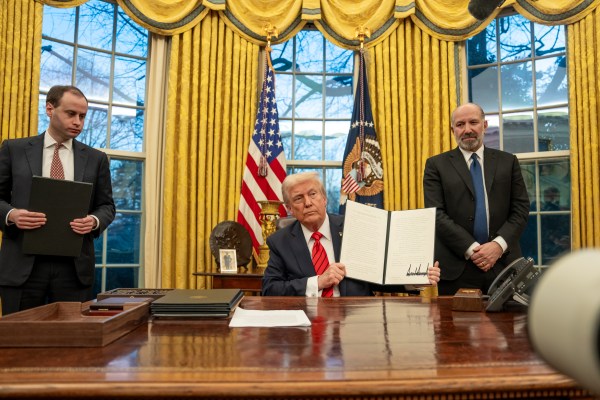
This apparent conflict of interest has industry participants bracing for potential retaliation from future Democratic administrations. As crypto startup founder Azeem Khan noted in the WIRED report, "There's going to be scorched earth to come with the midterm elections. There's not enough being codified into law yet." The industry's substantial political investments—hundreds of millions supporting pro-crypto candidates in 2024 congressional races—could face heightened scrutiny as a result of the pardon's controversial nature.
Market Impact and Competitive Dynamics
The pardon creates immediate uncertainty for US-based crypto exchanges, particularly market leader Coinbase, which has long positioned itself as the compliant alternative to international competitors like Binance. With Binance processing approximately $22 billion in daily trades—almost eight times Coinbase's volume—the potential for Binance to reenter US markets represents an existential threat to domestic competitors.
As Daniel Silva, partner at law firm Buchalter, explained in the WIRED coverage, while the pardon doesn't technically release Zhao and Binance from their plea agreement obligations, it "opens the door for the US government to formally release Zhao and Binance from their obligations." This creates a scenario where Zhao might feel emboldened to return to an active role at Binance despite the existing restrictions.

Industry Consolidation and Future Outlook
The US crypto exchange market appears headed toward consolidation as competitive pressures intensify. Coinbase has responded to the looming threat by acquiring a derivatives exchange, angel investment platform, and token launch service while partnering with traditional financial giants like PayPal and American Express. This strategy aims to create a comprehensive ecosystem that reduces reliance on trading fees and retains customers within Coinbase's orbit.
As Chris Perkins of crypto venture firm CoinFund predicted in the WIRED analysis, "Fees get squeezed, and you have to scale to win. There's going to be some holy or unholy alliances." The industry faces a fundamental tension between benefiting from the Trump administration's permissive stance and concerns about government favoritism determining market outcomes.
Conclusion: Balancing Growth and Integrity
The pardon of CZ represents a watershed moment for the US crypto industry, offering short-term regulatory relief while creating long-term vulnerabilities. As the industry navigates this new landscape, participants must balance the benefits of favorable treatment against the risks of appearing to benefit from political connections rather than market competition. The ultimate test will be whether the industry can achieve sustainable growth through legitimate market mechanisms rather than government intervention, ensuring long-term stability regardless of political shifts.