 Read on cbsnews.com
Supreme Court Hears Landmark Case on Presidential Tariff Authority
The Supreme Court heard arguments Wednesday in a landmark case challenging President Trump's authority to impose sweeping tariffs under federal emergency powers law. Justices appeared divided over whether the International Emergency Economic Powers Act authorizes the president's unilateral tariff actions, with several expressing skepticism about the breadth of power claimed by the administration. The case represents a significant test of presidential authority and could have far-reaching implications for executive power and trade policy.
The Supreme Court heard nearly three hours of arguments Wednesday in a landmark case that tests the boundaries of presidential power and could determine the fate of President Trump's most sweeping tariff policies. The central question before the justices is whether the International Emergency Economic Powers Act (IEEPA) authorizes the president to unilaterally impose broad tariffs on nearly every U.S. trading partner.
Judicial Skepticism of Presidential Authority
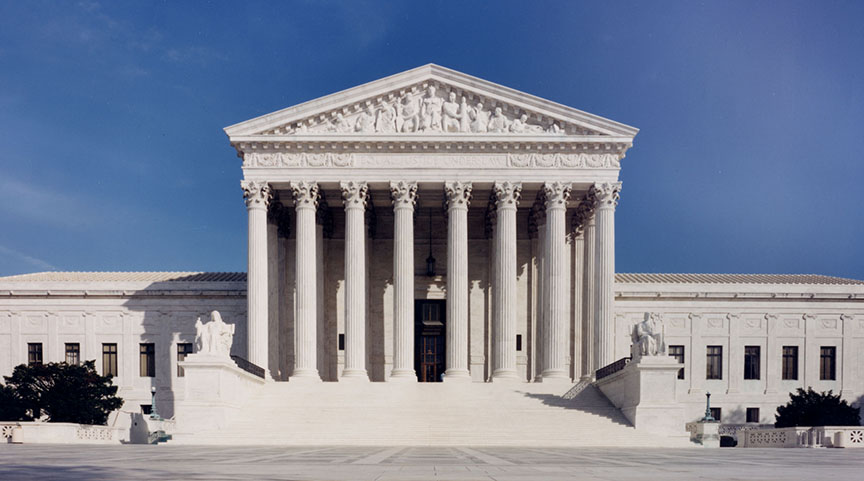
Several justices expressed significant doubts about the Trump administration's interpretation of IEEPA during the arguments. Chief Justice John Roberts noted that the statute doesn't use the word "tariff" and questioned whether Congress intended to grant such broad authority. "The statute doesn't use the word tariffs," Roberts said, adding that while the duties deal with foreign powers, "the vehicle is imposition of taxes on Americans, and that has always been a core power of Congress."
Separation of Powers Concerns
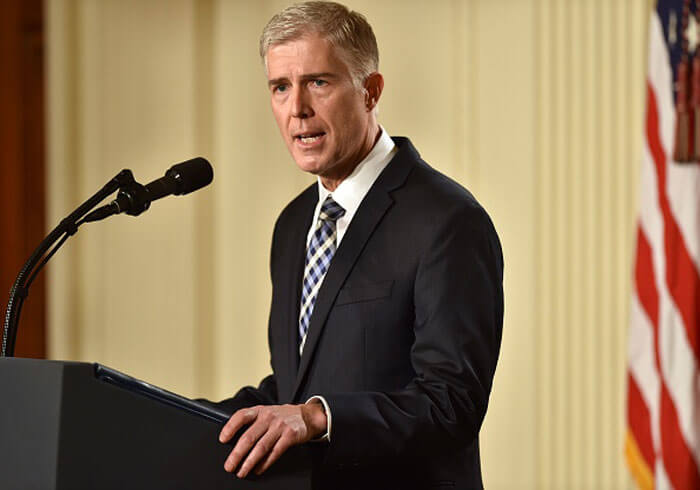
Justice Neil Gorsuch raised fundamental separation-of-powers questions, warning that the administration's theory could lead to a "one-way ratchet toward the gradual but continual accretion of power in the executive branch and away from the people's representatives." He questioned what would stop Congress from "abdicating all responsibility to regulate foreign commerce" if the court accepted the administration's interpretation.
The Tariffs in Question
The case involves two sets of tariffs imposed by President Trump through executive orders earlier this year. The first established a baseline 10% rate on nearly all U.S. trading partners, while the second targeted China, Canada, and Mexico with varying rates. The president declared trade imbalances and drug trafficking as national emergencies, triggering IEEPA's powers. The law authorizes the president to "regulate importation" to address "any unusual and extraordinary threat" to national security.
Administration's Defense
Solicitor General D. John Sauer argued for the Trump administration that IEEPA's authorization to "regulate importation" includes the power to impose tariffs. The administration contends that tariffs are essential tools for addressing national security threats and foreign policy challenges. Justice Brett Kavanaugh appeared sympathetic to this argument, questioning why the law would allow trade embargoes but not more targeted tariff measures.
Legal Challenges and Lower Court Rulings
Three lower courts have ruled against the administration, finding that most of the president's tariffs exceed his authority under IEEPA. The U.S. Court of Appeals for the Federal Circuit ruled 7-4 that while IEEPA may authorize some tariffs, it doesn't permit levies "of the magnitude" of President Trump's actions. Despite these rulings, the administration has been allowed to continue collecting the tariffs while the legal battle proceeds.
Potential Implications
The Supreme Court's decision could have profound implications for presidential power and trade policy. A ruling against the administration would deal a significant blow to President Trump's economic agenda and could trigger complex refund processes for tariffs already collected. The case represents the first time the Supreme Court has directly considered the legal merits of one of President Trump's signature second-term policies.
The court is hearing the case on an accelerated timeline and could issue a ruling relatively quickly. The outcome may depend on whether the justices view the tariffs primarily as exercises of foreign affairs power or as taxes that require congressional authorization under the Constitution.