Read on bbc.com
Myanmar's Phased Election: A Junta's Bid for Legitimacy Amid Civil War
Myanmar's military junta has commenced a three-phase election widely dismissed by international observers as a 'sham.' Held nearly five years after the 2021 coup, the vote occurs against a backdrop of intense civil war, with major opposition parties banned, leaders imprisoned, and up to half the country unable to participate due to conflict. Analysts argue the process, supported by China, is a strategic attempt to entrench the military's power and create a veneer of democratic legitimacy while cracking down on dissent with severe new laws.
Myanmar is navigating a deeply controversial electoral process, with the first phase of a three-round vote concluding amid widespread international condemnation and ongoing civil conflict. The military government, which seized power in a 2021 coup, is conducting what critics label a "sham" election designed not to reflect the popular will but to consolidate its authoritarian rule. With major political parties dissolved, key leaders imprisoned, and vast swathes of the country embroiled in war, the exercise faces profound logistical and credibility challenges. Observers, including the UN Special Rapporteur, assert the vote is a performative act meant to legitimize the junta's power with the support of allies like China, while a renewed crackdown silences dissent.
The Structure of a "Phased" Election
The election is being held in three distinct phases on December 28, January 11, and January 25, with final results expected by the end of January. This staggered approach is highly unusual. According to election-monitoring group Spring Sprouts, this phased structure allows the authorities to "adjust tactics if the results in the first phase do not go their way," suggesting a mechanism for engineering outcomes. Voting is only scheduled for 265 of Myanmar's 330 townships, with the remainder deemed too unstable due to the civil war. Consequently, as much as half the country's population is not expected to participate, fundamentally undermining any claim of a national mandate.
A Landscape of Suppression and Control
The electoral landscape has been meticulously shaped by the junta to eliminate meaningful opposition. The National League for Democracy (NLD), which won landslide victories in 2015 and 2020, has been banned. Its leader, Aung San Suu Kyi, and many senior figures are imprisoned on charges widely viewed as politically motivated. In total, some 40 political parties have been dissolved. Only six parties, including the military-backed Union Solidarity and Development Party, are fielding candidates nationwide. This ensures the political field is dominated by entities aligned with or tolerated by the military regime.

Crackdown on Dissent
Accompanying the vote is a severe legal crackdown designed to stifle any criticism. A new law enacted in July carries severe punishments, including the death penalty, for disrupting or opposing the polls. More than 200 people have already been charged under this legislation. Prominent cultural figures, including film director Mike Tee, actor Kyaw Win Htut, and comedian Ohn Daing, were each sentenced to seven years in prison for criticizing a pro-election film. This environment of fear aims to compel participation and silence dissent, with junta chief Min Aung Hlaing warning that those who refuse to vote are rejecting "progress toward democracy."
The Context of Civil War and International Reaction
The election unfolds within a devastating civil war that has killed thousands, displaced millions, and crippled the economy. The military, despite losing significant territory earlier, has recently clawed back ground using relentless air strikes enabled by support from China and Russia. Reports of explosions and air strikes coincided with the first day of voting, including a rocket attack in Mandalay and blasts in Myawaddy township near the Thai border. The international community has largely rejected the process. The UN Special Rapporteur Tom Andrews called it a "theatre of the absurd performed at gunpoint." Western governments and the European Parliament have dismissed it as a sham, while ASEAN has called for inclusive political dialogue as a prerequisite for any legitimate election.
Conclusion: Legitimacy Through Force, Not Ballots
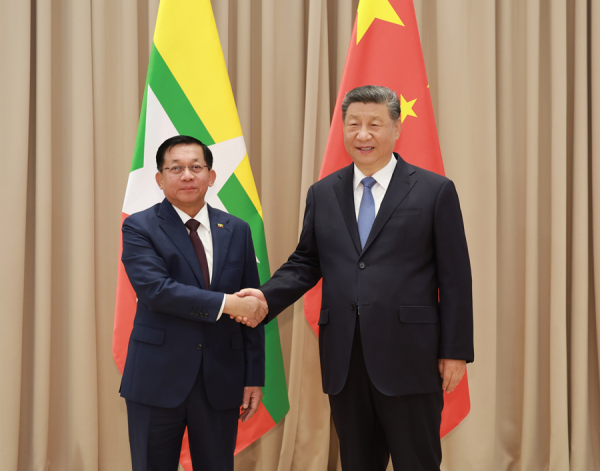
Myanmar's phased election represents a calculated attempt by the military junta to manufacture a facade of democratic legitimacy while continuing to wage war on its own people and imprison its political opponents. The structure of the vote, the suppression of dissent, and the exclusion of huge portions of the country from the process reveal its true purpose: to entrench the military's power under a veneer of electoral consent. With China's backing providing crucial support, the junta is seeking a path out of international isolation without making genuine concessions. The outcome is predetermined to favor the military's interests, offering no resolution to the country's profound political and humanitarian crises. For meaningful change to occur, a genuinely inclusive political process, not a staged election, remains essential.