Read on PBS News
Red Cross Facilitates Return of 285 Bodies in Gaza-Israel Ceasefire Agreement
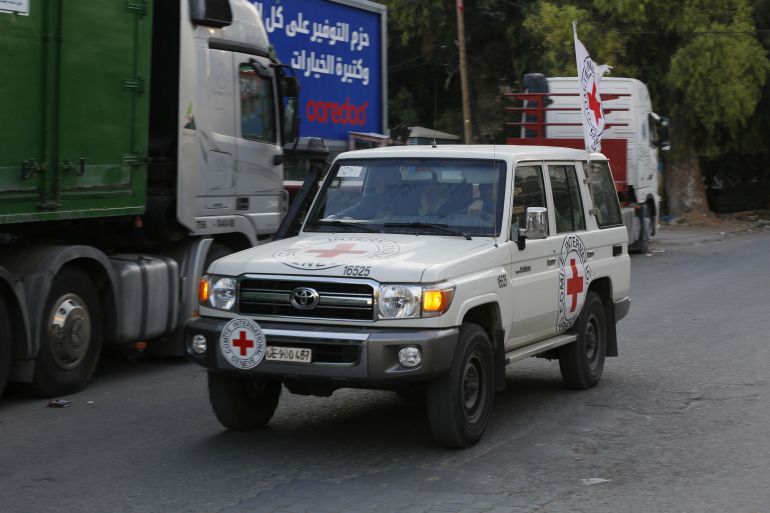
The International Committee of the Red Cross has transported 285 Palestinian bodies from Israeli custody to Gaza as part of the fragile ceasefire agreement brokered last month. The exchanges proceed despite ongoing allegations of violations from both sides, with Israel returning 15 bodies for each Israeli hostage remains recovered from Gaza. The process faces challenges including identification difficulties due to lack of DNA testing kits and accusations from both parties about agreement breaches.
The delicate ceasefire agreement between Israel and Hamas continues to unfold with the International Committee of the Red Cross playing a crucial humanitarian role in facilitating the return of human remains. Since the agreement was brokered last month, the organization has transported 285 bodies from Israeli custody to Gaza, marking a significant development in the ongoing conflict resolution efforts.
The Exchange Mechanism
The current exchange process operates on a reciprocal basis, with Israel returning 15 Palestinian bodies for each Israeli hostage remains recovered from Gaza. This systematic approach has created a predictable pattern in the humanitarian exchanges, though the process remains fraught with challenges and mutual accusations of agreement violations.
Operational Challenges
Health officials in Gaza face significant difficulties in identifying the returned remains due to a critical shortage of DNA testing kits. This complication adds another layer of complexity to an already sensitive humanitarian operation. The identification process is essential for providing closure to families and ensuring proper burial procedures according to cultural and religious practices.

Recent Developments
The most recent exchange occurred on Wednesday, when 15 bodies were returned to Nasser Hospital in Khan Younis. This transfer followed the previous day's handover of the body of Itay Chen, an Israeli soldier killed in the October 7, 2023 attack that initiated the current conflict. Chen's family described his return as bittersweet, emphasizing their ongoing demand for further investigation into how the initial attack was able to occur.
Agreement Framework and Future Steps
The body exchanges represent the central component of the initial phase of the U.S.-brokered agreement, which requires Hamas to return all hostage remains as quickly as possible. According to the agreement's structure, subsequent phases addressing broader conflict resolution cannot proceed until all Israeli hostage remains are returned. Future stages of the 20-point plan call for establishing an international stabilization force, though specific details regarding its composition and mandate remain under diplomatic discussion.
The ongoing exchanges occur against the backdrop of a conflict that began with Hamas's October 7, 2023 attack on southern Israel, which resulted in approximately 1,200 casualties and 251 hostages. Israel's subsequent military offensive has led to significant Palestinian casualties, though exact figures remain disputed between the parties involved.