 Read on cbsnews.com
USDA to Provide Partial SNAP Benefits During Government Shutdown, But Timing Remains Uncertain
The USDA has announced it will use $4.6 billion in contingency funds to provide partial food stamp benefits for November during the ongoing government shutdown. While this offers some relief to millions of Americans relying on SNAP benefits, significant uncertainty remains about when participants will actually receive these funds. The procedural changes required by states could take anywhere from a few weeks to several months to implement, leaving vulnerable families in limbo as they navigate food insecurity challenges.
The ongoing government shutdown has created significant uncertainty for millions of Americans who rely on federal nutrition assistance programs. In a recent development, the U.S. Department of Agriculture announced it will provide partial food stamp benefits for November using contingency funds, but the exact timing of these payments remains unclear, leaving participants in a state of financial limbo.
USDA's Contingency Plan for SNAP Benefits
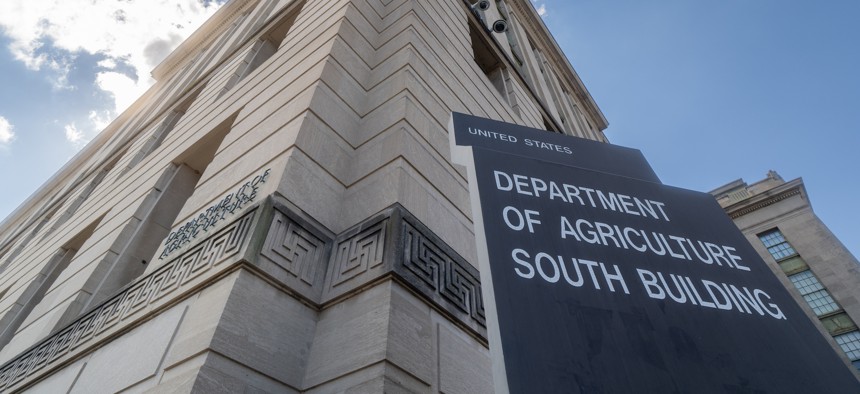
According to a declaration submitted to the U.S. District Court for the District of Rhode Island, the USDA will utilize $4.6 billion in contingency funds to cover approximately 50% of SNAP recipients' benefits for November. This emergency measure represents a critical lifeline for the millions of Americans who depend on the Supplemental Nutrition Assistance Program to meet their basic nutritional needs. The decision comes as the government shutdown continues without a clear resolution in sight.
Implementation Challenges and Timing Concerns
The USDA has acknowledged that procedural changes required by individual states to issue partial benefits could take "anywhere from a few weeks to up to several months" to implement. This extended timeline creates substantial challenges for families who rely on predictable benefit schedules to plan their monthly food budgets. Agriculture Secretary Brooke Rollins reinforced this timeline in social media posts, confirming that benefits could take several weeks to arrive even after the announcement.
State-Level Coordination Requirements
The success of this partial benefit distribution depends heavily on state-level coordination and technical adjustments. Each state must work with EBT vendors to modify their systems to accommodate the partial payment structure. Victoria Negus, a senior economic justice advocate at the Massachusetts Law Reform Institute, emphasized that this represents an unprecedented situation, making it difficult to predict how quickly states can adapt their systems. She expressed hope that states would "move heaven and Earth to get SNAP benefits flowing as quickly as possible."
Political Context and Future Uncertainty
The situation remains politically charged, with President Trump stating in a Truth Social post that future SNAP payments would only go out when Democrats vote to end the government shutdown. White House press secretary Karoline Leavitt later clarified that the President was referring to future SNAP payments beyond the current contingency funding, noting concerns about depleting emergency funds that might be needed for other national catastrophes.
As the government shutdown continues, the uncertainty surrounding SNAP benefits highlights the real-world consequences of political gridlock on vulnerable populations. While the partial funding provides temporary relief, the delayed implementation timeline and political posturing create additional stress for families already facing food insecurity. The situation underscores the critical importance of stable, predictable nutrition assistance programs for millions of Americans.