Sahara Desert's Dramatic Transformation: Climate Change Could Bring 75% More Rainfall
New research from the University of Illinois Chicago reveals that the Sahara Desert could experience up to 75% more rainfall by the end of this century due to rising global temperatures. Using 40 climate models, scientists project widespread precipitation increases across Africa, with the Sahara potentially doubling its historical rainfall levels. While most of Africa is expected to become wetter, some southwestern regions may dry out, highlighting the need for comprehensive adaptation planning to address both wetter and drier futures across the continent.
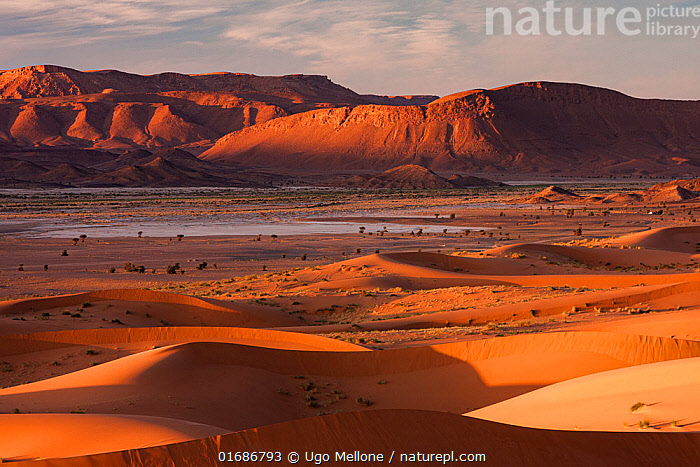
Climate change is poised to dramatically reshape one of Earth's most iconic landscapes, as new research suggests the Sahara Desert could transform from one of the driest places on the planet to a significantly wetter environment. According to a groundbreaking study from the University of Illinois Chicago, rising global temperatures may bring unprecedented rainfall increases to regions long characterized by extreme aridity.
Research Methodology and Key Findings
The UIC research team, led by postdoctoral climate researcher Thierry Ndetatsin Taguela, employed an ensemble of 40 climate models to simulate African summer rainfall patterns for the latter half of the 21st century (2050-2099). The team compared these projections with historical data from 1965-2014, examining both moderate and high greenhouse gas emission scenarios. The results, published in npj Climate and Atmospheric Science, reveal a continent-wide climate rebalancing that could affect billions of people.
Regional Precipitation Patterns
While the Sahara Desert shows the most dramatic projected increase at 75% more rainfall, other African regions also face significant changes. Southeastern Africa could see approximately 25% more precipitation, while south-central Africa might experience a 17% increase. However, the southwestern part of the continent is expected to become drier, with precipitation decreasing by around 5%. This divergence highlights the complex nature of climate change impacts across different geographical areas.
Scientific Implications and Adaptation Needs
The projected rainfall increase in the Sahara is particularly surprising given the region's extreme dryness. Currently receiving only about 3 inches of precipitation annually—roughly one-tenth of Chicago's rainfall—the Sahara could nearly double its historical precipitation levels. As Taguela emphasized in the study, "Understanding the physical mechanisms driving precipitation is essential for developing adaptation strategies that can withstand both wetter and drier futures." The research team continues to investigate how changing atmospheric conditions could reshape Africa's environment, agriculture, and long-term sustainability through UIC's Climate Research Lab.
Conclusion: Preparing for Africa's Climate Future
The UIC research underscores the urgent need for comprehensive adaptation planning across Africa. From flood management infrastructure in regions expecting increased rainfall to drought-resistant agricultural practices in areas facing drier conditions, policymakers and communities must prepare for significant environmental changes. As global temperatures continue to rise, understanding these complex climate dynamics becomes increasingly critical for sustainable development and disaster preparedness across the continent.