Spacetime Doesn't Exist: Why Events Happen Rather Than Exist
A revolutionary perspective challenges our fundamental understanding of spacetime, suggesting it's not a physical entity but rather a descriptive model for how events occur. This philosophical shift resolves long-standing confusions in physics, particularly around time-travel paradoxes and the nature of existence. By distinguishing between objects that exist and events that happen, we gain clarity in both scientific and philosophical discussions about reality.
The concept of spacetime has long been treated as a fundamental physical entity in modern physics, but emerging philosophical perspectives challenge this assumption. Rather than being something that exists, spacetime may be better understood as a powerful descriptive model for how events happen throughout the universe.
This distinction between existence and occurrence has profound implications for how we understand reality, time, and the very nature of physical events. The confusion arises when we treat mathematical descriptions as ontological claims about what fundamentally exists in the universe.
The Nature of Spacetime as a Model
Spacetime represents the continuous set of events that happen throughout space and time—from the Big Bang to the far future, from our immediate surroundings to the most distant galaxies. It serves as a four-dimensional map that records and measures where and when everything occurs. In physics, an event is defined as an instantaneous occurrence at a specific place and time, while an instant represents the three-dimensional collection of spatially separated events that happen "at the same time."
The power of spacetime lies in its ability to catalog the world's happenings systematically. This cataloging is indispensable for modern physics, but the words and concepts we use to describe it matter significantly. When we say that spacetime "exists," we risk confusing a useful model with the underlying reality it attempts to describe.
Events Happen, Objects Exist
The crucial distinction lies in understanding what we mean by "exist." Objects, buildings, people, planets, and galaxies exist—they occupy places, endure through time, persist through changes, and can be encountered repeatedly. In contrast, events do not exist in this same sense; they happen within an existing world.
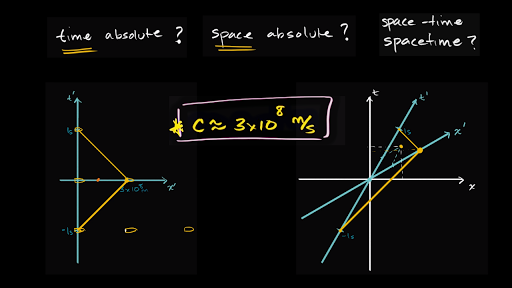
Consider a simple spacetime diagram used in physics: position on one axis, time on the other. A car traveling at constant speed creates a worldline—the full record of the car's position throughout a time interval. The car itself exists as an object, but its positions at different times represent events that happen. The map records these happenings, but the events themselves don't exist as ongoing entities.
Resolving Philosophical Confusion
This perspective resolves several long-standing philosophical puzzles. Time-travel paradoxes, for instance, rest on the false premise that events exist as revisitable locations. If we recognize that events happen rather than exist, these paradoxes dissolve because there's no "place" to travel back to—only occurrences that have already unfolded.
Much philosophical debate over the past century has treated events as things that exist, leading to discussions about whether events are past, present, or future, and whether they occur earlier or later than other events. These discussions assume that events are existent things bearing temporal properties. However, if events don't exist but merely happen, tense and order become features of how happenings relate within an existing world, not properties of existent objects.
Implications for Physics and Relativity
General relativity presents a mathematical theory describing a four-dimensional spacetime continuum, but this doesn't necessarily mean it describes a four-dimensional thing that exists. The theory successfully predicts how events are ordered relative to one another, how sequences of events unfold, and how lengths are measured in different reference frames.

Physics cannot actually describe spacetime itself as something that exists, nor can it account for any change spacetime might experience as an existing entity. By recognizing spacetime as a descriptive model rather than an existent entity, we maintain all the predictive power of modern physics while avoiding unnecessary metaphysical commitments.
Conceptual Clarity and Scientific Progress
The distinction between existence and occurrence provides conceptual clarity without sacrificing scientific accuracy. When we stop saying that events—and spacetime—exist, we recover a clearer understanding of reality. Events happen everywhere throughout the course of existence, and the occurrence of an event is categorically different from the existence of anything—whether object, place, or concept.
This perspective aligns with how we actually experience the world: we encounter existing objects and witness events happening. The empirical evidence supports the existence of material objects but provides no evidence that past, present, or future events "exist" as ongoing entities. Verifying the existence of an event would require something like a time machine to observe it now—even present events cannot be verified as ongoing things that exist.
By embracing this distinction, we can move beyond philosophical confusions that have plagued discussions of time and reality while maintaining the full explanatory power of our best physical theories. Spacetime remains an invaluable descriptive tool, but recognizing it as a model rather than an entity brings greater clarity to both physics and philosophy.