Flatworms Rewrite Stem Cell Science: The Secret Behind Limitless Regeneration
Groundbreaking research from the Stowers Institute reveals how flatworms achieve their remarkable regenerative abilities. Unlike most animals where stem cells follow local instructions, flatworm stem cells respond to long-distance signals from distant tissues. This discovery challenges fundamental biological principles about stem cell niches and could revolutionize regenerative medicine approaches for human tissue repair and healing.
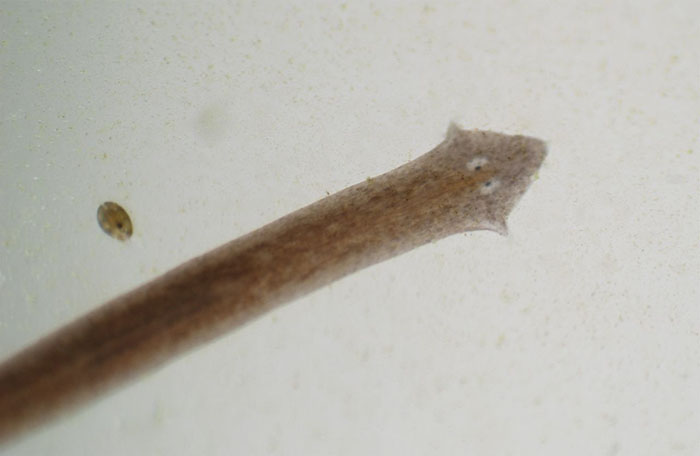
In the world of biological mysteries, few creatures captivate scientists quite like the humble flatworm. These simple organisms possess an extraordinary ability to regenerate complete bodies from tiny fragments—a capability that has puzzled researchers for decades. Now, a groundbreaking study from the Stowers Institute for Medical Research has uncovered the secret behind this remarkable feat, revealing a stem cell behavior that defies conventional biological wisdom.
Challenging the Stem Cell Niche Theory
For years, biologists have operated under the principle that stem cells exist within specific "niches" where neighboring cells provide instructions about when to divide and what types of cells to become. This local control mechanism helps maintain tissue integrity and prevents uncontrolled growth that could lead to cancer. However, the new research published in Cell Reports reveals that flatworm stem cells operate on an entirely different principle.
Led by Dr. Frederick Mann in Dr. Alejandro Sánchez Alvarado's laboratory, the study demonstrates that planarian stem cells ignore their immediate neighbors and instead respond to signals from distant cells, particularly those in the intestinal tissue. This finding fundamentally challenges our understanding of stem cell regulation and opens new possibilities for regenerative medicine.
The Discovery of Hecatonoblasts
Using advanced spatial transcriptomics technology, the research team made another surprising discovery: a previously unknown cell type they named "hecatonoblasts." These large cells feature multiple fingerlike projections extending from their surface, reminiscent of the many-armed giants from Greek mythology. Despite their proximity to stem cells, these hecatonoblasts don't control stem cell fate or function as traditional niche cells would.
Dr. Mann explained the significance: "Because they were located so close to stem cells, we were surprised to find that hecatonoblasts were not controlling their fate nor function, which is counterintuitive to a typical stem cell-niche connection." This finding further reinforced the idea that flatworm stem cells operate independently of local control mechanisms.
Implications for Regenerative Medicine
The discovery that flatworm stem cells can transform into any cell type without needing a fixed niche has profound implications for human medicine. As Dr. Sánchez Alvarado noted, "Understanding how stem cells are regulated in living organisms is one of the great challenges in the fields of stem cell biology and regenerative medicine. This finding challenges our concept of a stem cell 'niche' and may significantly advance our understanding of how to control stem cells' abilities to restore damaged tissues."
This research could lead to new approaches for tissue repair and regeneration in humans. By understanding how flatworms achieve such remarkable healing without the risk of uncontrolled growth, scientists may develop safer and more effective regenerative therapies. The ability to harness stem cells' potential while avoiding cancerous growth represents a major goal in medical research.

Rethinking Biological Communication Networks
The study introduces a new paradigm for understanding cellular communication. Co-corresponding author Dr. Blair Benham-Pyle described the findings in terms of communication networks: "I tend to think about this as local versus global communication networks. While interactions between stem cells and their neighboring cells influence how a stem cell reacts immediately, distant interactions may control how that same stem cell responds to big changes in an organism."
This global signaling system allows flatworms to coordinate regeneration across their entire body, ensuring that new tissues develop in the right places and proportions. The research suggests that the planarian's regenerative ability stems from this unique combination of local interactions and global signaling events.
Future Research Directions
The discovery opens numerous avenues for future research. Scientists now aim to identify the specific signals that guide flatworm stem cells from distant tissues and understand how these signals are transmitted across the body. Additionally, researchers want to explore whether similar mechanisms exist in other regenerative organisms or could be engineered in mammals.
As Dr. Sánchez Alvarado emphasized, "The more we understand how nearby cells and overall signals in the body work together to boost the ability and power of our stem cells, the better we'll be at creating ways to improve the body's natural healing. This knowledge could help develop new treatments and regenerative therapies for humans in the future."
The flatworm's simple appearance belies a sophisticated biological system that continues to surprise scientists. This latest discovery not only explains one of nature's most remarkable regenerative abilities but also provides new insights that could transform how we approach healing and tissue repair in human medicine.