 Read on cbsnews.com
Illinois National Guard Members Defy Federal Orders in Chicago Immigration Operation
Two Illinois National Guard members, Staff Sgt. Demi Palecek and Capt. Dylan Blaha, have publicly declared they will refuse to obey federal orders to deploy in Chicago as part of President Trump's immigration enforcement mission. Both soldiers describe growing unease among Guard members after the White House federalized 500 troops to secure immigration facilities in the Chicago area. The guardsmen argue the mission violates their oath to protect the Constitution and represents a dangerous precedent of using military forces against American communities.
In a rare act of open defiance from within military ranks, two Illinois National Guard members have announced they will refuse federal orders to participate in President Trump's controversial immigration enforcement operation in Chicago. Staff Sgt. Demi Palecek and Capt. Dylan Blaha, both political candidates in Illinois's 13th District, told CBS News they would not deploy against their own communities, citing constitutional concerns and moral objections to the mission.

The soldiers' declaration comes amid growing tension over the White House's decision to federalize 500 National Guard troops from Illinois and Texas to secure federal immigration facilities and personnel in the Chicago area. Both Palecek and Blaha described widespread unease among their fellow Guard members about being deployed against civilian populations.
Constitutional Concerns and Moral Objections
Staff Sgt. Demi Palecek, a Latina guardswoman, expressed deep reservations about the mission's legality and morality. "It's disheartening to be forced to go against your community members and your neighbors," Palecek told CBS News. "It feels illegal. This is not what we signed up to do." Her concerns reflect broader questions about the appropriate use of military forces in domestic law enforcement operations.

Capt. Dylan Blaha echoed these concerns, emphasizing his commitment to constitutional principles. "I signed up to defend the American people and protect the Constitution," Blaha said. "When we have somebody in power who's actively dismantling our rights — free speech, due process, freedom of the press — it's really hard to be a soldier right now." Both soldiers framed their refusal as upholding their military oath rather than violating it.
Legal Consequences and Current Status
Refusing a lawful federal order while serving in the National Guard can carry serious consequences, including court-martial, imprisonment, or felony-level discharge. The severity of punishment depends on multiple factors, including whether the soldier is under state or federal control and the nature of the disobedience. When contacted by CBS News, the Defense Department declined to comment on the specific situation.
A recent development has temporarily altered the operational landscape. A federal judge on Wednesday delayed the deployment of the National Guard in Chicago indefinitely, pending a final ruling or Supreme Court decision on the matter. This judicial intervention provides temporary relief but doesn't resolve the underlying constitutional questions.
Impact on Immigrant Service Members
The situation creates particular tension for the approximately 200 green card holders serving in the Illinois National Guard. Palecek described these service members as being in "sheer panic," forced to choose between standing up for their communities or risking their legal status and path to citizenship. Military service typically helps expedite citizenship for legal permanent residents through longstanding federal programs.
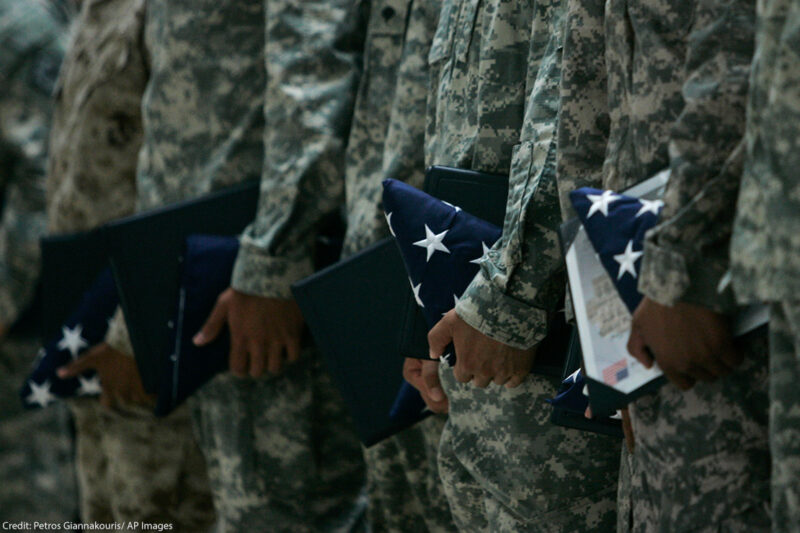
Palecek herself has experienced immigration processing delays, noting that her application for Parole in Place—a program designed to protect family members of service members from deportation—has been stalled. "Everyone says, 'Why don't they do it the right way?'" Palecek observed. "But they are doing it the right way."
Broader Implications and Precedents
Both soldiers expressed concern about the long-term implications of deploying federal troops in American cities. Blaha warned of "a slow normalization of using the military in American cities," suggesting that repeated deployments could desensitize the public to military presence in civilian areas. "If he declares martial law enough times, people will start to think it's OK," Blaha cautioned.
The soldiers see their stand as part of a larger pattern of resistance. "Today it's Chicago. Tomorrow it could be somewhere else," Blaha said, urging Americans to recognize what he characterized as the administration's true motives. "We need to combat the misinformation and stand up to Donald Trump. Crime is down. This is not about safety—it's about control."
Public opinion appears divided on the deployment issue. A September CBS News poll found that a majority of Americans oppose sending National Guard troops to U.S. cities as part of crime crackdown efforts, though approximately 42% expressed support for such deployments. Meanwhile, crime data from 2024 shows Chicago's violent crime decreasing by double-digit percentage points in 2025 compared to the previous year.