Read on PBS News
Deadly California Crash Renews Debate Over Immigrant Truck Driver Licensing
A fatal multi-vehicle crash in Southern California involving a 21-year-old semitruck driver who was allegedly under the influence of drugs and in the country illegally has reignited federal criticism of immigrant truck driver licensing policies. The incident, which killed three people and injured four others, prompted Transportation Secretary Sean Duffy to reiterate concerns about commercial driver's license eligibility requirements and enforcement.
A tragic multi-vehicle crash on a Southern California freeway has sparked renewed debate about commercial driver licensing policies for immigrants. The incident, which resulted in three fatalities and four injuries, involved a 21-year-old semitruck driver who authorities say was under the influence of drugs and in the United States illegally.

The Ontario, California Crash
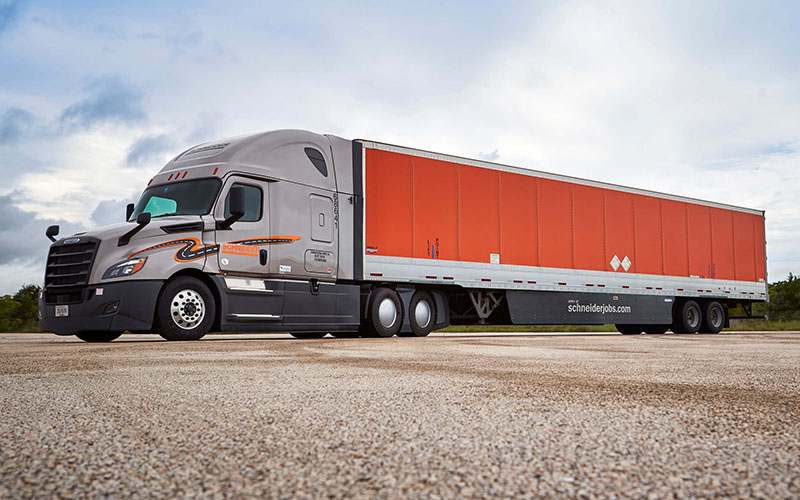
The devastating chain-reaction collision occurred on Tuesday afternoon on westbound Interstate 10 in Ontario, California, approximately 26 miles west of San Bernardino. According to the California Highway Patrol, traffic had slowed when a tractor-trailer failed to stop, striking multiple vehicles and triggering a series of impacts. Dashcam footage obtained by local media shows the truck slamming into a white SUV before continuing forward and striking several other vehicles, ultimately crashing into a disabled truck on the freeway's shoulder as flames erupted alongside the tractor-trailer.
Driver Background and Federal Response
The driver, identified as Jashanpreet Singh of Yuba City, California, faces three counts of vehicular manslaughter while intoxicated and driving under the influence causing injury. Homeland Security officials revealed that Singh, who is from India, entered the U.S. illegally in 2022 across the southern border. This revelation prompted Transportation Secretary Sean Duffy to restate earlier concerns about commercial driver's license eligibility.

Federal Licensing Restrictions
The Transportation Department recently implemented significant restrictions on when noncitizens can obtain commercial driver's licenses. Under new rules imposed last month, only noncitizen drivers holding specific visas—H-2a, H-2B, or E-2—are permitted to qualify for commercial licenses, and states are required to verify their immigration status. These licenses are valid for up to one year maximum, or until the applicant's visa expires if sooner. Secretary Duffy asserted that this week's crash wouldn't have occurred if California had followed these new federal regulations.
Pattern of Similar Incidents
This tragedy follows a similar fatal crash in Florida in August, where a truck driver who Homeland Security says was in the country illegally made an illegal turn on Florida's Turnpike, resulting in a collision that killed three people. Both incidents have drawn attention to the fact that California is one of 19 states, along with the District of Columbia, that issue driver's licenses regardless of immigration status according to the National Immigration Law Center.
Ongoing Policy Debate
The crash has intensified the ongoing political debate between federal authorities and California's state government. While federal officials criticize California's licensing practices, Governor Gavin Newsom's office responded that the federal government had approved Singh's federal employment authorization multiple times, allowing him to obtain a commercial driver's license in accordance with federal law. Meanwhile, immigrant advocacy groups have expressed concern about what they perceive as growing bias against immigrant drivers, noting that immigrant truckers make up nearly one in five long-haul drivers and most are fully licensed and law-abiding.
The case highlights the complex intersection of immigration policy, transportation safety, and state versus federal authority in regulating commercial driving privileges. As the legal proceedings against Singh move forward, the broader policy implications continue to unfold at both state and federal levels, with public safety concerns weighing heavily on all sides of the debate.