The Milky Way's Great Wave: Unraveling Our Galaxy's Cosmic Undulation
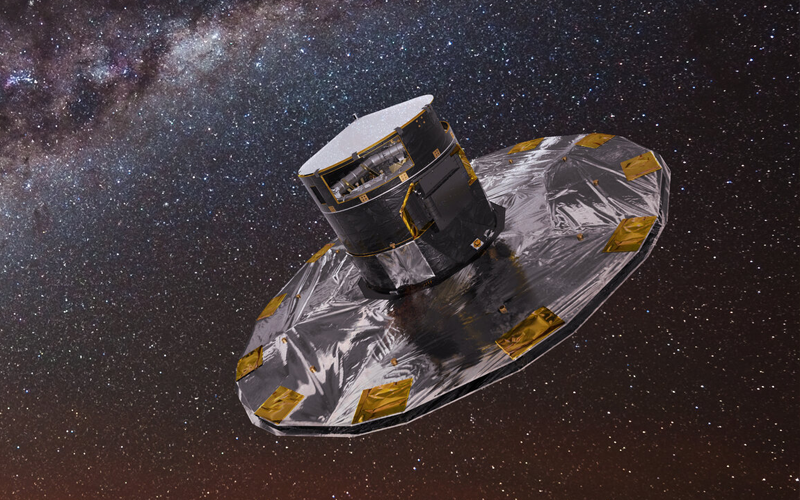
The European Space Agency's Gaia telescope has revealed a colossal wave rippling through our Milky Way galaxy, spanning tens of thousands of light-years. This remarkable discovery shows stars moving in a wave-like pattern through the galactic disc, with young giant and Cepheid stars participating in this cosmic motion. While the origin remains mysterious—possibly stemming from an ancient galactic collision—upcoming Gaia data promises to unveil more secrets about our galaxy's dynamic structure and behavior.
The Milky Way galaxy, our cosmic home, has long been considered a relatively stable spiral system, but recent observations from the European Space Agency's Gaia space telescope reveal a far more dynamic reality. Astronomers have discovered a massive wave rippling through the galactic disc, fundamentally changing our understanding of how galaxies evolve and behave over cosmic timescales.

The Discovery of Galactic Motion
For nearly a century, astronomers have understood that stars orbit the Milky Way's core, but the complexity of galactic motion continues to surprise researchers. The European Space Agency's Gaia mission has provided unprecedented precision in tracking stellar movements, revealing not just rotation but a sophisticated pattern of oscillations and waves throughout our galaxy. This new discovery builds upon earlier findings that showed the galactic disc isn't flat but warped, and that this warp oscillates over time like a spinning top.
Understanding the Great Wave
The newly identified wave spans an enormous section of the Milky Way, affecting stars located approximately 30,000 to 65,000 light-years from the galactic center. To put this in perspective, the entire Milky Way measures about 100,000 light-years across, meaning this wave influences a significant portion of our galaxy. Researchers led by astronomer Eloisa Poggio at Italy's Istituto Nazionale di Astrofisica detected this phenomenon by studying young giant stars and Cepheid stars, whose predictable brightness variations make them ideal for Gaia's observations across vast distances.

The Wave in Motion
What makes this discovery particularly compelling is Gaia's ability to measure not just star positions but their motions in three dimensions. The wave behaves exactly as physicists would predict—stars move with a vertical motion that shifts sideways relative to their positions, creating a true wave-like pattern through space. Eloisa Poggio compares this to a stadium wave, where different participants are at various stages of standing or sitting as the wave passes through the crowd. While galactic timescales are vastly longer, the underlying principle remains similar.
Potential Origins and Future Research
The cause of this galactic wave remains one of astronomy's current mysteries. One leading hypothesis suggests the Milky Way may have experienced a past encounter or collision with a smaller dwarf galaxy, creating ripples that continue to propagate through our galactic disc. Researchers also note potential connections to the smaller Radcliffe Wave, located much closer to our solar system, though the relationship between these two structures requires further investigation. The upcoming fourth data release from Gaia promises even more precise measurements of stellar positions and motions, potentially revealing the wave's origin and its implications for galactic evolution.

This discovery of the Milky Way's great wave represents a significant advancement in our understanding of galactic dynamics. As Johannes Sahlmann, ESA's Gaia Project Scientist, notes, future data releases will enable even more detailed mapping of these features, potentially uncovering additional surprises about our home galaxy's structure and behavior. The finding demonstrates that even well-studied cosmic systems like the Milky Way continue to reveal new complexities, reminding us that the universe remains full of mysteries waiting to be uncovered by advanced observational technologies like the Gaia space telescope.