Bolivia's Historic Presidential Runoff Marks End of Two-Decade Socialist Rule
Bolivians voted on Sunday in an unprecedented presidential runoff between two conservative, capitalist candidates, signaling a dramatic political shift after nearly 20 years of one-party rule by the Movement Toward Socialism party. The election pits former right-wing President Jorge 'Tuto' Quiroga against centrist Senator Rodrigo Paz, with both promising to rescue Bolivia from its worst economic crisis in decades. This historic vote represents a fundamental realignment in Bolivian politics and could reshape the country's international alliances.
Bolivians participated in a landmark presidential runoff on Sunday that marks a definitive break from nearly two decades of socialist governance under the Movement Toward Socialism (MAS) party. The unprecedented contest between two conservative, capitalist candidates—former President Jorge "Tuto" Quiroga and centrist Senator Rodrigo Paz—represents a seismic shift in Bolivian politics and signals the potential end of an era defined by Evo Morales's populist leadership.

Economic Crisis Drives Political Transformation
The runoff election comes as Bolivia faces its most severe economic crisis in decades, with voters seeking leadership to address multiple systemic challenges. Since 2023, the Andean nation has been crippled by a critical shortage of U.S. dollars that has locked Bolivians out of their own savings and severely hampered imports. Year-on-year inflation soared to 23% last month, representing the highest rate since 1991, while chronic fuel shortages continue to paralyze the country's transportation and commerce.
Both candidates have vowed to break with the budget-busting populism that characterized Bolivia under MAS, the party founded by Evo Morales, who became Bolivia's first Indigenous president in 2006. The promise of change has energized many voters who have known only one ruling party since 2005. As Senator Paz declared while casting his ballot in his hometown of Tarija, "We are living in a time of change and renewal. We are closing one cycle and opening another."

Divergent Approaches to Economic Reform
While both candidates share conservative, capitalist orientations, they propose significantly different approaches to addressing Bolivia's economic challenges. Quiroga advocates for immediate, drastic measures including seeking a substantial rescue package from the International Monetary Fund and other multilateral lenders. His platform demands savage cuts in state spending, including slashing fuel subsidies, shrinking the public payroll, and reducing state involvement in Bolivia's gas and mining industries.
Paz favors a more cautious, gradual approach to reform. He proposes phasing out fuel subsidies slowly while maintaining social protections similar to those established under MAS, including cash handouts to cushion the economic impact on vulnerable populations. Notably, Paz has committed to avoiding IMF involvement—an organization widely viewed with contempt in Bolivia after nearly two decades of left-wing rule—instead promising to address dollar shortages by legalizing Bolivia's black market and combating corruption.
Political Realignment and Regional Implications
The election outcome will trigger significant geopolitical realignments that could reverberate across Latin America. Both candidates have indicated they will welcome foreign investment and encourage private enterprise in Bolivia, which possesses the world's greatest lithium resources. The shift also signals a move away from Bolivia's current allies, China and Russia, and toward improved relations with the United States after decades of anti-American sentiment.
The end of MAS hegemony after approximately 20 years represents one of the most significant political transformations in recent South American history. As U.S. Secretary of State Marco Rubio noted, "Both candidates running in the runoff election want strong and better relations with the United States, so that's another transformative opportunity." This realignment could influence political dynamics across the region as other nations observe Bolivia's transition from socialist governance.
Challenges Facing the Next Administration
Whoever emerges victorious will inherit monumental challenges comparable to "running a marathon in Bolivia's highlands" at 4,150 meters altitude. The new president must address collapsed gas exploration and production while managing the legacy of unbridled state spending that characterized the early Morales era. The $2 billion annual fuel subsidy represents a particularly sensitive issue, with previous attempts to lift subsidies under Morales in 2011 lasting less than a week before mass protests forced reversal.
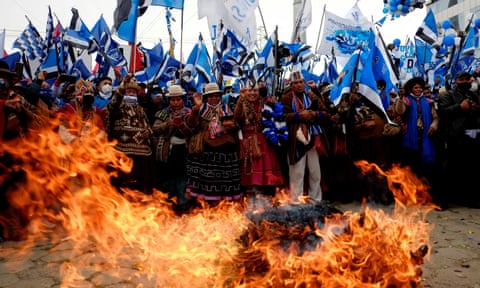
Public transportation unions have already threatened unrest if fuel subsidies are eliminated, and widespread disillusionment has left approximately 10% of voters undecided in recent polls. The depth of public skepticism was captured by voter Javier Quisbert, who stated, "Every candidate promises and promises, but when they get to power, they forget about the people."
This historic runoff represents not just a change in leadership but a fundamental reorientation of Bolivian politics and economics. The outcome will determine whether the country embraces rapid, radical reform or gradual transition as it seeks to emerge from crisis and establish a new political identity after two decades of socialist rule.