Democrats Stand Firm as Government Shutdown Enters Third Week
As the federal government shutdown enters its third week, Democratic leaders remain resolute in their opposition to Republican spending bills, despite President Trump's threats to fire thousands of federal workers. House Democratic leader Hakeem Jeffries emphasized that 'intimidation tactics are not working' as Democrats continue to demand negotiations on health care subsidies. The stalemate shows no signs of breaking as both parties maintain their positions, with Republicans refusing to negotiate until the government reopens and Democrats insisting on addressing health care costs first.
As the federal government shutdown enters its third week, Democratic leaders have made it clear they remain undeterred by President Donald Trump's threats to fire thousands of federal workers. The political standoff shows no signs of resolution, with both parties entrenched in their positions and no immediate path forward emerging from the ongoing crisis.
Democratic Resolve in the Face of Threats
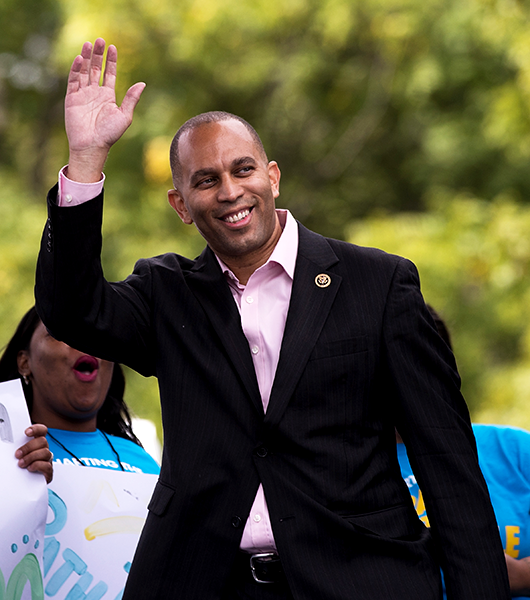
Democratic lawmakers returned to Washington this week showing no signs of weakening their opposition to Republican spending bills. For the eighth time, House Democrats rejected legislation to reopen the government, demonstrating their commitment to their negotiating position. House Democratic leader Hakeem Jeffries of New York stated unequivocally that 'their intimidation tactics are not working, and will continue to fail' in response to the administration's threats of additional federal worker terminations.
Health Care Subsidies Remain Central Issue
The expiring health insurance subsidies that affect millions of Americans have become the central focus of the Democratic negotiating position. Senators report hearing increasingly from constituents concerned about the looming expiration of these subsidies at year's end. Senator Chris Coons of Delaware emphasized that the impact of these expiring health care benefits, combined with recent Medicaid cuts, 'far outweighs' any potential federal worker firings threatened by the administration.
Republican Position Remains Unchanged
Republican leadership continues to maintain that they will not negotiate on health care subsidies until Democrats provide the votes necessary to reopen the government. Senate Majority Leader John Thune of South Dakota has repeatedly stated that the federal worker firings 'are a situation that could be totally avoided' if Democrats would support the Republican spending bill. House Speaker Mike Johnson of Louisiana noted that the country is 'barreling toward one of the longest shutdowns in American history' without any indication of compromise from either side.
Regional Dynamics and Political Calculations
Lawmakers from states with large federal worker populations, particularly Virginia and Maryland, have additional political incentives to maintain their opposition. Senator Tim Kaine of Virginia characterized the situation as 'Donald Trump is at war with his own workforce,' arguing that Republicans shouldn't be rewarded for what he described as 'punitive behavior' toward federal employees. These regional dynamics add another layer of complexity to the ongoing negotiations and political calculations on both sides.
Looking Ahead
With both parties showing no signs of compromise, the shutdown appears likely to continue indefinitely. The Senate planned additional votes on the Republican spending bill, but with moderate Democrats maintaining their opposition and no bipartisan breakthrough on health care subsidies, the path to resolution remains unclear. The political consequences for both parties continue to mount as the shutdown extends into its third week with thousands of federal workers facing uncertainty about their employment status.