Putin Claims Russian Forces Advancing Across Ukraine Front, Accuses NATO of Direct Involvement
Russian President Vladimir Putin has declared that Russian forces are advancing along the entire front line in Ukraine while asserting that nearly all NATO members are now actively fighting against Russia. Speaking at the Valdai Discussion Group in Sochi, Putin responded to former U.S. President Donald Trump's characterization of Russia as a 'paper tiger' by questioning NATO's own military capabilities. The Russian leader warned that potential U.S. supply of Tomahawk missiles to Ukraine would represent a dangerous escalation, while simultaneously praising his recent diplomatic engagement with Trump as productive peace efforts.
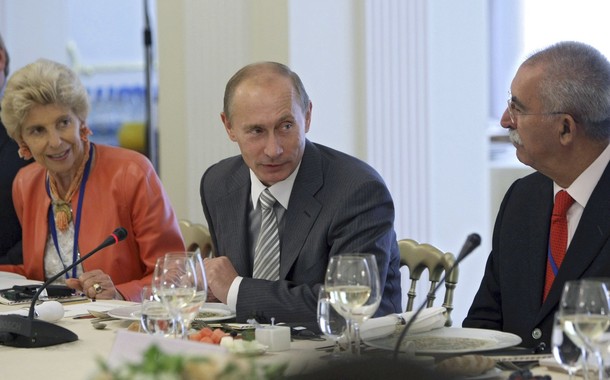
Russian President Vladimir Putin has made significant claims about the current state of the conflict in Ukraine, asserting that Russian forces are advancing across the entire front line while accusing the NATO alliance of direct military involvement against Russia. These statements, delivered during his address at the Valdai Discussion Group in the Black Sea resort of Sochi, represent Moscow's latest assessment of what Russian officials describe as a "hot" conflict with the West.
Military Advancements and NATO Involvement
Putin's declaration that Russian forces are advancing along the entire Ukrainian front comes amid ongoing military operations that have continued for several years. The Russian president framed this advancement as evidence of Moscow's military confidence despite Western support for Ukraine. More significantly, Putin asserted that "almost all of the U.S.-led NATO alliance was now fighting against Russia," marking one of his most direct accusations of NATO's comprehensive involvement in the conflict.
The characterization of the situation as Europe's deadliest conflict since World War Two underscores the gravity of Putin's assessment. Russian officials have consistently described the confrontation as the most significant between Russia and the West since the 1962 Cuban Missile Crisis, positioning current tensions within a historical context of superpower confrontation.

Response to Trump's 'Paper Tiger' Comments
Putin directly addressed former U.S. President Donald Trump's recent characterization of Russia as a "paper tiger," employing rhetorical questioning to challenge this assessment. "A paper tiger. What follows then? Go and deal with this paper tiger," Putin stated, before turning the criticism back toward NATO itself. "Well if we are fighting with the entire NATO bloc, we are moving, advancing, and we feel confident, and we are a 'paper tiger', then what is NATO itself?"
This exchange highlights the ongoing diplomatic tensions between Russian and American leadership, even as Putin acknowledged his recent summit with Trump in Alaska as "productive" in searching for potential ways to settle the Ukrainian crisis. The Russian president noted that he felt "comfortable" talking to Trump, suggesting ongoing diplomatic channels despite public criticisms.
Warnings About Military Escalation
Putin issued specific warnings about potential U.S. military support to Ukraine, particularly regarding the possible supply of Tomahawk cruise missiles. The Russian leader asserted that "It is impossible to use Tomahawks without the direct participation of American military personnel," and characterized such a step as representing "a completely new, qualitatively new stage of escalation, including in relations between Russia and the United States."
These warnings come amid ongoing Western military support for Ukraine, which Putin claims includes intelligence sharing, weapons provision, and training of Ukrainian forces. The United States has not announced any decision regarding Tomahawk missile supplies to Ukraine, but Putin's comments indicate Moscow's serious concerns about this potential development.

Regional Security Concerns
Putin dismissed European concerns about Russian military aircraft and drone incursions into NATO airspace, employing irony in his response to allegations about violations over Poland and Estonia. He quipped that he promised not to repeat such actions in Denmark and noted that Russia lacked drones capable of reaching Lisbon, minimizing what European authorities have described as "brazen violations" of regional airspace.
More seriously, Putin addressed what he characterized as Western "hysteria" about potential Russian attacks on NATO members, describing such scenarios as "impossible to believe." His message to NATO members was direct: "Cool down, sleep calmly, and take care of your own problems. Just take a look at what's happening on the streets of European cities."
Assessment of Ukrainian Military Capabilities
The Russian president provided his assessment of Ukraine's military situation, claiming significant challenges in manpower and describing problems with desertions within Ukrainian armed forces. In contrast, Putin asserted that Russia maintains sufficient military personnel to continue operations. These comments come as Ukraine continues its efforts to mobilize additional forces while defending against Russian advances.
Putin also provided specific territorial claims, stating that Russia controls almost all of Luhansk province, approximately 81% of the Donetsk region, and about 75% of both Zaporizhzhia and Kherson regions. These figures represent Moscow's current assessment of territorial control in the conflict areas.
Broader Geopolitical Context
Putin's statements reflect Moscow's broader framing of the conflict as a watershed moment in Russia's relations with the West. The Russian leader portrays the war as a response to what he describes as Western humiliation of Russia following the 1991 collapse of the Soviet Union, particularly through NATO expansion and what Moscow considers encroachment on its sphere of influence.
This perspective contrasts sharply with Western and Ukrainian characterization of the conflict as an imperial-style land grab. European leaders and Ukrainian officials have repeatedly vowed to defeat Russian forces, arguing that unless Russia is stopped, Putin might risk an attack on a NATO member state—a scenario the Russian president explicitly dismisses as unbelievable.
Putin's combination of military confidence, warnings about escalation, and calls for negotiation reflect the complex dynamics of the ongoing conflict. His suggestion that Kyiv should negotiate an end to the war comes alongside assertions of Russian military advancement and criticism of Western involvement, creating a multifaceted diplomatic and military position as the conflict continues.