Terms of Respect: Princeton President Defends Campus Free Speech Amid Political Attacks
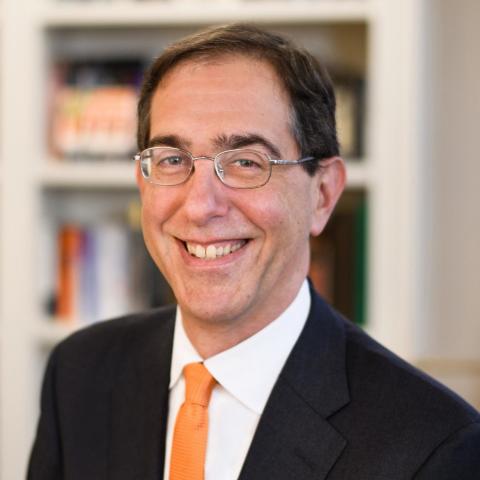
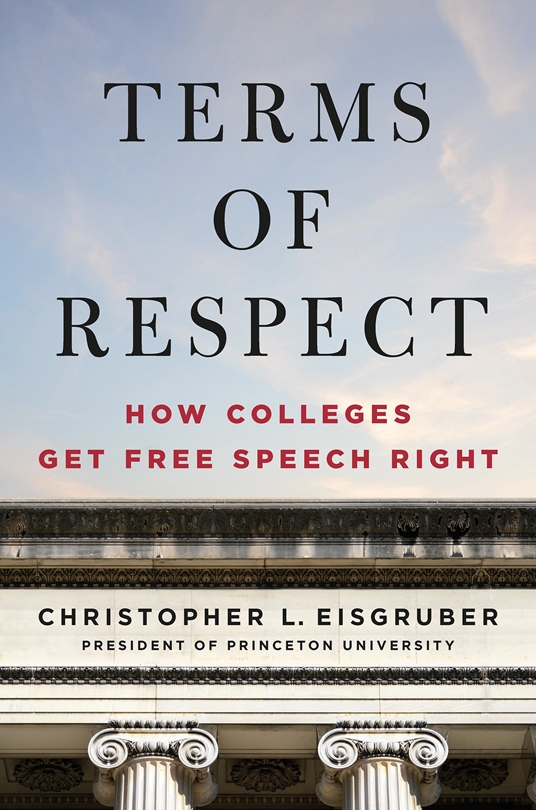
Princeton University President Christopher Eisgruber argues in his new book 'Terms of Respect' that American colleges are largely succeeding in protecting free speech despite intense political criticism. In a PBS NewsHour interview, Eisgruber counters claims that universities silence conservative voices and details how institutions are navigating complex debates while maintaining civil discourse. He addresses the Trump administration's funding cuts and investigations while emphasizing universities' role as engines of American prosperity and innovation.
In an era of heightened political polarization and direct government attacks on higher education, Princeton University President Christopher Eisgruber offers a compelling defense of campus free speech in his new book 'Terms of Respect: How Colleges Get Free Speech Right.' Despite President Trump's second-term campaign against universities—including freezing billions in federal grants and investigating institutions over DEI practices—Eisgruber contends that colleges are successfully navigating these turbulent times while protecting expressive rights.
The Free Speech Defense
Eisgruber's central argument challenges the prevailing narrative that universities have betrayed free speech principles. Drawing from his experiences at Princeton and broader observations across American higher education, he notes that while media attention focuses on rare incidents where discourse breaks down, most campuses maintain robust, civil exchanges across political divides. 'There's a lot going right,' Eisgruber told PBS NewsHour, 'and it's going right at a time when our country, along with our college campuses, faces a crisis where people find it hard to talk to one another.'
Addressing Conservative Concerns
Responding to claims that conservatives are silenced on campus, Eisgruber urges university leaders to be 'visibly open to conservative viewpoints.' He acknowledges the deep political divisions in American society, citing a Johns Hopkins poll finding that half of Republicans and half of Democrats view opposing party members as 'downright evil.' Under these circumstances, Eisgruber argues, universities must not only allow free speech but actively signal willingness to engage across ideological lines.

Navigating Campus Controversies
The book examines how universities handle contentious issues, particularly recent debates surrounding Israel and Palestine. Eisgruber emphasizes the importance of adhering to constitutional principles while enforcing time, place, and manner restrictions. 'Where you see things going right,' he explains, 'is when colleges are both allowing for free speech, including in the form of protests, and enforcing restrictions so that students who want to get to class are able to do that.' This balanced approach allows for expressive rights while maintaining campus functionality.
Defending Higher Education's Value
Facing sustained political attacks and funding cuts, Eisgruber mounts a vigorous defense of American universities' fundamental importance. 'American research universities are extraordinary engines for American prosperity, health, and security,' he asserts. Despite political disagreements, he argues that government leaders should recognize universities' role as global talent magnets and innovation drivers. The challenge for institutions is to acknowledge areas needing improvement while highlighting their substantial contributions to society.
The Meaning of Respect
The book's title, 'Terms of Respect,' raises crucial questions about how respect is defined and enforced in campus discourse. Eisgruber clarifies that 'nobody gets to authoritatively define what respect means,' noting that competing definitions of appropriate respect are part of ongoing national conversations. University leaders, he suggests, must model respect for all persons while creating conditions for civil discourse without imposing rigid definitions that could become tools for censorship.
Leading in Polarized Times
Reflecting on his decade-plus tenure, Eisgruber describes university leadership as both 'wonderful' and increasingly challenging. While he continues to find inspiration in academic communities, polarization has intensified the demands of serving multiple constituencies with strongly conflicting views. Educational institutions have become 'centers of controversy,' yet Eisgruber maintains that getting free speech right remains essential because 'these institutions are important to what America is and important to our future.'
As political pressures on higher education intensify, Eisgruber's work provides both a defense of current practices and a roadmap for maintaining free speech principles amid external attacks and internal tensions. His arguments underscore the continuing importance of universities as spaces for difficult conversations and the development of future leaders capable of navigating complex democratic discourse.