Jane Goodall: The Pioneering Primatologist Who Revolutionized Science and Conservation
Jane Goodall, the legendary primatologist and conservationist who passed away in 2025 at age 91, transformed our understanding of chimpanzees and the animal kingdom. As a female scientist in the 1960s, she broke barriers by giving chimpanzees names instead of numbers, documenting their tool use, and revealing their complex emotional lives. Her work at Gombe Stream Research Center in Tanzania revolutionized primatology and challenged scientific conventions about human-animal relationships. Later in her career, Goodall shifted focus to global conservation, founding the Jane Goodall Institute and traveling worldwide to advocate for environmental protection.
Jane Goodall's remarkable journey from a curious child fascinated by animals to a world-renowned primatologist and conservation leader represents one of the most inspiring stories in modern science. Her groundbreaking research fundamentally changed how we understand chimpanzees and our relationship with the animal kingdom, while her later conservation work established her as a global environmental advocate whose influence spanned generations.
Early Life and Path to Primatology
Born in London in 1934 and raised in Bournemouth on England's south coast, Goodall developed her passion for animals early in life. Her fascination with wildlife was sparked by a stuffed toy gorilla gift from her father and grew through immersion in adventure stories like Tarzan and Dr. Dolittle. Despite her academic ambitions, financial constraints prevented her from attending university initially, leading her to work as a secretary and later for a film company.
The turning point came in 1957 when a friend's invitation to visit Kenya provided the opportunity she needed. After saving money for the boat journey, Goodall arrived in East Africa, where she met famed anthropologist Dr. Louis Leakey and his wife, archaeologist Mary Leakey. This encounter set her on the path that would define her career and legacy in primatology.
Revolutionary Research at Gombe Stream
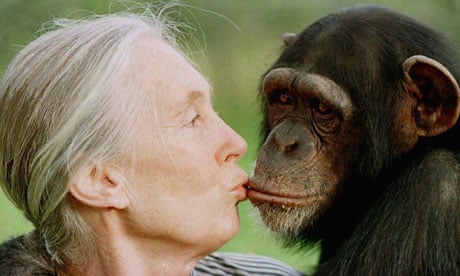
Under Leakey's guidance, Goodall established the Gombe Stream Chimpanzee Reserve (later renamed Gombe Stream Research Centre) near Lake Tanganyika in present-day Tanzania. Her approach to research broke with scientific conventions of the time in several groundbreaking ways. She gave chimpanzees names rather than numbers, recognizing their individual personalities and emotional lives. This humanizing approach was initially criticized but ultimately transformed primatology.

Goodall's most significant discoveries included observing chimpanzees using tools to eat termites, eating meat, and engaging in complex social behaviors including warfare. Her documentation of tool use was particularly revolutionary, leading Louis Leakey to famously remark that we must "redefine tool, redefine man, or accept chimpanzees as humans." These findings challenged the long-held belief that tool use separated humans from other animals.
From Research to Global Conservation
After nearly three decades of field research, Goodall realized that protecting chimpanzees required addressing the broader environmental threats to their habitat. This realization marked a significant shift in her career from dedicated researcher to global conservation advocate. In 1977, she founded the Jane Goodall Institute, a nonprofit organization supporting research at Gombe while expanding conservation and development efforts across Africa and eventually worldwide.
Goodall's conservation work expanded to include environmental education, health initiatives, and global advocacy. She established the Roots & Shoots program to engage young people in conservation efforts and became a tireless traveler, spending an average of 300 days per year meeting with officials, community groups, and school children around the world. Her advocacy continued well into her 90s, demonstrating her unwavering commitment to environmental protection.
Legacy and Recognition
Throughout her career, Goodall received numerous honors recognizing her contributions to science and conservation. She was appointed a Dame of the British Empire in 2003 and received the U.S. Presidential Medal of Freedom in 2025. Her partnership with National Geographic brought chimpanzee behavior into homes worldwide through films, television programs, and magazine features, making her work accessible to the public.
As a prolific author, Goodall published more than 30 books sharing her observations and insights, including her 1999 bestseller "Reason For Hope: A Spiritual Journey." She also authored numerous children's books, ensuring her message reached younger generations. Her work inspired countless women to pursue careers in science and conservation, creating a lasting legacy that extends far beyond her own research.
Jane Goodall's life and work demonstrate the power of curiosity, perseverance, and compassion in advancing scientific understanding and environmental stewardship. Her revolutionary approach to primatology and her later global conservation efforts have left an indelible mark on both science and environmental advocacy, inspiring generations to appreciate and protect the natural world.