PLA Condemns Canadian and Australian Warships' Transit Through Taiwan Strait
The Chinese People's Liberation Army's Eastern Theater Command has strongly condemned the recent transit of Canadian and Australian warships through the Taiwan Strait, labeling the move as a serious provocation that undermines regional stability. This incident highlights ongoing tensions in the strategically vital waterway and reflects broader geopolitical dynamics involving foreign military presence in the region. The PLA's response underscores China's firm stance on maintaining sovereignty and stability in the Taiwan Strait area.
The Chinese People's Liberation Army's Eastern Theater Command issued a strong condemnation on Saturday regarding the transit of Canadian and Australian warships through the Taiwan Strait, characterizing the move as a deliberate provocation that threatens regional stability. This development represents the latest in a series of tensions surrounding military activities in the strategically crucial waterway that separates mainland China from Taiwan.

The Taiwan Strait has long been a focal point of geopolitical tensions, with China consistently maintaining that Taiwan is an inalienable part of its territory. Foreign military transits through these waters have frequently drawn criticism from Chinese authorities, who view such movements as challenges to Chinese sovereignty and potential threats to regional peace. The latest incident involving Canadian and Australian naval vessels follows a pattern of similar confrontations that have occurred over recent years.
Geopolitical Context and Significance
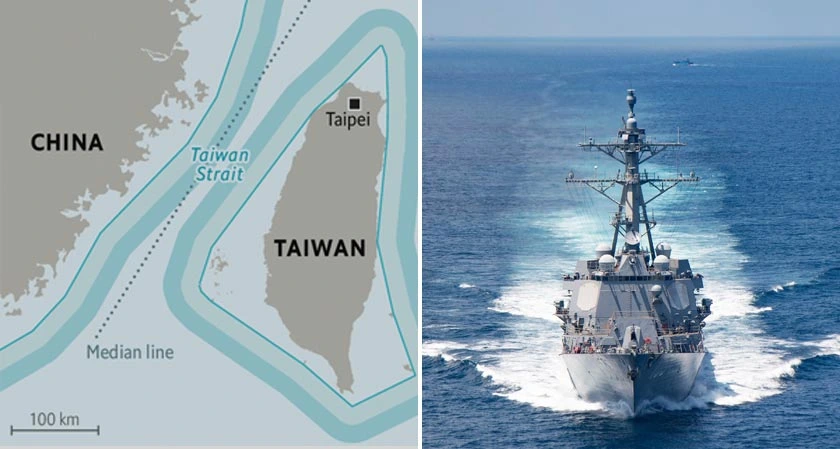
The Taiwan Strait serves as one of the world's most strategically important waterways, connecting the South China Sea with the East China Sea. Its geographical position makes it vital for international shipping and military mobility, which explains why foreign navies periodically conduct transits through these waters. However, China views these passages, particularly when conducted by Western military vessels, as undermining its territorial claims and destabilizing the region.
China's Position and Response
China's response to foreign military transits through the Taiwan Strait has been consistently firm. The PLA Eastern Theater Command, which is responsible for monitoring and responding to activities in this region, typically issues statements condemning such movements and often dispatches its own naval and air assets to monitor foreign vessels. This approach reflects China's broader policy of asserting its claims over Taiwan and opposing what it perceives as foreign interference in its internal affairs.
The condemnation specifically references the undermining of regional stability, a concern that Chinese officials have repeatedly raised regarding foreign military activities near its coastline. China maintains that such operations increase the risk of miscalculation and accidental escalation, potentially leading to more serious confrontations.
International Perspectives
From the perspective of Canada, Australia, and other nations that conduct freedom of navigation operations, these transits represent exercises of rights under international law. The United Nations Convention on the Law of the Sea generally permits innocent passage through territorial waters, though interpretations of what constitutes innocent passage can vary between nations. Western countries often frame these operations as maintaining open sea lanes and upholding international norms.

However, China's particular sensitivity regarding the Taiwan Strait stems from its view that Taiwan is part of its territory, making foreign military activities in these waters particularly provocative from Beijing's perspective. This fundamental disagreement over the status of Taiwan and the appropriate rules for military transit continues to create diplomatic friction between China and various Western nations.
The ongoing pattern of foreign transits and Chinese responses suggests that this issue will remain a persistent source of tension in the region. Both sides appear committed to their respective positions, with Western nations continuing to assert navigation rights while China maintains its territorial claims and opposition to foreign military presence near what it considers its waters.