Read on the Guardian
‘Free Me’: A Kenyan Play Tackles Gender-Based Violence by Sharing One Woman’s Story
The autobiographical play 'Free Me' by Kenyan producer Gathoni Kimuyu is using personal storytelling to encourage victims of gender-based violence to speak out. Restaged amid a rising crisis of femicide and abuse in Kenya, the production humanises survivors and challenges societal silence. This article explores the play's impact, the national context of GBV, and the powerful call for change it represents.
In an auditorium in Nairobi, a husband beats his wife, pushing her to the floor. Gasps fill the room. The wife, addressing the audience, says dryly, "My husband beat me up as if we were in a bar fight. Except, in a bar someone fights back." This powerful scene is from Free Me, an autobiographical play by Gathoni Kimuyu, a Kenyan theatre and TV producer who lived through an abusive marriage. The production, first performed in October 2023 and restaged in June 2024, is a direct response to the alarming rise of gender-based violence (GBV) in Kenya.

The Context of a Crisis
The play's resurgent popularity coincides with a public outcry over GBV in Kenya. According to the reference report, cases of femicide, sexual abuse, and physical abuse are at record highs and continue to rise. In response, hundreds of women marched in Nairobi in June 2024, demanding the government declare GBV a national crisis. While a technical working group formed in January 2025 recommended legal reforms, including codifying femicide as a distinct crime, the government has yet to act, and abuse cases remain headline news.
A Story of Survival and Resilience
Free Me follows Kimuyu's life from her teenage years in Nairobi's eastern outskirts to the present. The story is told through five actors playing her at different ages: the mischievous 16-year-old, the 21-year-old who marries and faces abuse, the 25-year-old who gives birth and leaves, and the 30-year-old who rebuilds her life. Director and co-writer Mugambi Nthiga emphasizes, "This is a play about gender-based violence about someone who lived [through it], but it's being staged in a reality where there's more than one woman every day who is not so lucky."
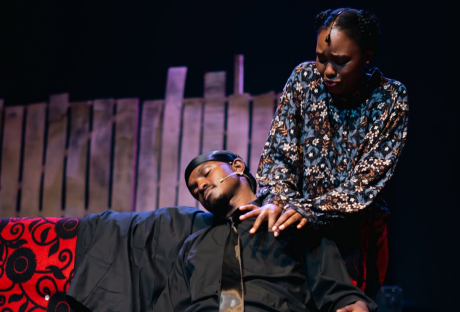
Renee Gichuki, who plays the 16-year-old, notes the play's timeliness: "The person standing next to you has experienced it or knows someone who has experienced it. We are educating and we are shedding light to both parties to know what can be done differently." Actor Tobit Tom, who plays the abusive husband, acknowledges the "heaviness" of his role, but accepts it as necessary to show that GBV "is happening and we have to talk about it and address it with seriousness."
Challenging Normalised Abuse
A particularly striking moment in the play occurs when Kimuyu's character leaves her husband after two years of abuse. His response—"You are never going to find anyone who loves you like I love you"—draws derisive laughter from the audience. Her comeback—"Your love is exactly the kind of love I'm walking away from. For ever."—prompts cheers. This exchange reframes the narrative, shifting blame from the victim to the abuser.
Empowerment Through Personal Truth
Kimuyu deliberately chose to tell her own story rather than fictionalise it. "There's nothing that resonates harder for people than a story about someone they know," she said. "To see someone survive and actually be on this side makes people believe that it's possible." The play humanises the statistics, showing that behind every case is a real person with a story of pain and resilience. By encouraging victims to speak out without shame, Free Me is not just a performance—it is a catalyst for a much-needed national conversation about ending violence against women in Kenya.