Read on the Guardian
The Comrades Ultramarathon: A South African Tradition of Unity and Endurance
The Comrades Marathon, the world's oldest and largest ultramarathon, is more than a race. It is a powerful symbol of South Africa's complex history and a rare day when the nation's deep racial inequalities seem to dissolve. This article explores the race's origins, its evolution from an all-white, all-male event to a truly inclusive one, and the profound personal stories of runners like William Seleka, who find purpose and healing in the grueling 88-kilometer journey between Durban and Pietermaritzburg. It highlights the unique camaraderie, the 'buses' led by pacers, and the emotional finish line, showcasing how the Comrades has become an integral part of the South African fabric.
For one day every June, South Africa's searing racial inequality seems to melt away. This remarkable phenomenon occurs not in a courtroom or parliament, but on the roads between Durban and Pietermaritzburg during the Comrades Marathon. The world's oldest and largest ultramarathon, now in its 99th iteration, is a grueling test of endurance that has evolved into a powerful symbol of unity and a fixture of South African life. As reported by The Guardian, this race draws thousands of runners from all walks of life, creating a temporary community where bankers, security guards, and celebrities run side-by-side.
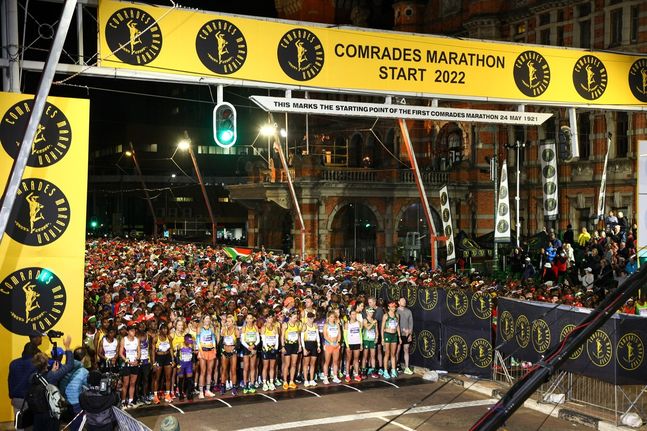
The race's origins trace back to 1921, when first world war veteran Vic Clapham conceived it as a way to honor his fallen comrades. That first year, only 34 white men lined up, with 16 finishing the 54.6-mile route. For decades, the Comrades reflected the country's apartheid-era divisions, with only white men officially allowed to compete. However, a turning point came in 1975 when the race was desegregated and opened to women. This shift, coupled with the introduction of television in 1976 and full broadcast coverage in 1986, captivated the nation. South Africans were mesmerized by scenes of black and white runners sharing water, a powerful image in a deeply segregated society.

Today, the race is a mass-participation event with over 20,000 runners. The course alternates direction each year: the "up run" from Durban to Pietermaritzburg involves a punishing 1,800-meter climb. For many, the Comrades is a deeply personal journey. William Seleka, a 38-year-old appliance repairman from Alexandra, started running to cope with depression after a divorce. Just months later, he was training for the Comrades, running at least 10km every evening and up to 50km on Saturdays. He described the race as a mission, a way to create a legacy for his children and to honor his sister, whose kidney failure inspired him to push through the pain.
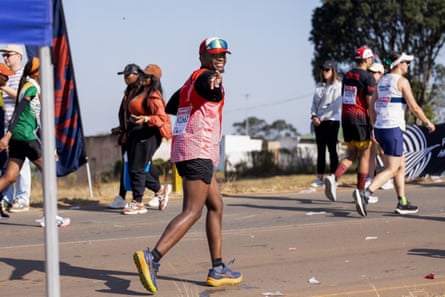
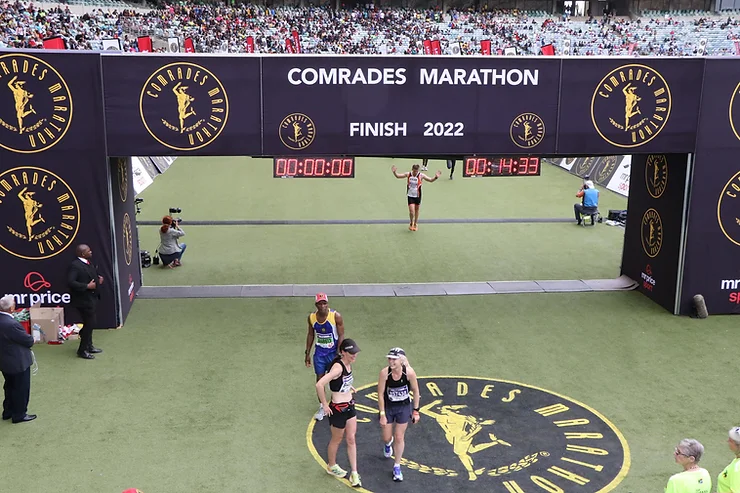
The race is characterized by a unique spirit of camaraderie. Hundreds of runners join informal pace groups known as "buses," led by a metronomic pacer who drives them towards the finish. The final 12-hour bus, driven by Shahieda Thungo, is often the most celebrated, carrying dozens of runners home in the last moments. The finish line in Pietermaritzburg is a scene of pure emotion: some runners dance across, others collapse in exhaustion, and many form bonds with strangers they met on the road. Seleka finished in 10:30:49, crying as he thought of his sister. The Comrades Marathon, as he said, "is a new chapter again."