Amnesty Accuses Israel of State-Sponsored Ethnic Cleansing in the West Bank Amid International Condemnation
Amnesty International has accused Israel of a state-sponsored campaign of ethnic cleansing in the West Bank, aiming to accelerate annexation. The accusation comes as France bans Israeli Finance Minister Bezalel Smotrich from entry, and six Western states sanction settler networks. Despite mounting international censure, the Israeli cabinet has advanced funding for dozens of new settlements and moved to establish a permanent military base inside an area of the West Bank under full Palestinian administrative control, a step avoided for three decades. The report details a coordinated outpost campaign, nightly settler raids, and the weaponization of water against Bedouin communities, while violence continues in Gaza.
The international community's mounting censure of Israeli policies in the occupied West Bank has reached a new intensity, with Amnesty International accusing Israel of a "state-sponsored" campaign of ethnic cleansing designed to accelerate annexation. This accusation, detailed in a June 10 report, has been met with tangible diplomatic actions, including France barring Israeli Finance Minister Bezalel Smotrich from entering the country and six Western states imposing sanctions on networks financing settler violence. However, these measures have done little to restrain the Israeli government, which has simultaneously advanced funding for dozens of new settlements and taken the unprecedented step of establishing a permanent military base within an area of the West Bank nominally under full Palestinian administrative control.

International Condemnation and Sanctions
On June 9, France took the significant step of banning Finance Minister Bezalel Smotrich from entering the country, alongside four settler organization leaders and 21 individual settlers. French Foreign Minister Jean-Noel Barrot cited Smotrich's promotion of West Bank annexation, the resettlement of Gaza, and the engineered "economic collapse" of the Palestinian Authority as reasons for the ban. This action was coordinated with other Western nations, as France, the United Kingdom, Canada, and Norway—working with Australia and New Zealand—announced sanctions against networks that finance settler violence. These diplomatic moves represent a rare and forceful rebuke from key allies of Israel.
Amnesty International's Ethnic Cleansing Accusation
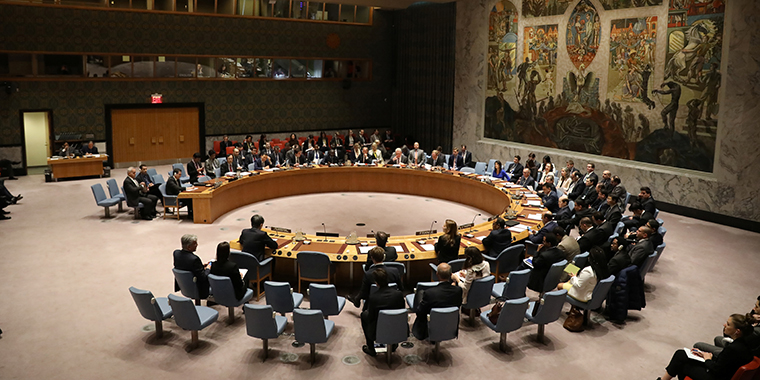
The diplomatic actions were followed by a damning report from Amnesty International on June 10, which accused Israel of a years-long, state-sponsored campaign of ethnic cleansing in the West Bank. The report alleges that this campaign is designed to accelerate the annexation of Palestinian territory, a charge that the Israeli military has rejected. Addressing the UN Security Council on the same day, Secretary-General Antonio Guterres warned of a "presumption of impunity" across the occupied territory, citing settler violence "now averaging six attacks per day" and displacement "at levels not seen since 1967." Guterres further stated that any attempted annexation would have "no legal validity."
Israel's Entrenchment Response
Israel's response to the mounting international censure came swiftly. The Israeli anti-settlement group Peace Now reported that the cabinet moved to fund 69 settlements in a plan worth $388 million, bypassing standard planning procedures. According to Peace Now, the government has approved or legalized 103 settlements since late 2022, 51 of them entirely new. Many of the newly funded sites are located in strategically sensitive areas, such as the South Hebron Hills and the Jordan Valley. Furthermore, on June 11, Haaretz reported that the Israeli military announced it was establishing a permanent post in Jenin refugee camp. This marks the first standing presence within Area A since the Oslo Accords, an area meant to be under full Palestinian civil and security control.
Coordinated Outpost Campaign and Settler Violence
On the ground, the drive to build new illegal outposts deeper into Palestinian-administered land has played out most visibly northwest of Ramallah. In Deir Abu Mash'al, residents spent six consecutive days attempting to stop settlers from establishing an outpost on al-Qarana hill. When villagers dismantled a settler tent, settlers erected a second one on June 15, attacking residents and a council member and injuring four Palestinians, one critically, while Israeli forces fired tear gas and live ammunition. Settlers also expanded outposts elsewhere, bringing mobile units and seizing hundreds of dunums of land while police reportedly barred landowners from their property. Nightly raids continued, with masked, armed settlers attacking villages, torching vehicles, partially burning homes, and setting fire to mosque entrances.
"Settler chat groups boasted in a circulated manifesto of 'endless tours through Areas A and B' and 'new outposts growing like mushrooms after rain'."
Impact on Bedouin Communities and Water Sabotage
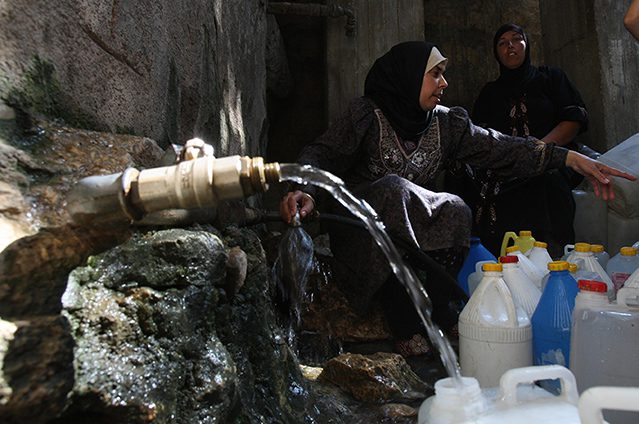
Bedouin and herding communities have continued to bear the brunt of the campaign. Israeli authorities issued demolition and stop-work orders against numerous structures, demolished homes, and razed a poultry slaughterhouse that supported 50 people. The weaponization of water has also been a recurring tactic, with settlers severing pipelines, contaminating wells, burning wells, and stealing pipes. The UN Office for the Coordination of Humanitarian Affairs (OCHA) reported that since January, more than 100 incidents have damaged or destroyed over 190 water and sanitation structures across the West Bank, cutting off at least 10 communities from the water network.
Conclusion
The events of the past week underscore a deepening crisis in the occupied West Bank, characterized by a stark disconnect between international condemnation and Israeli actions on the ground. While diplomatic moves like France's ban on Minister Smotrich and Western sanctions represent a significant shift in rhetoric, they have not deterred the Israeli government from advancing its settlement expansion and entrenchment. The Amnesty International report and the UN Secretary-General's warnings serve as grave assessments of the situation, pointing to a systematic and state-sponsored effort to reshape the occupied territory in a manner that many consider to be a violation of international law. The path forward remains fraught with tension, as the international community grapples with how to translate its censure into effective action that can halt the ongoing dispossession and violence.