Ukraine Opens Formal EU Membership Negotiations
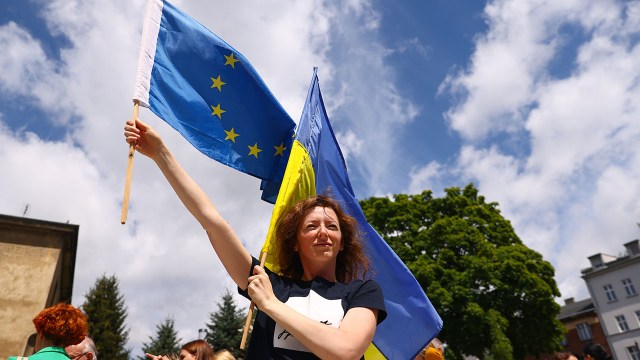
Ukraine has officially launched the first phase of accession talks with the European Union, marking a historic step in its integration with the bloc. President Volodymyr Zelenskyy hailed the development as an irreversible signal of Europe's commitment to Ukraine's future, despite the ongoing war. The negotiations, which began on Monday, represent a formal process that could take years to complete, but they underscore Ukraine's strategic alignment with Western institutions and its determination to secure a place within the European political and economic framework.
Ukraine has officially opened the first phase of membership talks with the European Union on Monday, marking a significant milestone in its long-standing aspiration to join the bloc. The negotiations, launched in a formal ceremony, signal the beginning of a complex and detailed process that will assess Ukraine's alignment with EU laws, standards, and values.
President Volodymyr Zelenskyy welcomed the opportunity, stating that the move sends a clear message that "Europe's progress cannot be stopped." The talks represent the formal start of accession discussions, which will cover a wide range of policy areas, from political and economic reforms to the adoption of the EU's extensive body of law.
What the First Phase Entails
The initial phase of EU membership negotiations, known as the screening process, involves a detailed review of Ukraine's existing laws and institutions to identify gaps and areas requiring alignment with EU standards. This process is typically divided into 35 thematic chapters, covering everything from the rule of law and human rights to economic policy, agriculture, and energy.
For Ukraine, this phase is particularly challenging given the ongoing war with Russia and the need to implement deep structural reforms while managing a conflict that has caused widespread destruction. The EU has acknowledged the difficulty but remains committed to supporting Ukraine's path toward membership, which is seen as a strategic priority for the bloc's security and stability in Eastern Europe.
Political Significance
The opening of talks is a powerful political signal, both to Ukraine's citizens and to the international community. It demonstrates that the EU remains committed to enlargement, even as it faces internal challenges. For Ukraine, it validates the sacrifices made since the 2014 Revolution of Dignity and the full-scale invasion in 2022, reinforcing the country's identity as a European nation.
President Zelenskyy has consistently framed EU membership as a strategic and existential priority for Ukraine. The start of negotiations provides a tangible roadmap for the country's future, offering hope and a clear direction amid the uncertainties of war.

Challenges Ahead
Despite the historic nature of the talks, the road to full membership is long and arduous. Previous enlargement rounds have taken years, and candidate countries must demonstrate sustained progress across all policy areas. Ukraine will need to implement significant judicial and anti-corruption reforms, strengthen its market economy, and align its foreign policy with EU positions.
The war also presents a practical hurdle, as parts of Ukraine's territory remain occupied and under dispute. The EU has stated that the accession process will not be hindered by the conflict, but the practicalities of negotiations and implementation in a war-torn environment remain complex.
Broader Implications for Europe
Ukraine's accession process is part of a broader resurgence of EU enlargement, which also includes negotiations with other Western Balkan countries and Moldova. This push reflects a recognition that a stable, prosperous, and integrated neighborhood is in Europe's strategic interest. However, it also requires the EU itself to reform its internal structures and decision-making processes to accommodate new members.
As negotiations progress, the EU and Ukraine will work together through a structured framework of meetings, technical assessments, and bilateral reviews. The coming months and years will test both sides' commitment to the process, but Monday's launch has set a clear course for Ukraine's European future.